
Indonesia's Investment Grows 7.22 Percent in Q1 2026 as Government Strengthens Reforms
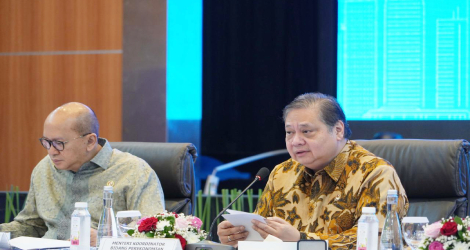
The government is continuously accelerating structural reforms to create a conducive, adaptive, and responsive investment climate amid global economic dynamics. These steps are being taken through the refinement of policies and a risk-based business licensing system capable of accommodating technological advancements and new business models. Coordinating Minister for the Economy, Airlangga Hartarto, stated that Indonesia’s economic fundamentals remain solid amid global uncertainties. “Amid ongoing global dynamics full of uncertainties, Indonesia’s economic fundamentals remain solidly maintained. The economic growth momentum in Q1 2026 is supported by household consumption, THR disbursements, and accelerated state spending through stimulus realisation reaching Rp809 trillion,” Airlangga said during a press conference at the Ministry of Investment and Downstreaming/BKPM on Thursday (23/4/2026). He revealed that investment realisation in Q1 2026 reached Rp498.79 trillion, growing 7.22 percent year-on-year, exceeding the set targets. Labour absorption also increased significantly to 706,569 people, up 18.93 percent from the same period the previous year. “This achievement demonstrates the real contribution of investment to job creation and economic equity, including increased investment outside Java,” he explained. On the monetary side, Bank Indonesia is maintaining the benchmark interest rate at 4.75 percent to safeguard exchange rate stability amid global volatility. Meanwhile, the March 2026 Manufacturing PMI index stood at 50.1, still in the expansion phase, with the Q1 average remaining above 50 and competitive in the ASEAN region. External performance also shows positive trends with a trade balance surplus continuing for 70 consecutive months and foreign exchange reserves reaching USD148.2 billion. On the fiscal side, the state budget deficit up to March 2026 was recorded low at 0.93 percent of gross domestic product (GDP). To sustain this momentum, the government has established the Task Force for Accelerating Government Programmes to Support Economic Growth Enhancement (P3M-PPE) through Presidential Decree Number 4 of 2026. This task force is tasked with ensuring that policies taken address investment obstacles (debottlenecking) and improve ease of doing business. Additionally, the government is promoting the implementation of the 2025 Indonesian Standard Industrial Classification (KBLI) as part of strengthening the business licensing system. This KBLI adjustment, set by the Central Statistics Agency, accommodates new economic developments, including the digital sector, artificial intelligence, climate change mitigation, and innovations in the financial services sector such as bullion banks. “To provide certainty to business actors, we are announcing a Joint Circular between the Minister of Investment and Downstreaming/Head of BKPM, the Minister of Law, and the Head of BPS as technical guidance for implementing KBLI adjustments without disadvantaging business actors,” Airlangga said. He explained that there are two main mechanisms in the implementation of KBLI 2025, namely automatic adjustments through system integration between the Directorate General of General Legal Administration and the Online Single Submission (OSS), as well as independent adjustments by business actors if there are changes to the articles of association.
Source: jawawa.id (https://jawawa.id/newsitem/indonesias-investment-grows-7-22-percent-in-q1-2026-as-government-strengthens-reforms-1777017173)
Originally published by m.batamtoday.com (https://m.batamtoday.com/berita-228040-Investasi-RI-Tumbuh-7,22-Persen-di-Triwulan-I-2026,-Pemerintah-Perkuat-Reformasi-Perizinan-dan-KBLI-2025.html), translated from Indonesian