
Indonesia’s Industrialisation Must Begin with Engineering
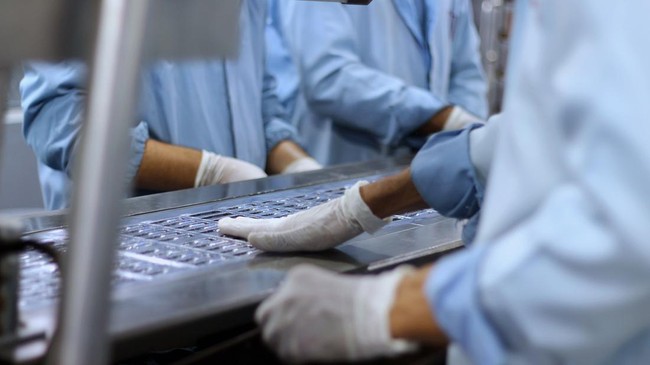
Indonesia continues to build factories and attract investment. The Government also measures industrial progress by production volumes and the level of domestic content (TKDN). These measures are important. But one question has not received enough attention: are Indonesian companies capable of designing and developing the technologies they produce?
A factory may assemble a product well, while another company still determines its design, selects its technology and controls its software. Such collaboration is normal in global industry. The problem arises when we can produce goods but cannot change or improve their designs ourselves.
That is why Indonesia needs to strengthen engineering. Engineering is the process of applying scientific knowledge to design, test and improve products responsibly, so they create added value. Engineers do not simply make things work; they also ensure products are safe, durable and suited to users’ needs.
Indonesia already has Law No. 11 of 2014 on Engineering, which provides a basis for professional competence and responsibility. But having the title of engineer is not enough. Companies must also apply engineering practices in their day-to-day work.
What does this mean for companies? Teams should document product requirements before starting the design process. They should test designs before manufacturing goods on a large scale. Companies should record test results and the reasons for every change. Leaders should give engineers room to raise risks, even when their findings could delay a product launch.
Engineers’ responsibilities also extend to public safety. If testing reveals a risk, companies must address it before selling a product. Sales targets must not be an excuse to ignore safety. Company leaders need to support evidence-based technical decisions. This is why engineering should be part of corporate governance, rather than being confined to technical or engineering departments.
The development of electronic devices offers an example. A device may work well in a laboratory but fail when temperatures rise, the power supply becomes unstable or it is used continuously. Testing helps companies identify problems early. Design improvements can prevent more costly failures after products reach customers.
This is not merely a matter of technical engineering skills. Companies that master design can adapt products to market needs. They can also repair faults more quickly and reduce their dependence on foreign technology providers. In this way, money spent on product development also builds expertise at home.
Companies must also preserve technical knowledge systematically. If an engineer leaves, other team members should still understand how a product works and its design history. Documentation and mentoring for young engineers ensure that a company’s capabilities do not depend on one person.
Cost is another challenge. Companies need time, laboratories, testing equipment and experts to develop technological products. These costs are not always as visible as the cost of buying machinery. As a result, some industrial players find it easier to assess the quantity of goods produced than a company’s design capabilities.
The Government can help change this way of thinking. In technology procurement, the Government and state-owned enterprises (SOEs) should assess suppliers’ ability to design, test, improve and maintain products. Such assessments must still ensure reasonable prices, quality and fair competition. Research support should also help products reach testing and real-world use, rather than stopping at the prototype stage.
State-funded research must be accountable, but researchers should not be criminalised simply because research or development fails to meet its maximum output targets, or even fails altogether. Advances in science and engineering are born precisely from experiments that often fail.
Excessive fear of ‘causing losses to the state’ can make engineers and researchers avoid risk, opt for safe, low-hanging-fruit research or even hesitate to take government funding. This is counterproductive to innovation.
Administrative measures, such as repayment of funds where evidence of irregularities is found, or the suspension of funding, are more appropriate responses to genuine failure. Criminal corruption charges should apply only where there is evidence of personal enrichment or actual abuse.
In practical terms, engineers who act in good faith and work transparently with proper documentation are relatively safe. The greater risks lie in lax financial management or pressure to deliver results that could encourage unethical practices. The Government must balance oversight with room for innovation, so that the research ecosystem is not paralysed by legal fears.
Universities and professional engineering programmes have an important role. They can connect theory with industrial challenges. Participants should not only explain technologies that have succeeded; they should also discuss failures, design decisions, risks and lessons learned. This experience can prepare younger engineers.
Industrial progress needs to be measured more comprehensively. Alongside counting factories and production, we should look at the number of tested designs, companies’ ability to improve products and the number of engineers developing their skills through real projects.
Indonesia does not have to produce every component itself. But it must become increasingly capable of understanding, designing, testing and developing the technologies it uses. Factories make goods. Engineering builds the nation’s ability to keep making better ones.