
Indonesia's Industrial Sector Enters Red Zone Amid Weak Rupiah and Sluggish Purchasing Power
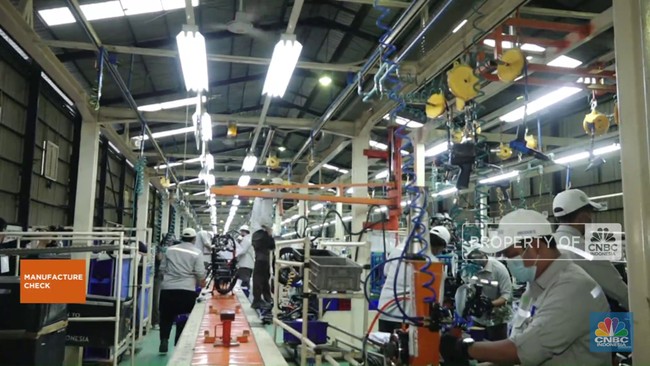
Jakarta - Economists have weighed in on Indonesia’s manufacturing Purchasing Managers’ Index (PMI) data for June 2026, which fell into contraction territory below the 50-point threshold. Fakhrul Fulvian, Chief Economist at Trimegah Sekuritas, stated that the decline signals the industrial sector’s urgent need for policy certainty and a clear signal of optimism from the government. “When businesses face mounting cost pressures, the government must reduce various forms of intervention that add to uncertainty. What is needed now is to restore confidence,” Fakhrul said on Thursday (2/7/2026). He argued that businesses will reinvest only if they see a clear, consistent policy direction that provides room for the private sector to grow. Fakhrul also assessed that the government must immediately prepare stimulus measures that directly lower industrial production costs. He noted that when pressure stems from the cost side, the best solution is to help businesses reduce their production cost burdens so they can maintain production capacity and retain their workforce. Furthermore, he said the weakening of public purchasing power must be addressed promptly. Fakhrul proposed that the government provide a 20 percent electricity tariff discount as a form of household consumption stimulus. He views that an electricity tariff discount has a relatively fast multiplier effect because it directly reduces household expenditure, thereby increasing disposable income without the lengthy process of distributing direct cash assistance. “Amid rising inflation, such a step can help sustain domestic consumption, which has been the main pillar of Indonesia’s economic growth,” Fakhrul stated. Meanwhile, Bank Permata economist Josua Pardede said the decline in the manufacturing PMI indicates that businesses are becoming more cautious due to weakening demand, rising production costs, an unstable rupiah, and declining market certainty. “The drop in the manufacturing PMI is not solely because businesses have lost trust in the government. However, this data clearly shows that businesses are increasingly cautious because demand is weakening, production costs are rising, the rupiah is not yet stable, and market certainty is declining,” Josua explained. He added that policy uncertainty could worsen the situation, particularly if regulations keep changing. “Policy uncertainty can worsen the situation if businesses see frequently changing rules, high logistics costs, and poorly targeted industrial support,” Josua clarified. He urged the government to provide policy certainty, secure raw material supplies, reduce logistics and energy costs, and accelerate support for labour-intensive and export-oriented sectors. Josua also noted that weakened public purchasing power contributed to the manufacturing PMI’s contraction. “The PMI’s fall into the contraction zone is also an indication that public purchasing power is weakening, but it is not the sole cause. The decline in new orders alongside weakened customer purchasing power is estimated to be influenced by price pressures,” Josua said. Previously, S&P Global released data on Wednesday (1/7/2026) showing Indonesia’s PMI at 46.9 in June 2026. This marked the sharpest rate of decline in a year, with incoming new orders falling again and causing the largest drop in output volumes since April 2025. S&P Global noted that the headline PMI indicated a further deterioration in the health of the goods-producing sector, showing a solid decline in factory operating conditions, one of the most significant in a year. “The main cause of the decline in June was a drop in demand for Indonesian manufactured goods. New orders fell for the first time in three months and at the fastest rate in a year,” S&P Global wrote.