
Indonesia’s Haze Costs Malaysia Up to Rp6 Trillion
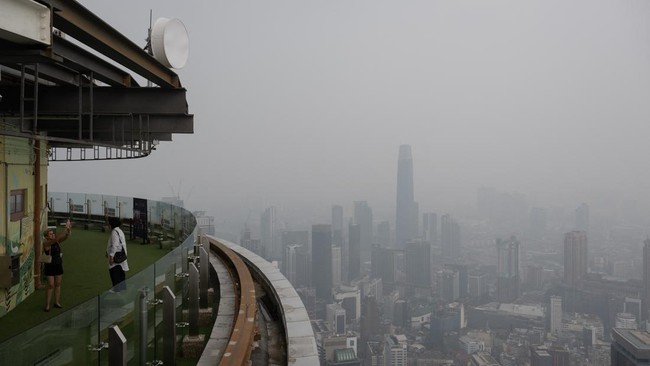
The haze affecting Malaysia is not only threatening public health but also causing economic losses of tens of millions of ringgit each day. Its effects are spreading across sectors ranging from tourism and aviation to agriculture and business activity.
According to the Straits Times, Sunway University economics professor Yeah Kim Leng estimates that prolonged haze could cause losses of 20 million to 50 million Malaysian ringgit (Rp88 billion to Rp219 billion) a day.
Yeah warned that total economic losses could rise to between 600 million ringgit (Rp2.6 trillion) and 1.5 billion ringgit (Rp6.5 trillion) a month if broader impacts are included.
Tourism and agriculture hit
Tourism and aviation are among the sectors worst affected. Air pollution could reduce tourist arrivals by as much as 8 per cent, with potential gross domestic product (GDP) losses of up to 1.5 billion ringgit.
Agriculture and plantations are also feeling the effects. Vegetable farmers in Johor have reportedly seen production fall, while fruit harvests have declined by as much as half. Oil palm plantations could experience delayed impacts over the next six to 12 months.
Reduced visibility caused by the haze is also disrupting transport and the distribution of goods. Deliveries are being delayed, while some construction projects are moving more slowly or have had to be suspended temporarily.
Worker productivity has also fallen as sick leave increases. School closures and weaker activity among small and medium-sized businesses are adding to the economic burden.
Healthcare costs rise
As well as disrupting economic activity, the haze is driving up healthcare spending.
Associate Professor Dr Mohd Hafiz bin Jaafar of Universiti Sains Islam Malaysia (USIM) said his research in Selangor found that additional hospital and clinic visits during haze periods from 2012 to 2015 cost around 14.6 million ringgit.
Nationwide, the cost of treating illnesses related to haze rose from about 21 million ringgit in 1997 to 410 million ringgit in 2013.
Those figures cover only medical costs for respiratory illnesses. The effects on cardiovascular health, lost income due to sick leave and reduced productivity have not been fully accounted for.
Hafiz stressed that haze should not be viewed solely as a health issue. The crisis also carries significant economic consequences, through both treatment costs and lost working time and disrupted business activity.
Malaysia urges joint prevention with Indonesia
To reduce the impact of recurring haze, experts are urging the Malaysian government to strengthen preparations before the haze season begins.
Measures include early-warning systems, clear health information and protection for children, older people and those with asthma or heart conditions.
Hafiz also called for regional cooperation with Indonesia to prevent the fires that cause the haze. Malaysia could contribute funding, technical assistance and monitoring, he said, but success would depend on cooperation from the Indonesian government.
He said a high-level meeting was needed to secure concrete commitments from countries in the region.
The experience of haze crises in 1997, 2006, 2013, 2015, 2019 and 2026 shows that the problem keeps recurring, with serious health and economic consequences.
Prevention, therefore, is considered far less costly than repeatedly bearing the same losses every few years. Without consistent joint action, the haze could continue to burden public health and hamper economic growth across the region.
Source: jawawa.id (https://jawawa.id/newsitem/indonesias-haze-costs-malaysia-up-to-rp6-trillion-1792115430)
Originally published by CNBC Indonesia (https://www.cnbcindonesia.com/lifestyle/20261015165043-33-776571/gara-gara-kabut-asap-ri-malaysia-derita-kerugian-rp6-triliun), translated from Indonesian