
Indonesia's Grand Educational Vision: People's Schools, Vocational Training, and Teacher Welfare
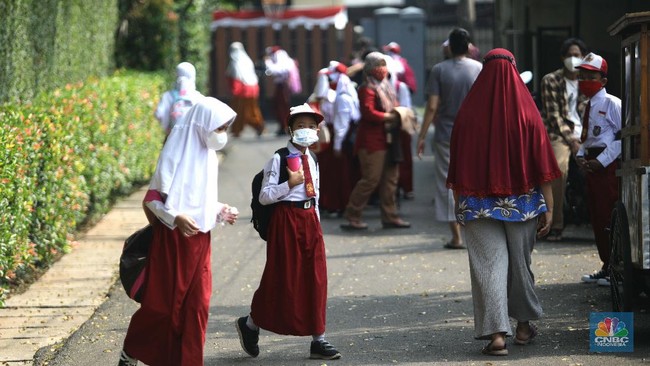
Indonesia currently ranks sixth in Southeast Asia according to the 2025 Programme for International Student Assessment (PISA) results. PISA scores serve as an international benchmark to evaluate the effectiveness of an education system and a nation’s human resource potential.
Eka Chandra Buana, Deputy for Macro Development Planning at the Ministry of National Development Planning/Bappenas, told CNBC Indonesia that the government has designed and is working towards improving the human capital index, specifically focusing on the face of Indonesian education. Improving PISA scores, according to Eka, is a vital foundation for human resource development to increase productivity and achieve Indonesia’s goal of becoming a developed nation.
One of the government’s efforts in this improvement is the construction of ‘Sekolah Rakyat’ (People’s Schools). Eka emphasised that these schools focus on equalising education for every Indonesian child, including those from underprivileged backgrounds. Students in these schools are taught greater discipline to foster superior character.
“Street children who have never had access are placed into schools with dormitory facilities and so on. There, they are taught discipline and togetherness, so that their eventual quality can be equal,” Elar told CNBC Indonesia.
In addition to student discipline, the government is also planning to enhance the curriculum, teaching staff, and infrastructure. Eka explained that to improve educational quality, the government is developing a curriculum that is interconnected with industry, ensuring students are prepared for the workforce or industrial sectors upon graduation.
Furthermore, the government is anticipating rapid technological advancements. Eka explained that the government is beginning to adopt a STEM (Science, Technology, Engineering, and Mathematics) approach to address technological disruption, which is being instilled from an early age.
Regarding teaching staff, Eka Chandra stated that the government is constantly striving to improve teacher welfare and quality, particularly addressing the disparity between teachers in cities and regional areas. Eka noted that teacher welfare inequality remains a significant task for the government.
“To be honest, regarding teachers, the welfare is quite good in places like Jakarta, where allowances are very high. However, if we look at several other regions, it is unbalanced. In Jakarta, operations and such are very good, but in the regions, they are not,” Eka continued.
Therefore, he believes that collaboration between the central and regional governments plays a significant role in equalising teacher welfare. For instance, the central government provides the budget policy, while the regional government acts as the executor. Additionally, improving educational governance is essential so that curriculum development, infrastructure, and teaching quality can improve and not fall behind other nations.
As reported by The Star, the 2025 PISA results released by the OECD in Paris placed Indonesia in sixth position, with scores of 389 for science, 364 for mathematics, and 365 for reading, while the CPS score was recorded at 427. This position places Indonesia sixth in Southeast Asia, behind Singapore (first), followed by Vietnam, Brunei Darussalam, Thailand, and Malaysia.
PISA is a large-scale international assessment organised by the OECD every three years. This assessment reflects the basic proficiency and competence levels of 15-year-old students in reading literacy, mathematics, and science. In 2025, the assessment also included computational problem-solving.
Source: jawawa.id (https://jawawa.id/newsitem/indonesias-grand-educational-vision-peoples-schools-vocational-training-and-teacher-welfare-1789966702)
Originally published by CNBC Indonesia (https://www.cnbcindonesia.com/news/20260921103636-4-769472/konsep-besar-pendidikan-ri-sekolah-rakyat-vokasi-guru-sejahtera), translated from Indonesian