
Indonesia's Geothermal Industry Marks 100 Years
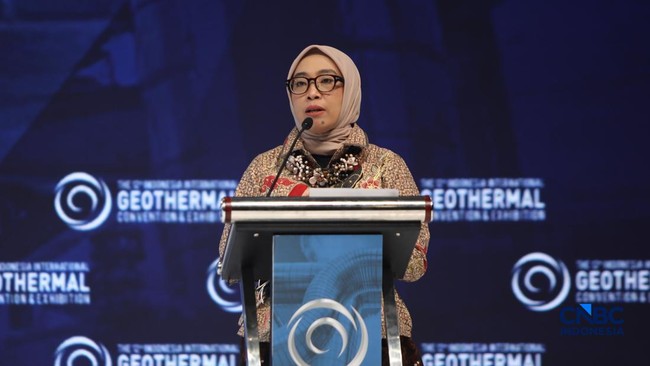
Indonesia’s geothermal industry has reached 100 years in 2026, with the first geothermal well drilled at Kamojang, Garut, West Java, in 1926. Director General of New Renewable Energy and Energy Conservation at the Ministry of Energy and Mineral Resources, Eniya Listiani Dewi, noted that despite reaching a century, the steam continues to flow and contribute to clean energy sources in the country. The Kamojang Geothermal Power Plant is now managed by PT Pertamina Geothermal Energy Tbk.
Speaking at the opening of the 12th Indonesia International Geothermal Convention & Exhibition in Jakarta, Eniya said geothermal energy can compete with diesel and fossil fuels such as coal because it can deliver electricity 24 hours a day. She stated that Indonesia’s installed geothermal capacity remains second in the world, and with the approved PLN Electricity Supply Business Plan, capacity is expected to rise by 5.2 GW, increasing the share of new renewable energy in the energy mix.
Eniya reported that the new renewable energy mix currently stands at 17 percent. In the first quarter of 2026 it briefly reached 18 percent, but fell to 16.8-17 percent after other non-renewable plants began operating. Within the renewable portion, biofuels such as Fatty Acid Methyl Ester contribute the largest share at 5.2 percent, followed by hydropower at 3.5 percent and geothermal at 2.2 percent. If geothermal capacity increases by 5.2 GW by 2034 under the 2025-2034 plan, geothermal’s share would rise to 4.5 percent. Solar power remains the smallest contributor at 0.5 percent.
Eniya also announced that the Minister of Energy and Mineral Resources has issued decrees for two geothermal working areas: Gunung Ungaran to PLN and Telaga Ranu to PT Telaga Ranu Geothermal. The minister has also assigned new preliminary survey and exploration work in Cubadak Panti, Pasaman and West Pasaman, West Sumatra, to PT Pertamina Geothermal Energy, and approved a preliminary survey for PT Cakrawala Bituang Geothermal in the Bituang working area, Tana Toraja and North Toraja, South Sulawesi.
The ministry is currently discussing a revision of Government Regulation Number 7 of 2017, including a breakthrough to make geothermal auctions a single-stage process. Eniya also highlighted the potential to utilise associated minerals from geothermal steam, particularly silica, and noted that geothermal steam can be used directly for hot water sources or drying coffee.
Geothermal non-tax state revenue reached Rp 2.45 trillion, with a target of Rp 2.6 trillion this year. Geothermal investment is targeted to rise to US$1.1 billion this year, and with new auctions, it is expected to reach US$2.2 billion, or around Rp 39 trillion, in 2026.
According to ministry data, Indonesia ranks second globally in installed geothermal capacity. Total geothermal potential is 23,202.77 MW, while installed capacity is about 2,776.39 MW, meaning only about 11.6 percent has been utilised. Sumatra has potential of about 9,441.10 MW, Java 7,587.80 MW, Sulawesi 3,006 MW, and Nusa Tenggara 1,272.87 MW. Kalimantan, Bali, Maluku, and Papua also have geothermal potential but no installed capacity yet. For 2026, the government is preparing development at two preliminary survey and exploration assignment locations and four geothermal working areas, with total resources of about 131 MW and additional capacity of about 185 MW.