
Indonesia's Geothermal Development Still Facing Obstacles, PGE Chief Offers These Suggestions
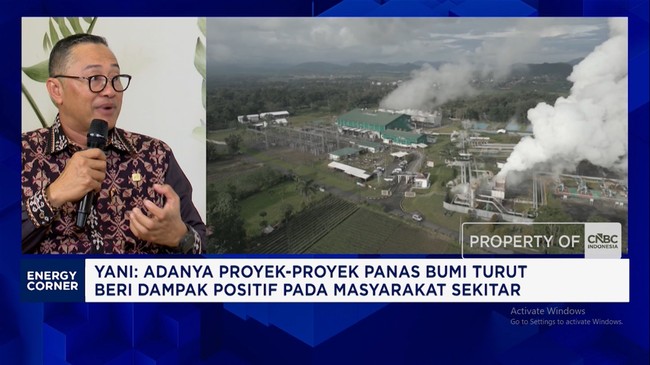
Indonesia faces a number of challenges in developing geothermal energy optimally, despite possessing abundant geothermal resources. Concerted efforts are therefore needed from all relevant parties to enhance the investment appeal of the geothermal sector.
President Director of PT Pertamina Geothermal Energy Tbk (PGEO), Ahmad Yani, said Indonesia has around 24 gigawatts (GW) of geothermal resource potential that could be developed to support the nation’s energy transition and self-sufficiency. Upon closer examination, 40% of the world’s geothermal potential is located in Indonesia. Within Southeast Asia alone, Indonesia controls around 84% of geothermal energy potential. This presents a strategic opportunity for Indonesia to maximise the use of clean energy in the national energy mix.
Unfortunately, the vast geothermal potential has not been matched by optimal utilisation. Of the total geothermal resource potential of around 24 GW, Indonesia has so far only been able to utilise 11%. This outcome is clearly a challenge that must be addressed by the government, business actors, investors and other stakeholders in the energy sector.
“We have enormous energy potential. This is something that deserves our collective attention: why are we not utilising this energy as much as possible? Of the 24 gigawatts available, only 11% is currently being utilised. This is our shared homework,” Ahmad said in Energy Corner, as reported on Thursday (20/8/2026).
Ahmad added that creating a business climate that makes geothermal projects financially viable and attractive to banks is one of the keys to accelerating the development of renewable energy in Indonesia. Consequently, discussions with the government are needed to calculate and refine policies, for example by improving Presidential Regulation (Perpres) Number 112 of 2022.
In addition, Ahmad considers the implementation of the Indonesia International Geothermal Convention & Exhibition (IIGCE) 2026 to be an important momentum for bringing together investors, independent power producers (IPPs), the government and industry players from various countries. IIGCE is not merely a forum for sharing experiences, but also a platform for finding solutions to various obstacles or bottlenecks in geothermal development in the country.
Specifically for PGE, Ahmad stated that the company already has a clear geothermal development pipeline. In other words, the main challenge for PGE at present is to remove various bottlenecks so that when the geothermal investment climate becomes feasible and bankable, investors can be attracted to enter and the industry can grow more quickly.
Furthermore, Ahmad continued, accelerating geothermal development will provide a multiplier effect for the Indonesian economy. In essence, geothermal development not only brings in investment worth billions of US dollars, but can also create jobs and have a positive impact on supporting industries. These benefits are expected to be felt by the government, the state, industry and the public.
“Indonesia happens to have enormous potential. This makes the whole world see that there is a business opportunity here that can be developed. This is a business worth billions of US dollars that can be developed and provide an extraordinary multiplier effect for the government and for the Indonesian people,” he concluded.