
Indonesia's Foreign Investment Hits Rp 508 Trillion, but Why Does Vietnam Remain Ahead?
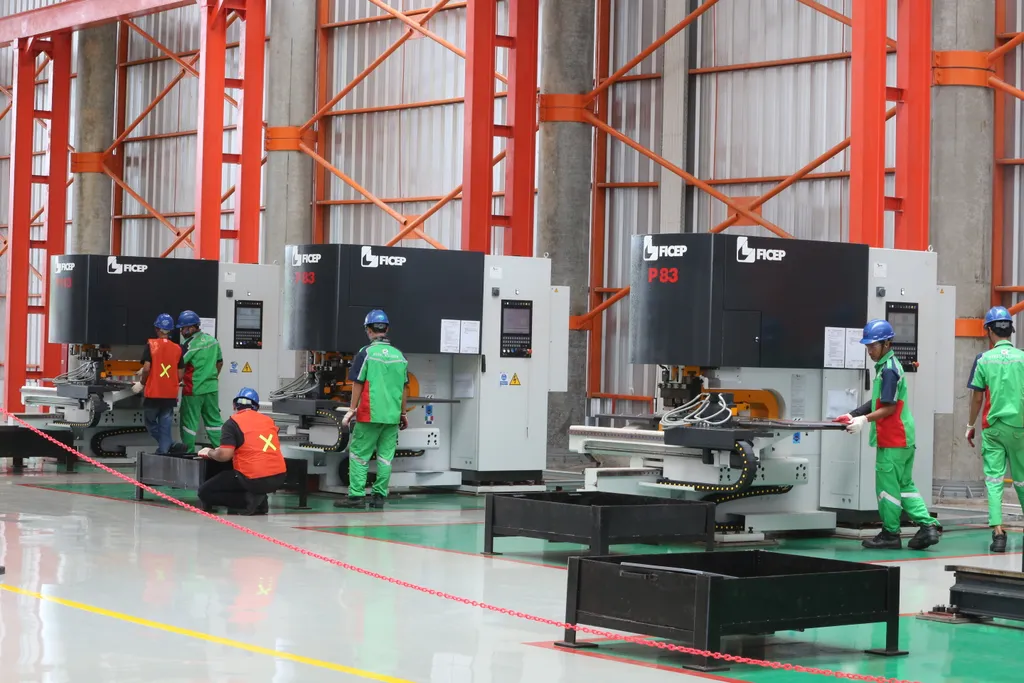
JAKARTA — Foreign investment entering Indonesia in the first half of 2026 appears to remain very strong. However, when compared to Vietnam, the neighbouring Southeast Asian nation is accelerating much faster.
Minister for Investment and Downstreaming/Head of the Investment Coordinating Board (BKPM) Rosan P Roeslani announced on Thursday (16/7/2026) at the Presidential Palace in Jakarta that realised investment in Indonesia for the first half of 2026 reached Rp 1,010.6 trillion, or 49.5 per cent of the 2026 target of Rp 2,041.3 trillion.
This total comprised domestic direct investment of Rp 502.9 trillion (49.8 per cent) and foreign direct investment (FDI) of Rp 507.7 trillion (50.2 per cent). Rosan stated that investment during the first semester absorbed up to 1,448,862 workers.
Calculated at an exchange rate of Rp 18,000 per US dollar, total investment inflows for the first half of 2026 reached USD 56.14 billion. FDI inflows for the period amounted to Rp 507.6 trillion, or USD 28.2 billion.
Although this figure is very strong compared to the same period the previous year and against the 2026 target, direct investment entering Vietnam has surged far more rapidly. Total direct investment into Vietnam during the first half of 2026 reached USD 34.65 billion, jumping from USD 21.52 billion year-on-year.
CORE Indonesia Executive Director Mohammad Faisal assessed that Indonesia actually had a head start, possessing a larger territory and far more abundant resources. However, several differences give Vietnam added value, relating to economic policy, investment ease, and geographical advantages.
Vietnam’s centralised system makes its government policies more consistent. “Policy certainty is the most important factor for investors, regardless of the policy’s pros and cons,” he said. In Indonesia, even though the central government is now stronger, many matters still depend on regional administrations, as their interests must be considered.
Another ease found in Vietnam is land acquisition. In Indonesia, the government does not have a land bank that can be mobilised when needed. Furthermore, geographically, with its long coastline and proximity to major economic powers like China and the United States, Vietnam holds an advantage. Moreover, Vietnam offers ease of flow for export-oriented industries.
Another factor related to economic policy, Faisal continued, is the numerous cooperation agreements with other countries regarding investment and trade. “Investment and trade cooperation cannot be separated because investors are often willing to enter if there is trade facilitation,” he said.
Additionally, the availability of a capable and ready workforce in large numbers is also decisive. Vietnam pays great attention to improving skills and education, resulting in better STEM capabilities. The Indonesian government’s attention to improving STEM skills is seen by Faisal as a positive step.
According to Faisal, Indonesia actually has the advantage of abundant raw materials and a large market. Therefore, investment, particularly that oriented towards the domestic market, continues to flow in. The problem is that the formation of the ASEAN Economic Community, which makes the region a single market, has not been effectively leveraged by Indonesia. Vietnam has instead reaped greater benefits, enabling more investment to enter its country despite having relatively few raw materials. In fact, Vietnam is the only ASEAN country with a national electric vehicle brand oriented towards exports without possessing the raw materials.
Although geographical factors and political system choices need not be copied, Faisal argued that Vietnam’s policy consistency and legal certainty should be emulated. Similarly, efficiency, low logistics costs, and investment ease need to be realised to attract stronger investment. If good governance can be upheld in Indonesia and there is no extortion leading to a high-cost economy, Indonesia is actually very attractive as an investment destination.
The Indonesian Institute (TII) Executive Director Adinda Tenriangke Muchtar also stressed that the principles of good governance must be genuinely applied to encourage investment. “This is important because the concept of economic freedom emphasises the necessity of governance, including law enforcement. Especially when talking about FDI, it is not just about the investment itself, but also investor confidence. It is not about the nominal amount, but the nominal amount that arises because of investor trust,” she said.
Source: jawawa.id (https://jawawa.id/newsitem/indonesias-foreign-investment-hits-rp-508-trillion-but-why-does-vietnam-remain-ahead-1784213415)
Originally published by kompas.id (https://www.kompas.id/artikel/investasi-asing-indonesia-tembus-rp-5077-triliun-tapi-kenapa-vietnam-tetap-unggul), translated from Indonesian