
Indonesia's Food Security: Do Not Merely Chase Production
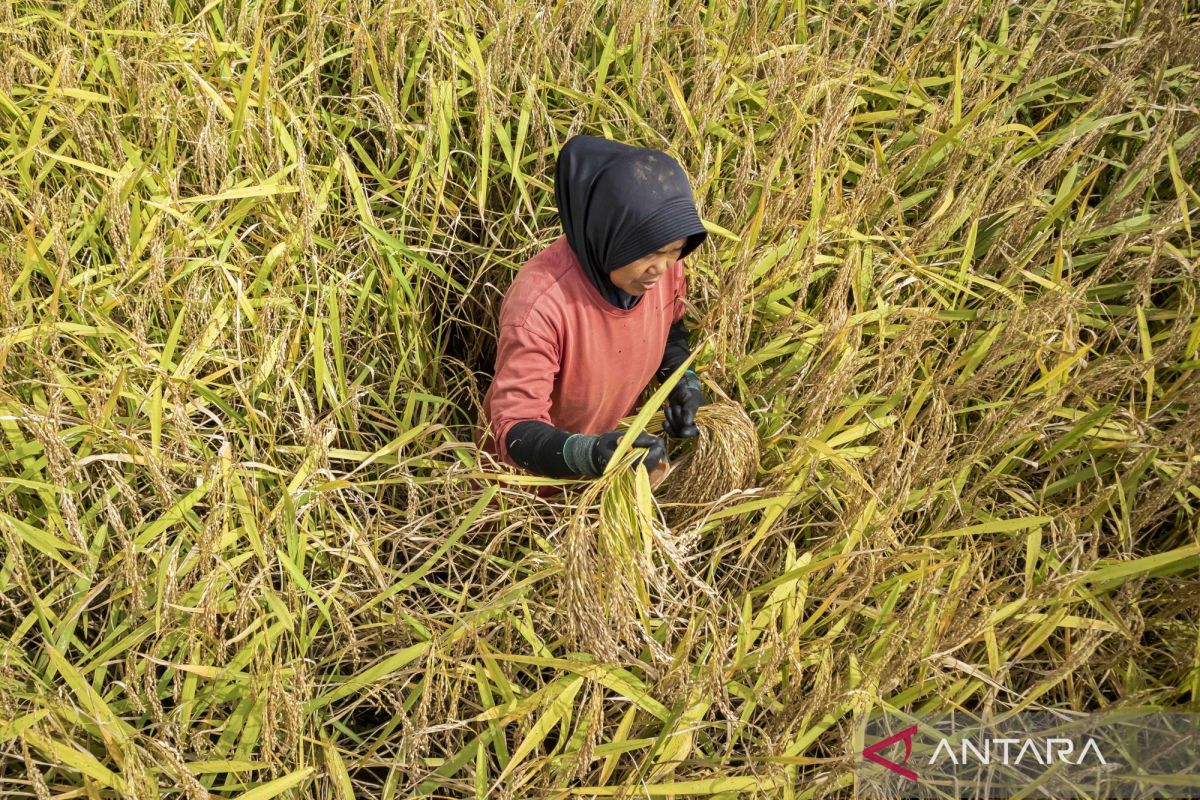
Jakarta (ANTARA) - The decline in global hunger provides a reason for optimism, but simultaneously serves as a reminder that the food issue is not yet resolved. The “State of Food Security and Nutrition in the World 2026” report shows that approximately 645 million people still experience hunger in 2025, although this figure has decreased by nearly 14 million compared to the previous year.
However, food insecurity remains more prevalent in rural areas and disproportionately affects women. An important message from this development is that food security cannot be measured solely by the volume of food produced.
Food security is also determined by the ability of communities to access food at affordable prices, the sustainability of production, farmers’ incomes, and the resilience of food systems in the face of climate change.
For Indonesia, this issue is becoming increasingly strategic. Indonesia has a population of over 280 million, and rice remains the staple food for the majority of the population. Therefore, an increase in rice production is good news.
Data from the Central Bureau of Statistics shows that in 2025, the paddy harvesting area reached approximately 11.32 million hectares, an increase of 12.69 per cent compared to 2024. Paddy production reached 60.21 million tonnes of dry milled grain (GKG), up 13.29 per cent, while rice production for domestic consumption reached 34.69 million tonnes, an increase of 4.07 million tonnes or 13.29 per cent from 2024.
These figures are certainly commendable. Rice production in 2025 is even above national consumption needs, which, according to government data, is around 31 million tonnes.
There is a fundamental difference between food security and food self-sufficiency. Self-sufficiency primarily concerns the ability to produce food domestically. Food security is much broader; it involves availability, access, utilisation, nutritional quality, price stability, and the ability of the food system to withstand various shocks.
A country can produce large quantities of rice, but low-income communities can still experience food insecurity if food prices are too high or if their incomes are too low. Indonesia’s own experience demonstrates this issue.
In 2025, rice production increased sharply, yet rice prices still faced pressure. In August 2025, medium-grade rice prices were reported to have reached approximately Rp15,950 per kilogram, up nearly 5 per cent since the beginning of the year and more than 24 per cent compared to the start of 2023. This indicates that high production does not necessarily result in food that is cheap and easily accessible to consumers.
Source: jawawa.id (https://jawawa.id/newsitem/indonesias-food-security-do-not-merely-chase-production-1788426676)
Originally published by Antara (Indonesian) (https://www.antaranews.com/berita/5724225/ketahanan-pangan-indonesia-jangan-hanya-mengejar-produksi), translated from Indonesian