
Indonesia’s Food Inflation Ranks Among the Top Three, with the Philippines and India Worst Hit
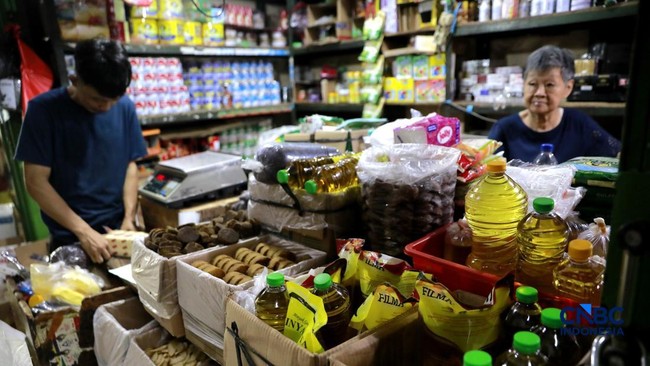
Jakarta, CNBC Indonesia — Inflationary pressure from rising energy and food prices is affecting not only Indonesia but also a number of emerging economies. Although Indonesia’s overall inflation is relatively lower than in some countries, domestic food price pressures remain high.
According to data from the Institute for Economic and Social Research at the Faculty of Economics and Business, University of Indonesia (LPEM FEB UI), Indonesia’s annual headline inflation in August 2026 was 3.19% year on year (yoy). This was lower than the Philippines’ 6.15%, India’s 4.82% and South Africa’s 4.17%.
However, Indonesia’s inflation was higher than Thailand’s 2.53% and Malaysia’s 1.93%.
LPEM FEB UI said the escalation of conflict in the Middle East, which has kept crude oil prices high, and the US Federal Reserve’s still relatively tight policy stance were external factors affecting inflation across these countries.
“The escalation of conflict in the Middle East, which has kept crude oil prices high, and the Fed’s still relatively tight policy stance are broadly common external factors for this group of countries,” LPEM FEB UI wrote in its report, cited on Tuesday (20 October 2026).
Despite facing broadly similar external pressures, the scale and composition of inflation differ from country to country. These differences reflect household consumption patterns, energy subsidy policies, food supply conditions, and each country’s inflation policies and targets.
The Philippines recorded the highest headline inflation, driven mainly by a 19.4% yoy surge in rice prices and rising domestic transport costs.
Malaysia, by contrast, had the lowest inflation among the six countries compared. Price rises there were relatively limited and came from transport, food and housing.
Thailand’s inflation remained relatively low, although it began to rise as fuel and food prices increased.
Indonesia’s food inflation among the top three
Despite relatively contained headline inflation, food price pressures in Indonesia were high compared with those in the countries used for comparison.
LPEM FEB UI recorded Indonesian food inflation of 3.86% yoy in August 2026. This placed Indonesia third-highest, behind India at 5.66% and the Philippines at 4.56%.
Food inflation was 2.99% in Thailand and 1.90% in Malaysia, while South Africa had the lowest rate, at 0.86%.
“Despite differences in each country’s food expenditure basket, these price increases provide a relative indication that food price pressures are occurring not only in Indonesia but also in several other emerging economies,” LPEM FEB UI said.
In India, high food inflation was driven mainly by sharp price increases for spices such as ginger, shallots and garlic. At the same time, the prices of some vegetables, including tomatoes and potatoes, fell.
Food inflation in South Africa remained very low, edging up only slightly after nine months.
Energy prices vary with government policy
Differences in inflationary pressure between countries were also evident in the energy category. The Philippines recorded the highest energy inflation, at 16.79% yoy, driven by rising transport fuel costs and utility charges.
South Africa followed with energy inflation of 7.35%, partly due to higher electricity tariffs. The country’s energy regulator, NERSA, approved an electricity tariff increase for Eskom of about 8.76% for direct customers from 1 April 2026 and 9.01% for municipal customers from 1 July 2026.
By contrast, Thailand’s energy prices fell 0.44% year on year.
Indonesia’s energy inflation was 3.18% yoy, broadly comparable with India’s 3.10% and Malaysia’s 3.26%.
LPEM FEB UI cautioned that energy inflation comparisons should not be used as the sole measure of countries’ success in controlling inflation. However, they show how broadly similar global oil price pressures can have different effects, depending on each government’s energy pricing policies, particularly for electricity and fuel.
In Indonesia, the impact of higher crude oil prices on inflation has been relatively contained because the government has ensured that the prices of widely used subsidised fuels, Pertalite and Biosolar, will not rise until the end of 2026, LPEM FEB UI said.
Thus, although Indonesia’s headline inflation remains mid-range compared with the countries examined, food price pressures still warrant close attention. Food commodity prices and energy policy will be important factors shaping the future direction of domestic inflation.
Source: jawawa.id (https://jawawa.id/newsitem/indonesias-food-inflation-ranks-among-the-top-three-with-the-philippines-and-india-worst-hit-1792482670)
Originally published by CNBC Indonesia (https://www.cnbcindonesia.com/news/20261020132152-4-777848/inflasi-pangan-ri-masuk-3-besar-filipina-india-terparah), translated from Indonesian