
Indonesia's Food Inflation and the Concept of Price Justice in Islamic Economics
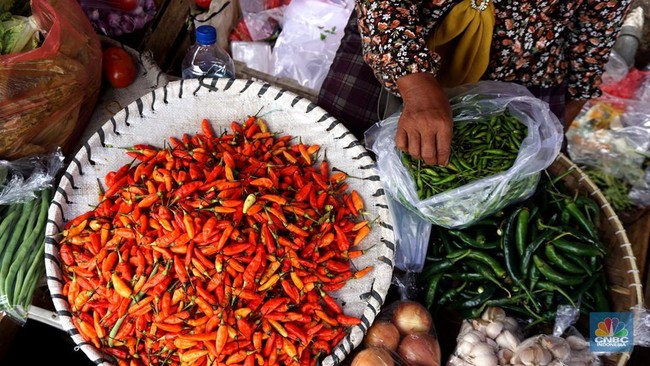
No economic issue is felt more quickly by the public than rising food prices. When the prices of rice, chillies, shallots, cooking oil, eggs, or meat increase, the impact is immediately felt at every family’s dining table, unlike price hikes for other consumer goods which only affect certain groups. Food inflation touches all levels of society, especially low-income households that allocate the majority of their expenditure to food needs. Therefore, food inflation is not merely a matter of statistical figures, but a question of social justice and public welfare.
In recent years, Indonesia has been relatively successful in maintaining economic stability amidst various global uncertainties. However, pressure on food prices remains a recurring challenge. Climate disruptions, changes in planting season patterns, high distribution costs, fluctuations in global commodity prices, and the inefficiency of domestic supply chains make food prices prone to volatility. This situation shows that national economic stability is still heavily influenced by the ability to maintain food supply and distribution. Data from the Central Statistics Agency (BPS) shows that Indonesia’s annual inflation in June 2026 reached 3.34 per cent. The food, beverages, and tobacco group remained one of the main contributors to national inflation. Meanwhile, Bank Indonesia recorded that inflation for the volatile food component was still in the range of 5.58 per cent (year-on-year). Although lower than the previous month, this figure indicates that food price pressure remains a major challenge in controlling national inflation.
This data sends an important message that maintaining general inflation does not automatically mean the food problem is solved. Indeed, Indonesia’s experience shows that the public feels changes in the prices of basic necessities far more than changes in the national inflation rate. If the price of chillies doubles within a few weeks, for instance, it is felt much more acutely than a change in inflation of a few basis points. This phenomenon serves as a reminder that food inflation should not be viewed solely as a matter of balance between supply and demand. It is also a matter of justice within the economic system. Who profits when prices soar? Who is most disadvantaged? Do farmers truly enjoy the price increase, or are the profits enjoyed by the long distribution chain? These questions become increasingly relevant when we observe the persistent wide gap between prices at the producer and consumer levels.
Ironically, many farmers sell their harvests at low prices when production is abundant. A few months later, the same commodity is sold to consumers at a price several times higher. This means that a price increase at the consumer level is not always synonymous with improved farmer welfare. In many cases, the main problem lies in inefficient distribution, trading systems, and market structures. This perspective distinguishes Islamic economics from economic approaches that view price merely as the result of the interaction between supply and demand. In Islamic economics, price is not just a number formed in the market, but must reflect the values of justice, public benefit, and balance for all economic actors.
This concept is known through the idea of tsaman al-mitsl, or the just and fair price. Ibn Taimiyah explained that a just price is one formed naturally through a market mechanism free from hoarding (ihtikar), monopoly, information manipulation, fraud (tadlis), and supply engineering. As long as the market operates healthily, the state does not need to set prices. However, when distortions occur that harm the public, the state has an obligation to intervene to restore justice. This view is highly relevant to Indonesia’s current conditions. Food price increases are often not solely due to declining production, but because of overly long distribution chains, high logistics costs, weak storage infrastructure, and speculative practices that exploit moments of scarcity. Under such conditions, the market mechanism no longer produces a fair price.
Islam does not reject profit; trade is even a highly respected activity. However, profit must not be obtained through means that harm society. The Prophet Muhammad explicitly forbade the hoarding of staple goods because this act creates artificial scarcity that drives prices up unreasonably. This prohibition shows that market freedom in Islam is always framed by moral responsibility and public interest. Furthermore, food price stability is essentially part of the implementation of maqashid shariah. The objectives of sharia not only regulate the relationship between humans and God, but also safeguard human life through the protection of the soul (hifz al-nafs), wealth (hifz al-mal), and progeny (hifz al-nasl). When food prices rise sharply, poor families typically reduce their consumption of nutritious food first. The impact is not only a decline in the quality of today’s consumption, but also an increased risk of stunting, malnutrition, and a lower quality of human resources in the future. Thus, controlling food inflation is not solely aimed at maintaining macroeconomic stability, but is also part of the effort to build the quality of the nation’s generation.
Source: jawawa.id (https://jawawa.id/newsitem/indonesias-food-inflation-and-the-concept-of-price-justice-in-islamic-economics-1784515867)
Originally published by CNBC Indonesia (https://www.cnbcindonesia.com/opini/20260720090831-14-752074/inflasi-pangan-indonesia-dan-konsep-keadilan-harga-dalam-ekonomi-islam), translated from Indonesian