
Indonesia's First President Complains That His Salary Is Insufficient, Has to Borrow from Aide
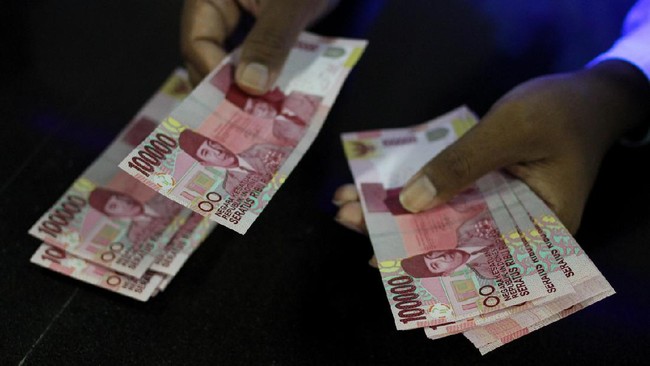
Jakarta, CNBC Indonesia - Indonesia’s first president, Soekarno, once complained about the meagre salary he received, to the point that he frequently had to borrow money, even from his own aide, amid the still chaotic state of the country’s economy in the early days of independence.
Shortly after the proclamation, the government set the president’s salary at f.1,000 per month through Government Decree No. 1/O.P in November 1945. In 1945, 1 gulden was equivalent to Rp1 rupiah. This means f.1,000 equated to Rp 1,000.
However, this amount was temporary, adjusted to the precarious conditions of the country at the time. For the palace family, this sum was considered very limited.
In her memoir Fatmawati: Catatan Kecil Bersama Bung Karno (2017), the First Lady Fatmawati recounted that every month she received an envelope containing Bung Karno’s salary, which was a paltry amount. This money had to be stretched to cover the family’s food needs and other household expenses, as there was only one source of income.
“I myself did not earn any money to help meet our needs,” Fatmawati revealed.
This state of severe limitation was also acknowledged directly by Soekarno. In his autobiography Bung Karno: Penyambung Lidah Rakyat Indonesia (1965), he admitted to often struggling to meet his family’s needs.
“And is there any other head of state as destitute as I am, who often has to borrow from his aides? My salary is US$200 a month and it is not enough to meet my family’s needs,” he recalled.
This candid revelation illustrates the harsh economic conditions even at the level of the head of state in the early days of the republic. This situation was inseparable from Indonesia’s position as a newly independent nation on 17 August 1945, without a strong economic foundation.
At that time, Indonesia faced hyperinflation, damaged infrastructure, disrupted distribution channels, and an administrative system that was not yet organised. On the other hand, the war to defend independence against the Dutch also drained a large budget.
The situation worsened after the Dutch implemented an economic blockade that hindered export-import activities and narrowed the state’s revenue. As a result, the government had to find various ways to survive, from pooling resources to selling assets that could still generate funds.
Amid this pressure, the president’s salary was also affected. Soekarno had to lead a simple life, far from the luxurious image often associated with heads of state.