
Indonesia's Financial Literacy, Inclusion Index Rises in 2026
Indonesia’s Financial Literacy, Inclusion Index Rises in 2026
Reporter
August 11, 2026 | 02:17 pm
TEMPO.CO, Jakarta - The Financial Services Authority (OJK) reports that financial literacy and inclusion levels among Indonesians expanded in 2026. Results from the 2026 National Survey on Financial Literacy and Inclusion (SNLIK) show an increase in public understanding of financial products and services, alongside broader access to them.
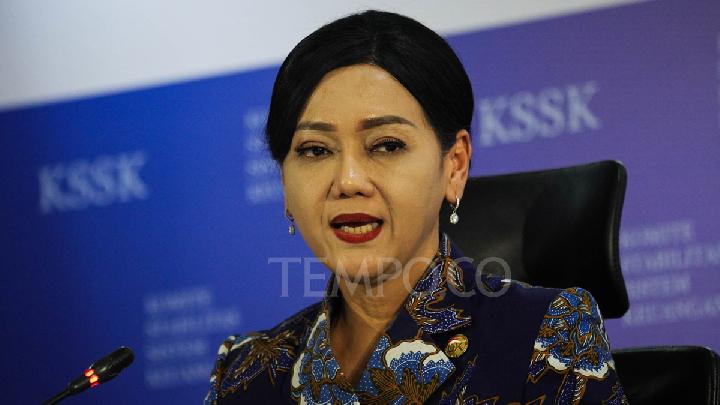
Friderica Widyasari Dewi, Chair of the OJK Board of Commissioners, stated that the national financial literacy index climbed from 66.64 percent in 2025 to 69.57 percent in 2026. “The educational approach certainly cannot be one-size-fits-all; we need a life-cycle approach to financial literacy,” Friderica said during a press conference on the 2026 SNLIK findings at the Central Statistics Agency (BPS) headquarters in Jakarta on Monday, August 10, 2026.
Jointly conducted by the OJK, BPS, and the Deposit Insurance Corporation (LPS), the 2026 SNLIK survey registered a rise in the financial inclusion index from 92.74 percent in 2025 to 93.61 percent in 2026. This uptick aligns with expanding public access to formal financial institutions.
Broken down by gender, the financial literacy index for women surpassed that of men in 2026 for the first time. Financial literacy among women increased from 65.73 percent in 2025 to 69.61 percent in 2026. Meanwhile, financial literacy among men grew from 67.53 percent to 69.54 percent. Furthermore, the financial inclusion index for women reached 93.73 percent, outpacing men at 93.49 percent.
By occupational group, employees and professionals recorded the highest financial literacy level at 85.12 percent, alongside an inclusion rate of 98.89 percent. Retirees saw their literacy rate jump from 74.11 percent to 85.15 percent, with financial inclusion reaching 99.54 percent. Entrepreneurs and self-employed individuals registered a literacy rate of 76.51 percent and an inclusion rate of 96.03 percent.
Homemakers logged a literacy rate of 68.36 percent and a financial inclusion rate of 93.72 percent. Meanwhile, student financial literacy edged up from 61.76 percent to 62.72 percent, with an inclusion rate of 92.76 percent. Farmers, livestock breeders, plantation workers, and fishermen recorded a literacy rate of 59.75 percent, while their financial inclusion stood at 87.82 percent.
Unemployed individuals still registered the lowest literacy rate at 53.89 percent. However, that mark represents an improvement from the 49.46 percent logged in 2025. Financial inclusion for this demographic also expanded from 84.04 percent to 89.59 percent.
This year’s SNLIK surveyed 75,000 respondents across 38 provinces and 514 regencies and cities across Indonesia. Data collection was conducted through face-to-face interviews using Computer-Assisted Personal Interviewing (CAPI) to guarantee that the gathered data was relevant, accurate, and nationally representative.
Read: Danantara Prepares to Acquire Stake in Indonesia Stock Exchange
Click here to get the latest news updates from Tempo on Google News