
Indonesia's EV Battery Plant to Operate End of July 2026, Buyers Already Lined Up
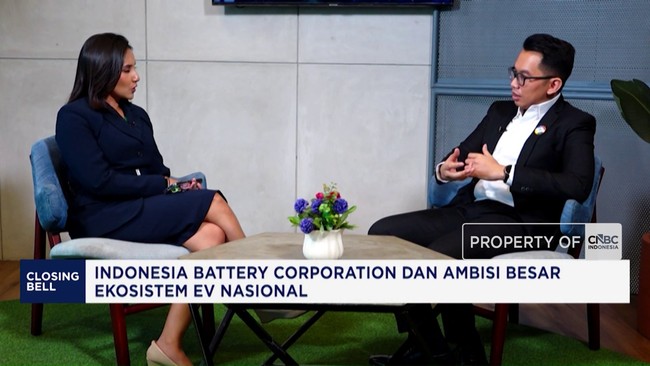
Indonesia Battery Corporation (IBC) has announced that the electric vehicle battery plant owned by PT Contemporary Amperex Technology Indonesia Battery (CATIB) is targeted to begin operations by the end of July 2026. Ahead of the plant’s commissioning, IBC has confirmed it already has prospective buyers. IBC President Director Aditya Farhan Arif stated that demand for batteries from the electric vehicle sector already exists, including from an existing Japanese automotive manufacturer. “Currently, the existing buyer that is already confirmed comes from the EV sector, specifically a Japanese manufacturer,” Aditya told CNBC Indonesia. Additionally, CATIB has the opportunity to supply batteries to the Energy Storage System (ESS) market. The need for ESS is expected to continue rising in line with the massive adoption of new and renewable energy across various countries. Energy storage systems are a critical component for maintaining the stability of electricity supply from intermittent renewable sources such as solar power plants and wind power plants. “Furthermore, if we discuss electric vehicle batteries specifically using nickel-based cathodes, the European Union is a very strong candidate for that market,” he added. Indonesia is currently building an integrated electric vehicle battery factory ecosystem, claimed to be the largest in Asia. This is supported by the country’s large reserves of nickel, the main raw material for battery components. The upstream-to-downstream integrated battery ecosystem project is operated by PT Aneka Tambang (Antam), Indonesia Battery Corporation (IBC), and Chinese company Ningbo Contemporary Brunp Lygend Co. Ltd. (CBL), a joint venture between CATL, Brunp, and Lygend. The total initial investment for the entire integrated upstream-to-downstream battery project amounts to US$5.9 billion, equivalent to Rp96.04 trillion. The project consists of six joint ventures spanning upstream to downstream activities. The upstream ecosystem comprises JV 1, a nickel mining project by PT Sumberdaya Arindo with a production capacity of 7.8 million wet metric tons of saprolite and 6 million wet metric tons of limonite, which began production in 2023. JV 2 is an RKEF nickel smelter facility by PT Feni Haltim with a capacity of 88,000 tonnes of refined nickel alloy per year, targeting initial production in 2027. JV 3 is an HPAL nickel smelter facility by PT Nickel Cobalt Halmahera with a capacity of 55,000 tonnes of MHP per year, targeting production in 2028. The downstream ecosystem includes JV 4, a battery materials project in East Halmahera producing cathode materials, cobalt sulphate, and ternary precursors with a capacity of 30,000 tonnes of Li-hydroxide, targeting 2028. JV 5 is the battery cell project by CATIB located in Artha Industrial Hill and Karawang New Industry City, with a total capacity of 15 GWh per year, targeting production for Phase 1 in 2026 and Phase 2 in 2028. JV 6 is a battery recycling project in East Halmahera with a capacity of 20,000 tonnes of metal per year, targeting 2031.