
Indonesia's Energy Transition Requires Investment and Multi-Stakeholder Collaboration
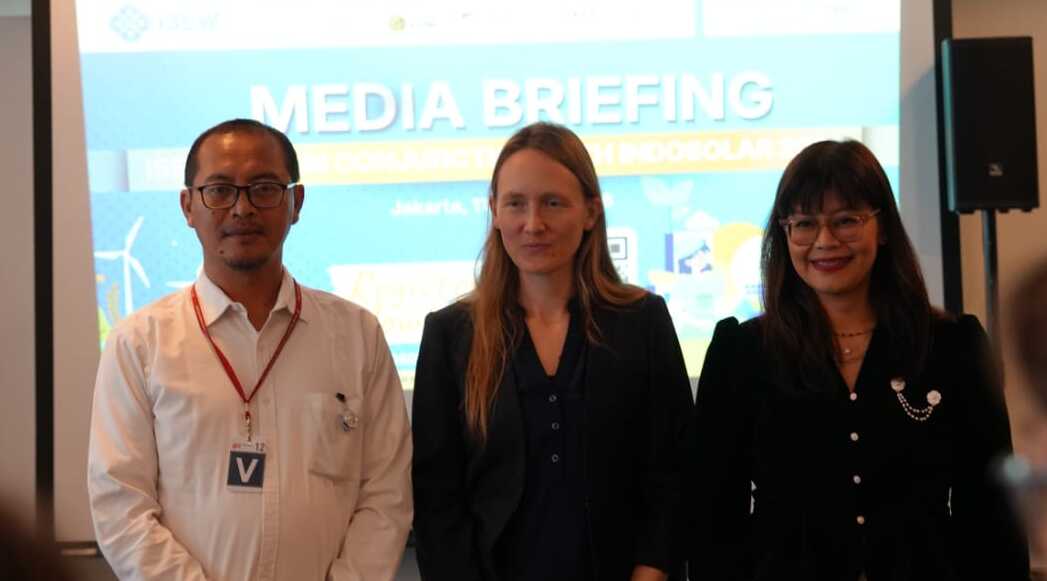
Indonesia’s energy transition requires investment and multi-stakeholder collaboration to ensure that the targets that have been set can be translated into projects and tangible implementation. Strengthening synergy between the government, the private sector, investors, technology players, academics, development partners, and the public is important to accelerate the development of renewable energy.
This is the main focus of the Indonesia Sustainable Energy Week (ISEW) 2026, which will be held on 19–20 August 2026 at the Fairmont Hotel Jakarta. The event is organised by the Ministry of National Development Planning/Bappenas and the Ministry of Energy and Mineral Resources (ESDM), with support from the German Government, and is organised by Deutsche Gesellschaft für Internationale Zusammenarbeit (GIZ) Indonesia & ASEAN.
This forum brings together policymakers, business actors, investors, academics, development partners, and innovators to exchange perspectives, identify opportunities, and build partnerships to support the acceleration of a sustainable energy transition in Indonesia.
“The energy transition is an inseparable part of Indonesia’s long-term development agenda,” said Yusuf Suryanto, Director of Transmission, Electricity, Aerospace, and Space at the Ministry of National Development Planning/Bappenas, in his statement.
According to him, Indonesia’s future challenge is not only setting targets, but also ensuring that these targets can be realised in the form of investment, projects, and tangible benefits for the economy and society.
“These targets must be translated into investment, projects, and tangible benefits for the economy and society,” he said.
The first day of ISEW 2026, on 19 August, will carry the theme From Targets to Action: Realising Indonesia’s Energy Transition. A number of topics to be discussed include energy security, private sector participation, electricity sector reform, waste management of renewable energy technology, community involvement in large-scale renewable energy projects, and the use of solar energy for the fisheries sector.
The forum will also highlight Indonesia-Germany energy cooperation in supporting the national energy transition, including through policy dialogue, technology exchange, innovation, and the development of concrete solutions.
Lisa Tinschert, Director of the Energy Programme at GIZ Indonesia & ASEAN, said that ISEW is designed to connect various discussions on the energy transition that have so far been running separately.
“Policy needs to meet investment, while technology must answer real implementation challenges,” said Lisa.
According to her, ISEW is not only a space for exchanging ideas, but also a platform for building connections and partnerships that can help translate Indonesia’s energy transition ambitions into concrete action.
On 20 August, ISEW discussions will focus on mobilising private sector investment and innovation. The agenda includes large-scale renewable energy financing, project de-risking strategies, industrial decarbonisation, renewable energy procurement, and various obstacles in the implementation of renewable energy projects.
Mada Ayu Habsari, Chairperson of the Indonesian Solar Energy Association (AESI), said that the collaboration between Indosolar and ISEW is expected to strengthen the relationship between government policy and industry needs.
“We want to strengthen the bridge between policy and industry needs,” said Mada.