
Indonesia's Energy Supply Remains Secure, DPR Reveals Key Strategy
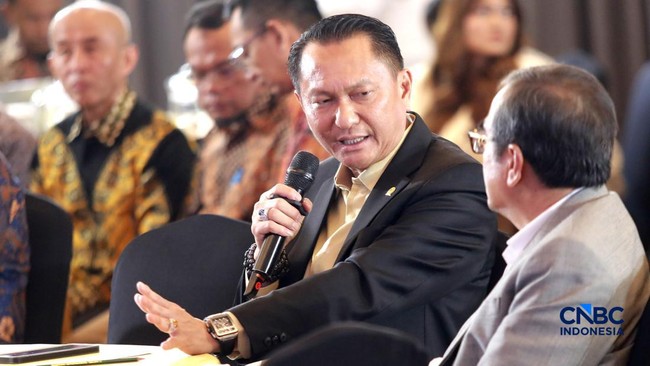
The Chairman of Indonesia’s House of Representatives (DPR) Commission XII, Bambang Patijaya, has stated that the country remains in a secure position regarding energy resilience and supply, despite global challenges. He noted that JPMorgan recently ranked Indonesia second in the world for energy resilience. “From March until now, Indonesia’s energy resilience has been fine. Although there are challenges and issues, all problems can be overcome because we are under pressure,” Bambang said at the CNBC Indonesia Energy Forum in Jakarta on Thursday. He confirmed that the supply of subsidised fuel is guaranteed until the end of this year.
To ensure continued energy security, Bambang pointed to a regulation that facilitates agility in energy procurement through Lemigas. The agency will act as an extension of the state, simplifying agreements with partner countries. “Lemigas has been given the mandate to conduct direct procurement with various criteria, and all the aggregation taken by the government can guarantee supply availability,” he explained.
Beyond subsidised fuel, Bambang also addressed non-subsidised fuel, which is supposed to follow market mechanisms. However, the government continues to intervene, setting prices below the economic cost. “We must be open that the capital for RON 92 is around US$1.1 per litre, or Rp 19,000, but the government has capped the selling price at Rp 16,220 per litre. This means the public should know that the government is intervening even for non-subsidised goods,” he stated. He praised the government’s efforts in securing supply, adding that the LPG situation is also relatively safe. “If there are problems, everything can be recovered. Diversification in the global supply chain is already extensive. The situation in March-April was worrying, but government intervention was extraordinary; Pertamina was not left to struggle alone,” he said.
Regarding the energy transition, Bambang highlighted the government’s aggressive push to optimise biodiesel use, moving from B40 to B50. He asserted that no other country has dared to implement such a high mandatory biodiesel blend, with most others only reaching 10-20%. “The closest is Malaysia, which is still at B10-B20. But we will have B50 by 1 July, and this is not easy,” he stressed. At the same forum, National Energy Council member Mohammad Fadhil Hasan emphasised the need for Indonesia to continue diversifying its energy resources, especially given rising geopolitical tensions and the Middle East conflict. He warned against complacency, stating that consistency in driving the energy transition programme is essential for the future.