
Indonesia's Electronics Factory Output Stagnates, Three Main Culprits Weigh Heavy
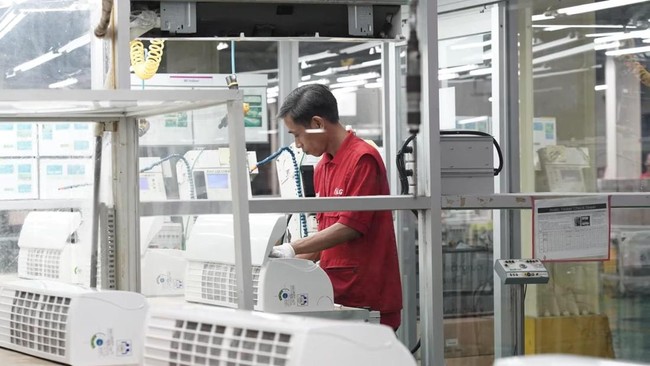
The national electronics industry is facing pressure that has kept factory utilisation rates hovering around 65%. This condition is seen as a signal that domestic market demand has not truly recovered, while businesses must also contend with various challenges simultaneously.
Deny Irawan, Chairman of the Indonesian Electronics Commodity Entrepreneurs Association (Apkonik), said the low industrial utilisation cannot be viewed as a single issue. According to him, the weakening of people’s purchasing power, changes in consumer behaviour, the influx of imported products, and high interest rates are interrelated factors that are suppressing the national electronics industry.
‘From changes in consumer behaviour, declining purchasing power, and then on the other hand, what is also burdensome are perhaps several factors such as the large number of imported products entering the market, which also makes our industry’s outlook very depressed,’ Deny told CNBC Indonesia on Monday (27/7/2026).
Conditions on the ground show that public demand is still fluctuating. As a result, companies must be more cautious in managing production because they have yet to see any certainty in the recovery of household consumption.
‘Speaking about the buying and selling cycle in the electronics industry process, it is still fluctuating, so it still mirrors the demand from people’s purchasing power. Actually, if I look at the field or the reality, our buyers usually tend to delay purchases a little,’ he said.
In addition to changes in consumer behaviour, Deny assesses that the pressure on the industry also stems from a combination of several economic factors occurring simultaneously. According to him, weakening purchasing power, high costs due to interest rates, and competition with imported products are narrowing the industry’s room for manoeuvre.
‘The three are related because demand, purchasing power, and the production felt by the industry cannot be separated, coupled with continuously rising interest rates,’ he said.
He cautioned that this condition could trigger a greater impact if not anticipated promptly. According to him, when demand continues to weaken, companies have little choice but to adjust production volumes to keep operations running.
‘The first thing to be affected is a decline in sales. And this will also put pressure on the electronics industry. When demand weakens, companies will certainly make production adjustments,’ he said.
Nevertheless, Deny remains optimistic that the electronics industry still has an opportunity to recover if the government and business players can strengthen collaboration in formulating policies that support the business climate. He believes industrial utilisation will not remain at the current level if these steps are taken immediately.
‘We are optimistic that this can continue to grow and not stagnate at this 65% figure. This certainly will not stagnate; it will definitely continue to grow. I am optimistic about that,’ said Deny.