
Indonesia's Electrification Ratio Increases, Reaching 99.38% in Q1 2026
The Ministry of Energy and Mineral Resources (ESDM) has recorded that the national electrification ratio reached 99.83% as of the first quarter of 2026. This demonstrates the equitable distribution of electricity access compared to the realisation ten years ago in 2016, which stood at only 91.16%.
The Acting Director General of Electricity at the Ministry of ESDM, Tri Winarno, explained that the government continues to strive towards achieving full electrification across all regions of Indonesia. Tri noted that the majority of provinces in Indonesia currently have electricity access above 95%, with regions such as DKI Jakarta and Bali having reached 100%.
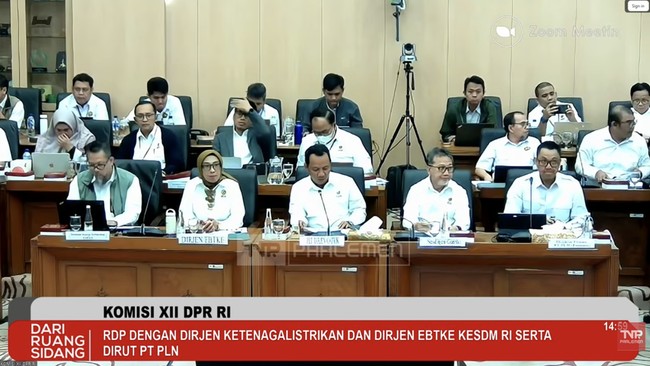
“Based on data from the first quarter of 2026, the electrification ratio in Indonesia reached 99.83%, a significant increase from 91.16% in 2016. This achievement shows that electricity access for the Indonesian people is becoming more tangible and is approaching full electrification,” he stated during a Hearing Meeting (RDP) with Commission XII of the Indonesian House of Representatives (DPR RI) on Monday (8/6/2026).
The government is currently intensifying the Village Electricity Programme (Lisdes) to reach 10,685 locations nationwide that are currently without electricity. Most of these unserved areas are concentrated in Eastern Indonesia due to geographical challenges.
“In 2025, there were 10,685 locations without electricity across Indonesia, with the largest concentration in the Maluku, Papua, and Nusa Tenggara regions, amounting to 5,555 locations or more than 55% of our total plan,” said Tri.
As of April 2026, the total installed capacity of national power plants reached 108 Gigawatts (GW). Of this capacity, 73% or approximately 79.05 GW is managed by PT PLN (Persero) alongside Independent Power Producers (IPP), which serve as the backbone of the nation’s electricity system.
“The total installed capacity of national power plants as of April 2026 reached 108 GW, of which 79.05 GW or 73% falls within PLN’s business area, managed by both PLN itself and IPPs,” he explained.
Regarding the energy mix, the portion of New and Renewable Energy (EBT) showed positive performance with a realisation of 17.89% up to April 2026. This figure exceeded the initial target of 16.46%, even though national power plant operations are still dominated by fossil fuels.
“EBT, as seen in 2025, experienced an increase exceeding the target, with a realisation trend of 17.89% against a target of 16.46%. This portion is certainly encouraging and demonstrates the positive performance of new and renewable energy,” he concluded.