
Indonesia's Economy Shows Resilience Amid Global and Regional Pressures
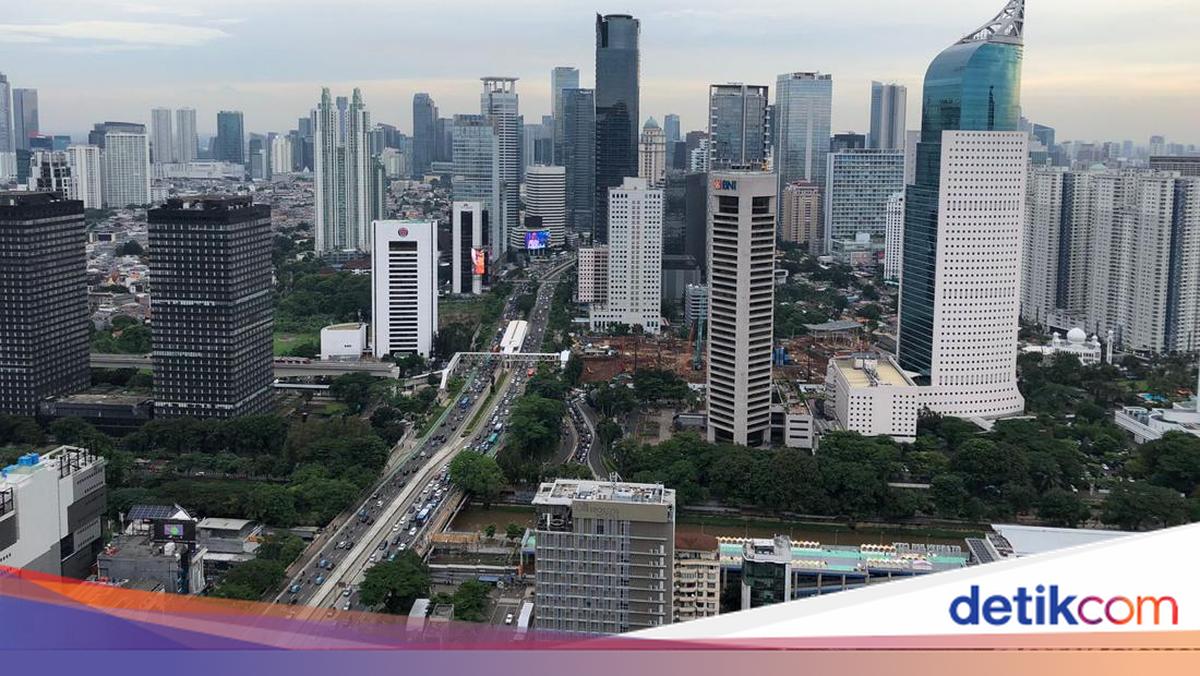
One of the key messages from the President’s speech was the national economy’s ability to maintain growth momentum amid a global situation full of uncertainty.
Indonesia’s economic growth reached 5.61% in the first quarter of 2026, while the first half of 2026 reached approximately 5.45%. The government even expressed optimism that with the right policies, economic growth throughout 2026 could move towards the 6% range.
This achievement is significant because it comes as the world still faces geopolitical tensions, trade fragmentation, supply chain shifts, commodity price fluctuations, and policy uncertainty in major economies. But economic growth must not remain a statistical figure. The most important question is: how far does that growth reach people’s households?
Growth must be converted into jobs, income, increased purchasing power, business opportunities, better public services, and poverty reduction. In other words, Indonesia needs not only high growth but quality, inclusive, productive, and sustainable growth.
Food Self-Sufficiency: The Foundation of Economic Sovereignty
One of the most strategic achievements is in the food sector. Indonesia has achieved self-sufficiency in a number of strategic food commodities, including rice, maize, large chillies, bird’s eye chillies, consumption sugar, chicken meat, chicken eggs, and shallots. Government rice reserves have even surpassed 5 million tonnes, an extremely high level in the history of national food reserve management.
This must not be seen merely as an agricultural sector success. Food is a matter of national sovereignty. A country with a population of more than 280 million cannot depend entirely on the international market for its food needs.
Geopolitical crises, climate change, export restrictions by producer countries, or global supply chain disruptions can at any time turn food into a strategic issue. Food self-sufficiency therefore has a direct link to economic and political stability. Strong food production helps maintain supply.
Adequate supply helps keep prices stable. Controlled food prices help keep inflation in check. And controlled food inflation means people’s purchasing power is better protected.
Farmers Must Be Subjects of Development
Increased production must not be achieved at the expense of food producers. The Farmer Exchange Rate (NTP) is therefore an important indicator to maintain.
The philosophy is simple: self-sufficiency must make the country strong while making farmers prosperous. Food policy must therefore be complemented by available and affordable fertiliser, irrigation, mechanisation, superior seeds, financing, price certainty, protection against market volatility, strengthening of cooperatives, market access, and the development of processing industries in production areas. If this is done, food self-sufficiency will become a gateway to rural economic transformation.
Investment Shows Improving Confidence in Indonesia
In the first half of 2026, investment realisation reached approximately Rp1,010.6 trillion, or nearly half of the 2026 national investment target of approximately Rp2,041.3 trillion.
More importantly, that investment created approximately 1.45 million direct jobs. Throughout 2025, investment realisation reached approximately Rp1,931 trillion with the creation of more than 2.7 million jobs.
These figures show that Indonesia remains an attractive investment destination and that investment is increasingly playing an important role in job creation. However, going forward we must change the measure of investment success. The question is no longer simply: ‘How many trillions of investment have come in?’
We must also ask: how many jobs have been created, how much technology transfer has occurred, how many national industries have entered the supply chain, how many MSMEs have grown, and how much added value remains in Indonesia?
The best investment is not merely investment that brings capital, but investment that builds national economic capacity.
Investment Is Beginning to Move Outside Java
In the first half of 2026, investment outside Java reached approximately Rp507.8 trillion, or 50.2% of total investment, slightly higher than investment in Java at approximately Rp502.8 trillion, or 49.8%.
This is an important signal for equitable development. Sulawesi, Kalimantan, Sumatra, Maluku, Papua, Bali and Nusa Tenggara must increasingly become part of Indonesia’s new industrialisation map. Investment distribution is not merely a matter of inter-regional justice. It is a strategy to enlarge overall national economic capacity.
Downstreaming: No Longer Selling the Homeland in Raw Material Form
In the first half of 2026, downstreaming investment reached approximately Rp300.1 trillion, or nearly 30% of total national investment realisation. Indonesia must not be satisfied merely exporting nickel, but must enter the battery and electric vehicle industry chain. It is not enough to export bauxite, but Indonesia must produce alumina, aluminium and derivative products.
It is not enough to produce palm oil, but Indonesia must strengthen the food industry, oleochemicals, biodiesel and various derivative products. It is not enough to produce copper, but Indonesia must build copper-based industries. The principle is simple: Indonesia’s natural wealth must generate as much added value as possible within Indonesia.
Downstreaming Must Move Up a Class to Industrialisation
Downstreaming must not stop at building smelters. The next stage must be bigger: national industrialisation. The chain to be built is: natural resources, processing, intermediate industry, component industry, manufacturing, technology, research and innovation for high-value products and global markets.
Indonesia needs a manufacturing sector revival. Industrialisation also has a broad multiplier effect: transport, logistics, housing, trade, financial services, education, health, MSMEs, and various supporting services. Industrialisation must therefore become one of the engines for creating Indonesia’s middle class.
Jobs Are the Most Tangible Measure
Ultimately, people do not live from GDP figures. People live from jobs and income. Job creation must therefore be the primary indicator of development success.
Investment in the first half of 2026 absorbing approximately 1.45 million direct workers is an achievement worthy of appreciation. However, the next challenge is the quality of those jobs.
Indonesia needs not only more jobs, but also more productive jobs with better incomes. The demographic bonus will only be an advantage if the young generation obtains education, skills, jobs and economic opportunities.
Among all economic indicators, purchasing power is the indicator most quickly felt by the public. For Indonesian families, the economic question is very concrete: is rice affordable, can school fees be paid, are jobs available, is income sufficient until the end of the month, and can the family still save?
Food stability, inflation, job creation and income improvement must therefore be seen as a single unit.
The development formula is ultimately simple: food is available, prices are controlled, jobs are available, incomes rise and purchasing power strengthens.
The success of economic growth must therefore increasingly be measured by the growth of people’s real incomes. We also need to ensure that Indonesia’s middle class grows again and becomes stronger.
The implementation of B50 biodiesel is directed at reducing diesel imports, which previously remained in the range of millions of kilolitres per year.
The policy is projected to generate very large foreign exchange savings.
However, its strategic benefits go far beyond foreign exchange savings. B50 connects plantations, processing industries, energy, job creation and national self-reliance.
The state budget (APBN) must not be viewed merely as a document of government revenue and expenditure. The APBN must be an instrument of economic transformation.
State spending must be directed at sectors with a large multiplier effect: education, health, food, industry, research, technology, social protection and productivity improvement.
Efficiency is not simply cutting budgets. Efficiency means ensuring that every rupiah of the people’s money generates the greatest possible benefit for the people.
Amid the industrialisation, downstreaming and investment agenda, one thing must not be forgotten: the Indonesian people. The Free Nutritious Meals programme, the construction and revitalisation of education and health facilities, social protection and the improvement of human resource quality must be seen as long-term investments.
Downstreaming of natural resources must go hand in hand with downstreaming of human resources. All these achievements do not mean Indonesia has solved all its problems.
Poverty must still be reduced. Inequality must be narrowed. Informal work must increasingly transform into productive work.
The quality of education must be improved. Labour productivity must be increased. The middle class must be strengthened. National industry must be deepened.
Dependence on technology imports must be reduced. Development must be increasingly equitable, reaching Eastern Indonesia.
Optimism and criticism need not be opposed. A healthy nation needs both.
The greatest challenge for President Prabowo’s administration is not merely raising economic growth from 5% to 6, 7 or even 8%. The real challenge is transforming Indonesia’s economic structure.
From a consumer country to a producer country. From an exporter of raw materials to an exporter of value-added products. From a country reliant on natural wealth to a country that masters industry and technology.
From food dependence to food sovereignty. From energy dependence to energy self-reliance. From investment that merely pursues capital to investment that creates jobs and technology transfer.
Indonesia has more than 280 million people, a large domestic market, natural resources, a demographic bonus, a strategic geographical position, a large food production base, and the opportunity to become a centre of industry and global supply chains.
What is needed is policy consistency, effective government, legal certainty, eradication of corruption, improvement of human quality, national unity and the courage to make strategic decisions. Indonesia has sufficient capital to make a historic leap.
Optimism Rooted in Work
President Prabowo’s speech provides reasons to view Indonesia’s future with rational optimism. Economic growth of approximately 5.45% in the first half of 2026, investment of approximately Rp1,010.6 trillion, the creation of approximately 1.45 million direct jobs from investment, downstreaming investment of approximately Rp300.1 trillion, the strengthening of self-sufficiency in a number of strategic food commodities, government rice reserves above 5 million tonnes, and the growing share of investment outside Java all point to a foundation that can be strengthened.
However, these figures must be seen as stepping stones, not the finish line.
The measure of development success is ultimately not how many statistics the government can present. The measure of success is whether the people truly feel that food is more secure, prices are more affordable, jobs are more available, incomes are better, purchasing power is stronger, children receive quality education, farmers and fishers are more prosperous, national industry is stronger, and regions are more developed.
Entering the 81st year of the Independence of the Republic of Indonesia, this nation must increasingly believe that we are capable of determining our own future. Indonesia is not destined merely to be a market for other countries’ products. Indonesia is not destined merely to sell its natural wealth in raw material form.
Indonesia must become a nation of producers, a nation of industry, a nation of innovators and a nation that stands on its own economic strength. Optimism does not mean saying that all problems have been solved.
Optimism is the courage to acknowledge progress, the resolve to correct shortcomings, and the conviction that Indonesia has the ability to become a nation that is advanced, independent, just, prosperous and dignified.
That is our great collective task. And that is Indonesia’s optimism towards the future.
Source: jawawa.id (https://jawawa.id/newsitem/indonesias-economy-shows-resilience-amid-global-and-regional-pressures-1786866715)
Originally published by detikcom (https://news.detik.com/kolom/d-8621082/ekonomi-ri-menunjukkan-daya-tahan-di-tengah-tekanan-global-dan-regional), translated from Indonesian