
Indonesia's Economy Once Hit Rock Bottom, Government Urges Citizens to Cut Back
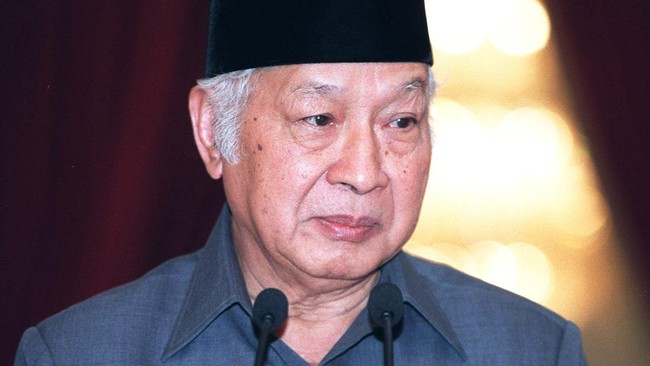
The Indonesian government has often taken strategic steps to maintain national stability during economic turbulence. One historic moment occurred in 1986, when President Soeharto instructed the public to adopt frugal and simple living patterns to confront the economic slowdown at the time.
The crisis was triggered by the end of the oil export boom that had previously been the backbone of state revenue in the early 1980s. Entering 1986, the situation reversed dramatically due to the fall in global crude oil prices and the slowing world economic growth, which directly pressured Indonesia’s oil and gas sector and key commodities.
Historians Jan Luiten van Zanden and Daan Marks in Ekonomi Indonesia 1800-2010 (2012) noted that this condition severely impacted the national economy.
“Growth slowed, trade and investment declined sharply, debt increased, and the government faced major fiscal challenges due to falling oil revenues,” they wrote.
This pressure was reflected in the 1986/1987 Draft State Budget, which experienced a roughly 7% reduction. The government responded swiftly with various rescue policies, from devaluation to deregulation across sectors such as banking, finance, and investment.
However, these measures were not limited to the macroeconomic level.
In January 1986, Soeharto publicly asked all segments of society, including civil servants, military personnel, and civilians, to practise thrift and simplicity. He emphasised that such a lifestyle must be adopted to accelerate recovery.
“I have issued several regulations applicable to high-ranking officials, both civil and military. However, this simple lifestyle is not only aimed at government officials. The wider public, especially the affluent, also has a moral obligation to internalise and embrace this simple lifestyle,” Soeharto stated, quoted from Merdeka (10 February 1986).
According to Soeharto, frugal living should not be interpreted as poverty or feigned destitution, but as reasonable simplicity. He warned that luxurious lifestyles amid economic difficulties could spark social envy and hinder economic recovery.
In fact, such appeals were not new. In 1974, Soeharto had issued a similar directive through Presidential Decree No. 10 of 1974, urging officials and state apparatus to live simply and avoid extravagance, including in official events. According to Sinar Harapan (3 February 1986), the policy aimed to direct fund usage towards appropriate interests and purposes.
However, unlike previous policies, the 1986 thrift appeal targeted the wider public and was repeatedly conveyed by the president on various occasions. Even at the 1986 Annual MPR Session, the president reiterated the same message to help society achieve prosperity.
In addition to urging the public to live frugally, Soeharto also implemented efficiencies within the government. According to a report in Suara Karya (10 January 1986), one example was simplifying previously convoluted investment procedures and tightening priorities to close leaks and waste.
Misguided Appeal
Nevertheless, some quarters viewed the thrift appeal as misguided, as it should only apply to officials and the rich. Philosopher Franz Magnis-Suseno told Sinar Harapan (18 January 1986) that the tendency towards luxury had mostly occurred among officials and the wealthy. He highlighted the prevalence of seminars and events in luxury hotels, which contradicted the government’s appeal.
“So, this is all about setting an example,” Magnis stressed.
A similar view was expressed by historian Ong Hok Ham. In an interview with Kompas (10 February 1986), Ong assessed that frugal living actually lacked strong historical roots in Indonesian society. According to him, Indonesians are familiar with patterns of luxury and poverty. No matter how poor, people cannot live frugally.
This is because in social practice, expenditures are often unavoidable due to the need to maintain relations, such as hosting guests, even if it burdens household finances. In other words, society cannot be thrifty.
Based on this, Ong believed that reducing consumptive lifestyles could only be achieved through strict oversight.
“Strict oversight structures must be interpreted as orderliness, not mere tranquillity or efforts towards stability,” Ong stated.
However, he emphasised that such efforts must begin with the government’s own example, given that many officials had yet to adopt simple living. In the end, the appeal proved ineffective.
Instead, the series of deregulations successfully withstood the economic shock from falling oil prices. Towards the end of the 1980s, Indonesia’s economy began to stabilise. During 1986-1988, the economy grew at an average of 5.5%. Entering 1989, the state budget condition improved, and dependence on oil and gas revenues gradually decreased, along with rising exports and investment.