
Indonesia's Economy Grows 5.45% in First Half of 2026, Driven by Downstreaming and Investment
Economic transformation is one of the main agendas of national development in 2026. In line with the theme of the 2026 Government Work Plan (RKP), “Food and Energy Sovereignty, and a Productive and Inclusive Economy”, the government continues to strengthen the economic foundation through industrial downstreaming, increased investment, job creation, and economic development down to the village and sub-district level.
These steps are taken to maintain growth momentum while increasing the added value of the national economy. The transformation is also directed at making Indonesia more self-reliant in meeting food and energy needs, building a stronger industrial structure, and improving competitiveness amid global economic dynamics.
National economic performance has shown a positive trend over the past two years. Economic growth increased from 5.03 percent in 2024 to 5.11 percent in 2025.
That momentum continued in the first half of 2026, with economic growth reaching 5.45 percent year-on-year (yoy).
Gross National Income per capita also rose by 4.07 percent, from US$4,920 in 2024 to US$5,120 in 2025. This achievement maintains Indonesia’s position as an upper-middle-income country.
Economic growth was also supported by the manufacturing sector. In the first half of 2026, the sector grew 4.78 percent year-on-year, driven among other things by the acceleration of natural resource downstreaming programmes, strengthening of the industrial structure, and increased investment in priority industrial sectors.
This performance is a positive signal for the shift of the economic structure towards high-value-added sectors.
The strengthening of the economic structure is also reflected in investment realisation. Throughout 2025, investment reached Rp1,931.2 trillion, an increase of 12.7 percent compared with the previous year. The realisation also succeeded in absorbing more than 2.7 million workers.
Meanwhile, in the first half of 2026, investment realisation reached Rp1,010.6 trillion, up 7.2 percent compared with the same period the previous year.
Foreign direct investment (PMA) contributed 50.2 percent to investment realisation in the first half of 2026 and grew 17.5 percent year-on-year.
One of the drivers of investment is the downstreaming agenda. In the first half of 2026, investment realisation in 15 priority downstreaming commodities under the 2025–2029 RPJMN reached Rp273.47 trillion, or 27.06 percent of total national investment realisation.
The government is also continuing to accelerate downstreaming projects. In April 2026, a second-phase groundbreaking was held for 13 downstreaming projects with an investment value of around Rp116 trillion. The projects include five energy-sector projects, five mineral projects, and three plantation projects.
Downstreaming is one of the key strategies for increasing the added value of natural resources while strengthening national industrial capacity.
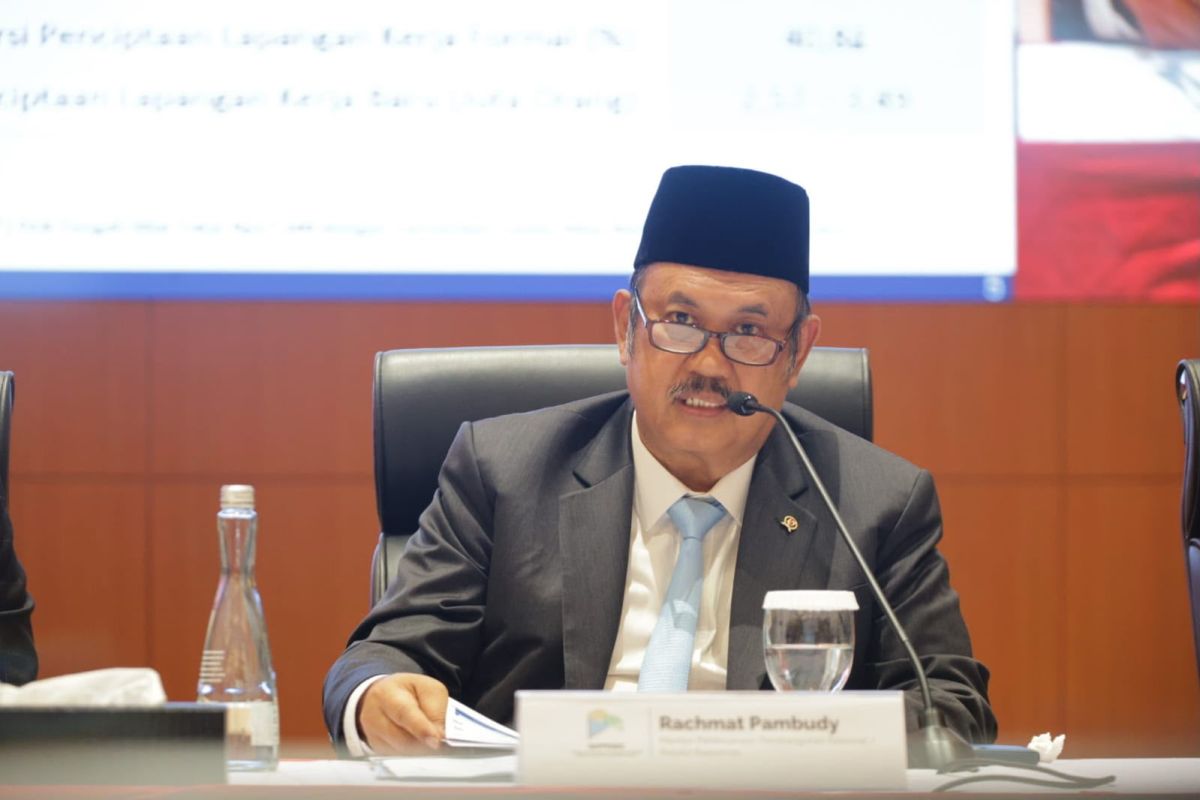
“In navigating development dynamics, the Ministry of National Development Planning/Bappenas plays a central role in translating the long-term vision of Golden Indonesia 2045 and the Asta Cita agenda into National Priorities. Responding to the challenges of efficiency and sovereignty, the 2026 RKP is focused on the theme ‘Food and Energy Sovereignty, and a Productive and Inclusive Economy’,” said Minister of National Development Planning/Head of Bappenas Rachmat Pambudy.
Economic strengthening is not only taking place in growth centres. Economic transformation is also being extended to the village and sub-district level through the development of Red and White Village/Sub-district Cooperatives (KDKMP).
As of 5 August 2026, 83,382 KDKMP had obtained legal entity status. Of the 38,109 locations proposed for the construction of physical outlets, 19,623 warehouses and outlets have been completed.
The government has also recruited 30,000 KDKMP managers through the Sarjana Penggerak Pembangunan Indonesia (SPPI) programme to strengthen cooperative management capacity.
Economic strengthening at the local level is expected to create a stronger business ecosystem while expanding public access to productive economic activities.
In addition to cooperatives, housing development is also part of strengthening welfare as well as economic activity. In 2025, household access to decent housing reached 68.40 percent. Construction and improvement of housing quality reached 850,786 units in 2025 and 380,787 units in the first half of 2026.
Economic growth has also been accompanied by an increase in the number of people entering and being absorbed into the labour market.
The labour force increased by 1.22 percent, from 153.05 million people in 2025 to 154.91 million people in 2026. Meanwhile, the number of employed people increased by 1.30 percent, from 145.77 million to 147.67 million.
The open unemployment rate (TPT) fell from 4.76 percent to 4.68 percent in February 2026.
Average worker wages also increased by 6 percent, from Rp3.09 million per month in 2025 to Rp3.29 million per month in 2026.
At the same time, the government is strengthening workforce competencies. Through job training centres and halls, 38,009 graduates were produced in the first half of 2026, with 20,916 of them obtaining competency certification.
Efforts to expand business opportunities are also being made through the Self-Employed Assistance (TKM) programme. In the first half of 2026, the programme reached 7,034 start-up entrepreneurs, 1,777 recipients of TKM Thematic Extreme Poverty, and 1,000 recipients of TKM Advanced.
Economic transformation is also directed at strategic sectors projected to be an important part of the future economy.
Danantara is strengthening strategic investment cooperation through the development of Waste-to-Energy (WtE) processing in more than 30 regencies/cities.
The development of a semiconductor ecosystem is also beginning to be directed through a talent development programme for 1,000 engineers out of 15,000 experts.
In addition, the strengthening of the hajj and umrah ecosystem is being carried out through multi-asset acquisitions in Makkah as well as plans to build hotels, mosques, and commercial areas in the Thakher area.
“This Speech Attachment serves as a bridge between development planning and a form of government accountability to the public. Going forward, governance refinement will be focused on the sustainability of strategic investments and the efficiency of the supporting ecosystem,” Rachmat stressed.
This economic transformation shows that development in 2026 is not only oriented towards short-term growth achievement. The strengthening of industry, investment, downstreaming, workforce quality, the village economy, and future sectors is directed at building a more productive and competitive economic foundation.
Thus, economic growth of 5.45 percent in the first half of 2026 is part of a larger process, namely building a national economic structure that is increasingly self-reliant, inclusive, and capable of creating broader opportunities for society towards Golden Indonesia 2045.
Source: jawawa.id (https://jawawa.id/newsitem/indonesias-economy-grows-5-45-in-first-half-of-2026-driven-by-downstreaming-and-investment-1786726443)
Originally published by Antara (Indonesian) (https://www.antaranews.com/berita/5695320/ekonomi-indonesia-tumbuh-545-persen-di-semester-i-2026-hilirisasi-dan-investasi-jadi-penggerak-transformasi), translated from Indonesian