
Indonesia's Economy Grows 5.29% in Q2 2026, Manufacturing and Investment Surge
Jakarta, CNBC Indonesia - Statistics Indonesia (BPS) recorded that Indonesia’s economy grew by 5.29% year-on-year (yoy) in the second quarter of 2026. BPS also noted that the Indonesian economy expanded by 5.45% in the first half of 2026 compared with the first half of 2025 (c-to-c).
“Economic growth in the second quarter of 2026, based on GDP at current prices of Rp 6,552.1 trillion and at constant prices of Rp 3,576.2 trillion, resulted in growth of 5.29% yoy compared with the second quarter of 2025,” said M. Edy Mahmud, Deputy for Balance Sheets and Statistical Analysis, during the BPS release on Wednesday (5/8/2026).
By industry, growth occurred in nearly all sectors, except mining and quarrying, which contracted by 1.64%.
Sectors that grew significantly included electricity and gas supply at 10.81%, followed by accommodation and food and beverage services at 10.60%.
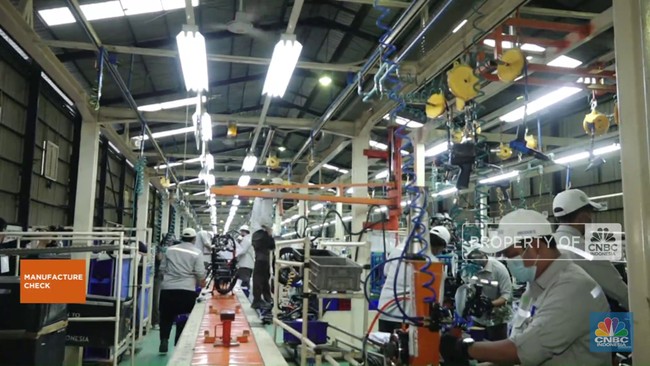
The manufacturing industry, which plays a dominant role in the Indonesian economy with a contribution of 0.9%, grew by 4.52% yoy. Manufacturing growth was driven by domestic and external demand. Three sub-sectors propelled the manufacturing industry.
The food and beverage industry grew by 6.51%, driven by increased domestic and external demand for processed fish, chicken meat, milk, and dairy products.
The fabricated metal goods; computers, electronic and optical products; and electrical equipment industry grew by 8.04%, in line with increased external demand for electronic components, batteries, and electrical equipment.
The chemicals, pharmaceuticals, and traditional medicine industry grew by 4.99%, driven by increased domestic demand for chemicals and chemical products.
The trade sector contributed 0.83% to Indonesia’s economic growth and expanded by 6.39% yoy. This sector was driven by improved goods distribution due to increased supply of domestic agricultural and manufacturing products as well as imported products, along with higher car and motorcycle sales, particularly commercial vehicles.
By expenditure, the construction sector contributed 0.62 percentage points and grew by 6.68%, driven by increased construction activity and investment, including:
Higher realisation of government capital expenditure for buildings and structures as well as roads, irrigation, and networks
Increased disbursement of construction loans by banks
Expansion of industrial estates, Special Economic Zones, and housing
Higher realisation of infrastructure construction for the Merah Putih Village/Sub-district Cooperatives (KDKMP)
Another sector contributing to economic growth was Information and Communication, with a contribution of 0.48% and growth of 6.97%, in line with increased digital economic activity, such as:
Higher business revenue at several telecommunications companies amid rising data traffic
Increased transaction volume in digital trade (e-commerce) and digital payments, especially mobile and internet transactions
Expanded data centre capacity
Meanwhile, by expenditure, growth occurred across all expenditure components.
According to BPS data, household consumption remained the main growth driver. In the second quarter, household consumption grew by 2.67% and accounted for 53.32% of GDP, with a growth contribution of 5.06%.
“In the second quarter, household consumption remained the largest source of growth, at 2.67%,” said Edy.
Household consumption, Edy noted, was driven by the momentum of holiday and religious festive periods.
The highest household consumption growth occurred in spending on restaurants and hotels at 6.47%, in line with increased consumption of prepared food in food and beverage service providers. Transport and communication consumption also grew strongly at 5.71%, driven by the use of private transport and purchases of motor vehicles and their repairs.
Gross fixed capital formation (PMTB) contributed 2.06% to economic growth, expanding by 6.87%. The highest PMTB growth occurred in the vehicle sub-component at 26.03%, and the other equipment sub-component grew by 16.18%, both from domestic production and imports.
Government consumption contributed 1.07% to growth and expanded by 15.97%, in line with higher realisation of personnel expenditure due to the payment of the 13th-month salary for civil servants, military and police personnel, as well as accelerated payment of allowances for non-civil servant educators.
Higher realisation of goods and services expenditure, particularly goods distributed to the public through the Free Nutritious Meals (MBG) programme, also boosted government consumption.
By region, the economy grew positively in all regions in the second quarter of 2026. The largest distribution was in Java at 56.47%, while the highest growth was recorded in Bali and Nusa Tenggara at 6.10% yoy, above the national economic growth rate. The breakdown of economic growth by region is as follows:
Sumatra grew by 5.06% yoy, with the main sources of growth being trade, manufacturing, and agriculture. The province with the highest growth contribution was North Sumatra at 1.17% yoy.
Java grew by 5.65% yoy, with the main sources of growth from manufacturing, trade, and construction. DKI Jakarta had the highest growth contribution at 1.55% yoy.
Bali and Nusa Tenggara’s economy grew by 6.10% yoy, with the main sources of growth from mining, trade, and public administration. Bali was the province with the highest growth contribution at 2.72% yoy.
Kalimantan’s economy grew by 4.10% yoy, with the main sources of growth from manufacturing, trade, and mining. East Kalimantan was the highest growth contributor at 1.76% yoy.
Sulawesi grew by 5.53% yoy, with the main sources of growth from manufacturing, trade, and construction. South Sulawesi was the largest growth contributor at 2.47% yoy.
Maluku and Papua’s economy grew by 1.36%, with sources from manufacturing, trade, and construction. North Maluku had the highest growth contribution at 2.98% yoy.