
Indonesia's Economic Growth Bolstered by Domestic Consumption
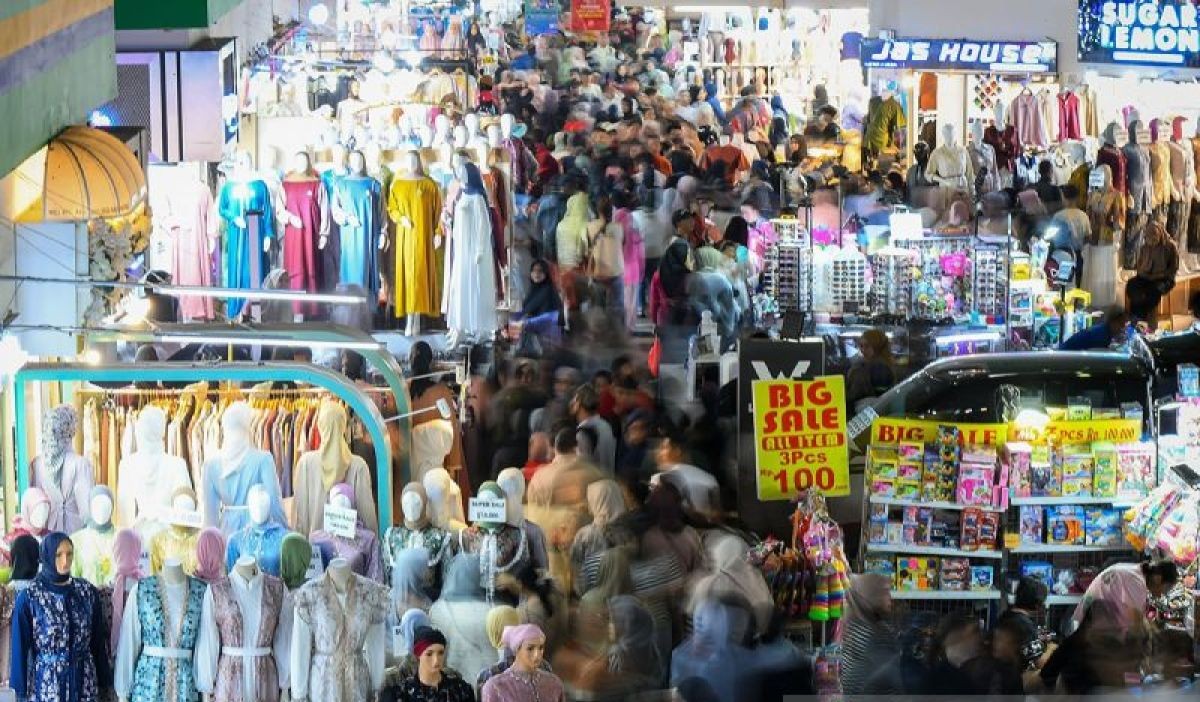
Permata Institute for Economic Research (PIER) assesses that the Indonesian economy needs to rely increasingly on domestic strength, especially public consumption, in order to face mounting pressure on the global economy. This strategy is considered crucial for maintaining national growth stability.
Chief Economist of Permata Bank, Josua Pardede, revealed that a number of international institutions are projecting that global economic growth will slow this year. Nevertheless, the Indonesian economy is still viewed as fairly resilient thanks to a solid domestic demand base.
“If world institutions say Indonesia’s economic growth remains resilient, this means it is largely supported by the domestic economy,” said Josua during an online presentation on Indonesia’s economic outlook for the second quarter of 2026 (2Q26) in Jakarta, Monday (11/8).
PIER noted a shift in the dynamics of the economic growth engine during the second quarter of 2026. Household consumption remained the main contributor, although it underwent normalisation following the Lebaran celebrations.
Data shows household consumption growth stood at 5.06% year-on-year (YoY), slightly lower than the previous quarter’s 5.52% YoY. On the other hand, the investment sector, or Gross Fixed Capital Formation (PMTB), showed a positive performance with growth accelerating from 5.96% YoY to 6.87% YoY.
Although investment increased, Josua stressed that this rise has not been able to replace the position of household consumption as the main engine of the national economy. Therefore, strengthening people’s purchasing power is the key when demand from external markets begins to come under pressure.
Currently, Indonesia is still in a recovering phase, with the manufacturing PMI index consistently above the 50 level. This figure indicates that national industrial activity remains in an expansion zone, although future challenges must still be anticipated.
Several external factors that could potentially limit support from export markets include:
“The impetus or support from export markets and external markets will indeed be quite limited. This is something we need to examine more deeply,” Josua added.
Besides trade issues, the rise in energy prices since March 2026 has also become a serious concern. The surge in global energy prices is triggering inflation, especially for developing countries that depend on crude oil imports.
The increase in energy costs has a direct impact on transportation and production costs, which ultimately drives up the prices of goods and services. If not accompanied by an increase in income, this condition risks significantly depressing people’s purchasing power.
In this situation, PIER emphasised the importance of the government’s role in maintaining purchasing power while creating a conducive investment climate. The aim is for economic growth not to rely solely on public spending, but also to be supported by job creation and sustainable income growth.
Source: jawawa.id (https://jawawa.id/newsitem/indonesias-economic-growth-bolstered-by-domestic-consumption-1786416617)
Originally published by Media Indonesia (https://mediaindonesia.com/ekonomi/920418/pertumbuhan-ekonomi-indonesia-tertolong-konsumsi-domestik), translated from Indonesian