
Indonesia's Economic Fundamentals Remain Solid, BNI Economist Explains Why
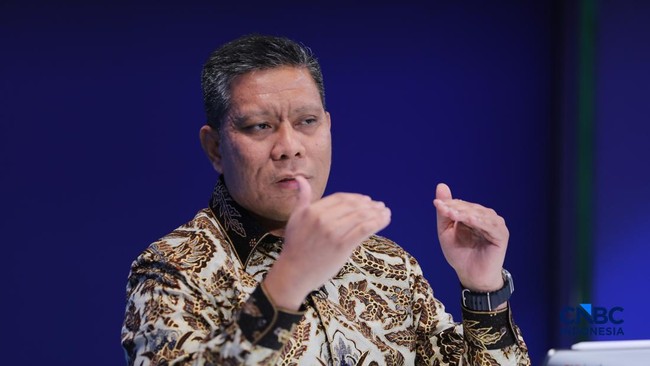
Jakarta, CNBC Indonesia - Chief Economist of PT Bank Negara Indonesia (Persero) Tbk (BNI), Leo Putera Rinaldy, views the national economic fundamentals as still relatively solid. Up to the second quarter of 2026, the Indonesian economy managed to grow 5.29% year-on-year (YoY).
Compared with other developing countries, Indonesia’s economic growth realisation above the 5% level is still considered good. Moreover, several other developing countries were only able to record economic growth of around 3% in the second quarter of 2026.
This condition is evidence that Indonesia’s economic growth is considered very good amid the current global conditions. In fact, the current national economic growth realisation is higher than the average condition before the Covid-19 pandemic.
“Now if we look at the details, we can divide it into two parts. First, if we look at GDP from the expenditure side, the figure of 5.6% economic growth in the first quarter to 5.3%, that is if we look at it there is some effect of normalisation. Because of the occurrence of a low base, especially on the private consumption side in the first quarter of last year,” he said in Power Lunch, Thursday (13/8/2026).
He said the slowdown that occurred in the second quarter of 2026 was more due to a shift in Eid and holiday activities to the first quarter of 2026. As a result, the effect of that major momentum was concentrated in the first three months of this year.
On the other hand, Leo assesses that current national economic growth is supported by government spending. Expenditure in the form of government spending is still growing high at 16% year-on-year. This shows the front loading of fiscal spending carried out by the government to maintain economic growth momentum.
“Now what is interesting is if we look at the real investment variable. So if we look at real investment, year-on-year in the second quarter it increased to almost reach 7%. Now if we break down between construction investment and non-construction investment, what is driving the increase is construction investment. So construction investment, if we look at it year-on-year, increased in the second quarter and this is a good contribution from both the private and public sector sides,” he explained.
He continued that developments in the public sector itself are closely related to the government’s strategic programmes. One of them is related to the physical construction of the Merah Putih Village/Sub-district Cooperatives (KDMP). Thanks to that construction, cement sales in the second quarter of 2026 experienced an increase.
Next, he continued, there are other factors that strengthen the national economic fundamentals, namely the construction sector, especially in the services sector.
“So the sector, if we look at education services, public administration. Now what is interesting in my opinion is manufacturing. So if we look at the manufacturing sector, indeed year-on-year it is slowing. But if we look in more detail at the manufacturing subsectors within the manufacturing sector, there are several subsectors that actually rose year-on-year in the second quarter,” he explained.
Leo mentioned subsectors such as textiles, footwear, wood products, and furniture experienced year-on-year growth increases in the second quarter of 2026. The performance improvement of several of these subsectors is closely related to export activities.
With the combination of growth above pre-pandemic levels and support from consumption, government spending, investment, and a number of production sectors, Leo assesses that Indonesia’s economic fundamentals still show solid resilience amid global environmental pressures.