
Indonesia’s Downstreaming Exports Forecast to Reach US$50bn, with Aluminium Set to Surge
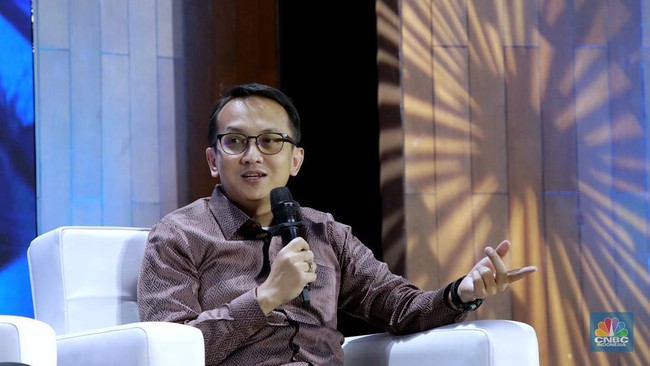
Jakarta, CNBC Indonesia — The National Economic Council (DEN) estimates that the value of Indonesia’s exports of downstream products, including nickel, aluminium and lithium battery components, will reach US$50 billion in 2026. This would be an increase of nearly 45% from exports of around US$34.5 billion in 2024.
DEN member Septian Hario Seto said Indonesia’s downstreaming growth is no longer driven solely by nickel. Aluminium processing and lithium battery components are also expanding rapidly and could become additional sources of foreign exchange for Indonesia.
“According to the National Economic Council’s calculations, by the end of this year the value of downstream nickel, aluminium and lithium battery components will reach around US$50 billion, or rise by nearly 45% compared with our exports in 2024,” Seto said at Merdeka Palace on Tuesday evening (21 October 2026).
Seto explained that the forecast is part of the DEN’s latest study on downstreaming developments, which was also presented to President Prabowo Subianto.
He said the increase in exports of downstream products was a positive development during the first two years of the Prabowo administration. As well as strengthening domestic industry, the growth could increase Indonesia’s supply of foreign exchange.
Aluminium processing is one of the sectors recording significant growth. The DEN estimates that exports of aluminium products will reach between US$7 billion and US$7.2 billion in 2026.
That figure is almost double the export value in 2024, which stood at around US$3.5 billion.
Seto added that the outlook for aluminium exports remained strong, with further growth possible as investment increases in new aluminium smelters in Indonesia.
“We expect aluminium exports to exceed around US$10 billion in the future as investment is added to new aluminium smelters in Indonesia,” he said.
The DEN also highlighted developments in the lithium battery components industry. Indonesia has become one of the producers of battery components, including anodes and cathodes, and has facilities for refining lithium.
According to Seto, this shows that industrialisation can be pursued even when Indonesia does not have domestic lithium resources.
“This means Indonesia can industrialise resources that we do not have domestically. But this industrialisation is part of a more complete ecosystem,” he said.
Source: jawawa.id (https://jawawa.id/newsitem/indonesias-downstreaming-exports-forecast-to-reach-us-50bn-with-aluminium-set-to-surge-1792547469)
Originally published by CNBC Indonesia (https://www.cnbcindonesia.com/news/20261021071938-4-778015/ekspor-hilirisasi-ri-diramal-tembus-us-50-m-aluminium-bisa-melesat), translated from Indonesian