
Indonesia's Digital Transformation Enters the Agentic AI Era
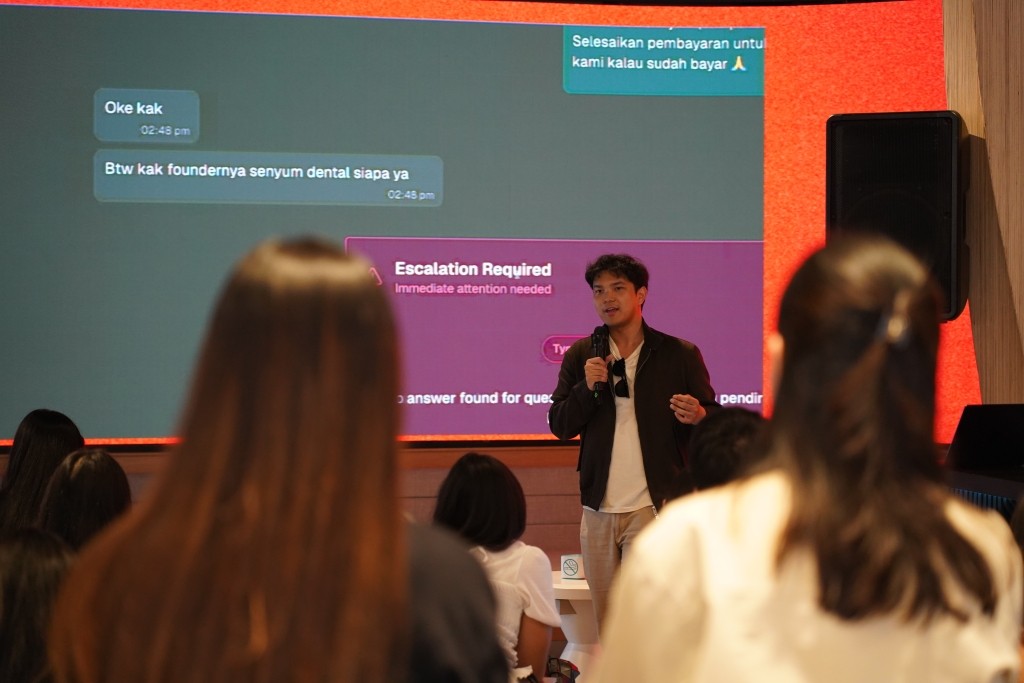
The development of artificial intelligence (AI) in Indonesia is entering a new phase. AI technology is no longer merely used as a chatbot to answer customer questions, but is beginning to be directed towards Intelligent Agentic AI capable of understanding customers, remembering interaction history, providing recommendations, and executing business processes more comprehensively.
This shift aligns with the growing number of companies across various sectors adopting AI to improve productivity, operational efficiency, and customer service quality.
Co-Founder and Chief Technology Officer (CTO) of Covena AI Jason Tjahjono said the business world’s need for AI has now evolved far beyond the ability to answer automated messages.
“Many AIs look sophisticated during demos. But when actually tried, the AI’s answers do not meet expectations. Many business owners have entrusted Covena as their revenue channel. Therefore, we are building AI infrastructure with quality as the top priority so that it remains reliable when AI is used by customers in day-to-day operations,” said Jason on Wednesday (12/8/2026).
According to him, the challenge of AI implementation is not only producing fast responses, but ensuring answers remain accurate and relevant consistently. For this reason, Covena AI developed an AI Sales Agent with self-improving capabilities that allow the AI to continuously learn from customer interactions.
In less than two years, Covena AI claims to have been trusted by various enterprise companies across industries, including Garuda Indonesia, AYANA Bali, CoLearn, ALVA Auto, and AECC. The AI response accuracy rate is said to reach more than 97% in handling thousands of messages every day.
Jason assessed that this development shows AI is beginning to shift from customer service automation into technology integrated with business processes. The AI Sales Agent is now equipped with Customer Memory, AI-native CRM, business and marketing analytics, as well as integration with various platforms for scheduling, payment, delivery, and customer management.
The integration includes Google Maps, Calendar, and Sheets, Grab, Gojek, and Lalamove services, as well as Xendit and Stripe payment gateways. “The goal is not merely to make AI able to reply to chats, but how every conversation with customers can become part of a business process that generates value and revenue,” said Jason.
Covena also developed Automations features for follow-ups and payment reminders, Pass Back to AI for collaboration between AI and human agents, Ticket Intelligence for analysing conversations, as well as Co-pilot Mode and Watchtower to maintain AI response quality. The use of AI is beginning to have an impact across various sectors.
At Garuda Indonesia, the integration of services through WhatsApp for ticket booking, GarudaMiles, refunds, rescheduling, and online check-in is said to have generated revenue of approximately Rp1.675 billion. In one month, more than 71,000 customer conversations were handled by AI with a CSAT of 4.34 out of 5.
At CoLearn, AI handled more than 150,000 conversations with accuracy above 97% and is said to have generated additional revenue of up to hundreds of millions of rupiah and reduced customer acquisition costs by up to 25%.
Meanwhile, AECC Indonesia utilised AI to strengthen communication with more than 20,000 students and helped acquire more than 500 new students within three to four months.
At ALVA Auto, the implementation of AI for sales automation and customer engagement is said to have generated additional revenue of more than Rp588 million per quarter and handled more than 16,000 customer conversations.
This development shows that AI is beginning to be positioned not only as a tool to reduce administrative work, but as part of sales strategy, service, analytics, and business decision-making.
Jason said the next challenge is ensuring AI is able to adapt to company workflows while continuing to collaborate with human workers.
“AI must be able to adapt to business needs, collaborate with human teams, and provide consistent service quality,” he said.
The shift from chatbots to Agentic AI marks a new chapter in the adoption of artificial intelligence in Indonesia. AI has the opportunity to evolve from a supporting technology into part of business infrastructure that works around the clock and is directly connected to sales processes, service, and revenue creation.