
Indonesia's Defence Industry and the Urgency of Building Modern Military Capabilities
Recent global developments have altered the way we understand the global power map. The Covid-19 pandemic demonstrated that in a connected world, minor disruptions in the supply chain can have broader impacts on national security.
Some defence industry producers may wait months only to find that components previously obtainable within a week are now unavailable. The Russia-Ukraine war has made this risk even more acute; it is no longer just about lead times, but the availability of artillery shells, precision munitions, and even basic spare parts from the global market has become a primary concern. The semiconductor shortage, which previously impacted avionics and radar systems in various air forces, adds to the list of challenges, as nations can now find themselves isolated due to foreign policy decisions or international sanctions.
In this environment, nations are striving to protect their national interests with greater manoeuvrability. The concept of ‘strategic autonomy’ has become a primary method for building modern military capabilities. Originally associated with President Charles de Gaulle’s idea to withdraw the French military from integrated NATO command, it is now a central pillar of European Union policy to strengthen its defence industry and support its strategic agenda without heavy reliance on the United States.
Other nations, such as India and Canada, are also attempting to diversify their supply sources and strengthen domestic capabilities to reduce dependence on external partners. For Indonesia, this idea is not new. After achieving independence, Jakarta adopted a non-aligned strategic stance, often referred to as the ‘free and active’ principle, popularised by Mohammad Hatta, reflected in his famous analogy of ‘rowing between two reefs’.
Maintaining this position serves as evidence of why strategic autonomy is still much needed today. Amidst hegemonic competition, Indonesia is maintaining regional leadership and aiming to play a significant role in global dynamics. To achieve this, strength is required to provide necessary bargaining power while minimising the risk of sabotage from other nations.
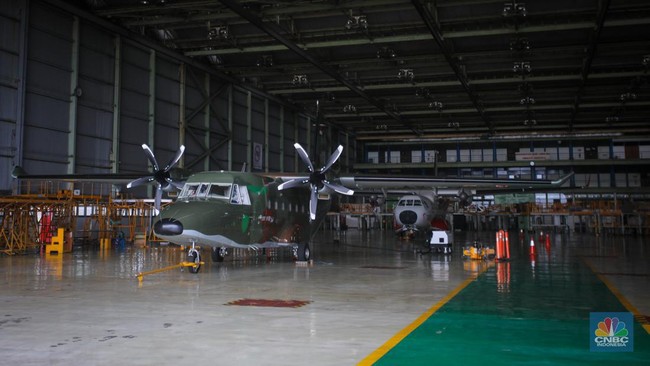
Indonesia has previously succeeded in achieving strategic independence, at least to a certain extent, through the CASA/IPTN CN-235 programme. Stemming from the initial C212 partnership, this programme was one of Indonesia’s early opportunities to have meaningful participation in both production and development via production licences, with more than half of the entire arrangement carried out domestically through the Airtech International joint venture.
However, these developments still face limitations. While aircraft bodies are produced locally by IPTN, engines, control systems, and communication systems are still sourced from European and US manufacturers. This demonstrates that the supply chain capabilities built by Indonesia still contain gaps in technological dependency.
This narrative is increasingly relevant when looking at the current state of the defence industry. Indonesia has long requested technology transfer during procurement. This need for Transfer of Technology (ToT) is even reinforced by Law Number 16/2012 concerning the Defence Industry, yet the results have not been maximised, and Indonesia’s defence equipment still relies on foreign sources.
The Directorate of Defence Potential of the Ministry of Defence noted that in 2025, although the defence industry possesses the capability to produce basic products, the level of Domestic Component Content (TKDN) for products with higher technological complexity remains relatively low. For example, the TKDN for new combat vehicles is only between 34.12% and 40.91%.
According to a 2022 SIPRI report on weapons production self-sufficiency in the Indo-Pacific, imports still accounted for 90.2% of Indonesia’s total procurement of major weaponry during the 2016-2020 period, while domestic design and production achieved only 9.8%. The challenges ahead are significant, but a transition is not impossible to achieve.
Indonesia’s latest defence modernisation plan, the Optimum Essential Force (OEF), highlights this effort. Following the Minimum Essential Force (MEF), which only managed to cover about 65% of the ideal force structure, the OEF directs force development with an emphasis on the importance of the domestic supply chain role.
Various ongoing programmes in the defence industry sector serve as important illustrations for the development of strategic autonomy, with each case contributing at different levels. The Harimau medium tank by PT Pindad, developed alongside FNSS from Turkey, demonstrates how joint development and ToT can strengthen bilateral relations, which in turn supports programme sustainability and builds bargaining power.
Following the end of Harimau/Kaplan Medium Tank (MT) production in 2024, both companies are continuing their strategic partnership through an agreement to develop and produce the Harimau/Kaplan Armoured Personnel Carrier (APC). In the private sector, the collaboration between PT Sentra Surya Ekajaya (SSE) and Texelis in the development of the P2 Tiger APC shows a similar trajectory. In January 2025, the P2 Tiger APC prototype, built at the PT SSE facility in Tangerang, Banten, was successfully showcased. Additionally, PT SSE is collaborating with KNDS Mobility to develop…
Source: jawawa.id (https://jawawa.id/newsitem/indonesias-defence-industry-and-the-urgency-of-building-modern-military-capabilities-1791129067)
Originally published by CNBC Indonesia (https://www.cnbcindonesia.com/opini/20261004212600-14-773180/industri-pertahanan-ri-dan-urgensi-membangun-kemampuan-militer-modern), translated from Indonesian