
Indonesia's Data Centres: Opportunities and Investments in the Digital Economy Era
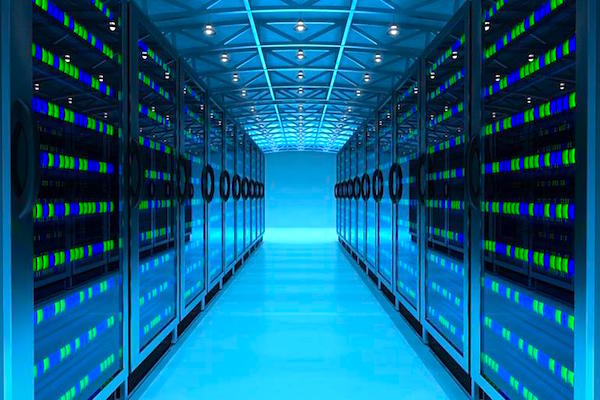
The development of Indonesia’s digital economy in recent years has brought about a major change that is often not immediately visible to the public: the increasing need for data centres. Behind cloud services, digital transactions, artificial intelligence, social media, and the everyday applications used by society, there is infrastructure that works tirelessly to store, process, and manage vast amounts of data. And as digital activity grows ever faster, the need for data centres surges accordingly. Indonesia is now regarded as one of the most attractive data centre markets in Southeast Asia. This is not only due to the large number of internet users but also because of the continuously increasing growth of the digital economy. In this context, data centres are no longer seen merely as technology infrastructure but as an essential part of the foundation of the national digital economy.
The Explosion of Data and Digital Transformation
The growth in the need for data centres in Indonesia did not happen suddenly. Changes in societal behaviour, the increasing use of cloud computing, the expansion of streaming services, and the development of AI have caused data volumes to grow exponentially. Companies now no longer just store basic operational data. Modern digital activities generate far larger amounts of data, from real-time transactions and customer analytics to AI-based computing needs. On the other hand, digital transformation in sectors such as banking, e-commerce, telecommunications, government, and manufacturing is accelerating this demand. The more digital a business becomes, the greater the need for data storage and processing capacity.
Indonesia Becomes a Strategic Market
With a population of more than 280 million and a continuously increasing number of internet users, Indonesia has become a highly strategic market for the data centre industry. Indonesia’s position is also becoming increasingly important because the national digital economy is projected to continue growing in the coming years. The value of Indonesia’s digital economy is even estimated to become the largest in Southeast Asia. This situation has led various global players to aggressively enter Indonesia. Hyperscale cloud providers such as Amazon Web Services (AWS), Google Cloud, Microsoft Azure, and Alibaba Cloud are beginning to build and expand data centre infrastructure in Indonesia. They see local needs continuing to increase, especially with the growth of cloud and AI. At the same time, local players are also strengthening their capacities. Companies such as Telkom through Neucentrix, DCI Indonesia, Biznet, and various other domestic data centre operators are expanding to capture the growing market opportunities.
More Than Just Server Buildings
Although often understood as places for storing servers, modern data centres are actually far more complex. They are critical infrastructure that supports digital services in real time. The availability of electricity, cooling, physical security, network connectivity, and cybersecurity systems are essential parts of their operations. Therefore, data centre investments require enormous costs. Building a hyperscale facility can consume investments of up to billions of dollars, particularly due to the high energy needs and supporting infrastructure. However, behind these large investments, the business potential generated is also very substantial.
Regulatory Push and Data Sovereignty
Regulatory developments are also an important factor driving the growth of data centres in Indonesia. With increasing attention to data protection and digital sovereignty, the need to place data domestically becomes ever more relevant. The Personal Data Protection Law (UU PDP) strengthens focus on data management, while discussions on placing strategic data domestically continue to evolve. This situation opens up significant opportunities for local data centre operators. Companies and government institutions are beginning to consider data storage locations as part of compliance and security strategies.
AI as a New Driver
In addition to cloud computing, the development of artificial intelligence is becoming a new driver of data centre growth. AI requires very large computing capacity. Training AI models, data processing, and the use of generative AI require high-capability infrastructure and significant energy consumption. This means that as AI develops further, the need for data centres will also rise. In the coming years, AI is expected to be one of the main factors accelerating data centre investments in Indonesia.
Energy and Infrastructure Challenges
Although the opportunities are great, the data centre industry also faces no small challenges. One of the most primary is the energy requirement. Modern data centres need a stable and very large electricity supply. On the other hand, demands for the use of green energy and sustainability are also increasing. As a result, data centre operators now not only compete in capacity and technology but also in energy efficiency and sustainability. In addition to energy, connectivity and national infrastructure readiness are also important factors.
Competition Set to Intensify
Given the very large market growth, competition in Indonesia’s data centre industry is expected to become even more intense in the coming years. Global players bring substantial capital and technology, while local operators try to rely on market proximity and understanding of domestic regulations. In such conditions, what will determine success is not just who has the largest capacity, but who can provide the most efficient, secure, and relevant services to market needs.
Source: jawawa.id (https://jawawa.id/newsitem/indonesias-data-centres-opportunities-and-investments-in-the-digital-economy-era-1778608559)
Originally published by majalahict.com (https://www.majalahict.com/data-center-indonesia-peluang-investasi-di-era-ekonomi-digital/), translated from Indonesian