
Indonesia’s Data Centres Need 20 Gigawatts of Electricity: Bahlil’s Plan
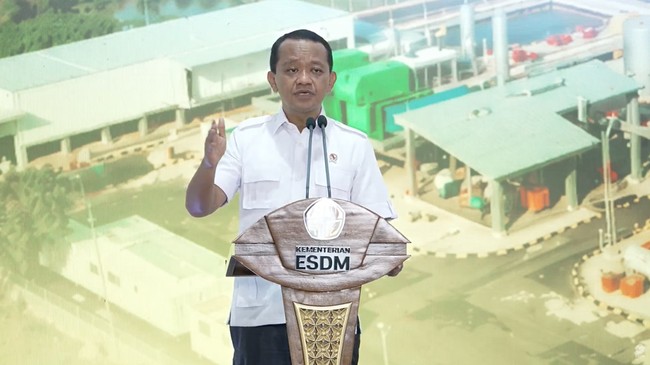
Jakarta, CNBC Indonesia – Coordinating Minister for Downstreaming and Energy Transition and Minister of Energy and Mineral Resources Bahlil Lahadalia says data centres will require a substantial increase in electricity supply. In Indonesia, data centres are estimated to need an additional 20 gigawatts (GW), equivalent to 20% of the country’s current total electricity capacity.
Bahlil said reliable energy supplies, particularly clean energy, would be crucial to attracting investment in regional-scale data centres. He made the remarks at Bali Tech Week 2026 in Denpasar on Monday (19 October 2026). Digitalisation, he said, is an instrument of industrialisation, but without adequate energy it could create new problems.
“I’ve just spoken with the president director of PLN, and [data centres] need an additional 20 GW. That is 20,000 MW, equivalent to 20% of the electricity capacity currently in place. It’s no small amount; it’s very substantial,” Bahlil said, as quoted on Tuesday (20 October 2026).
Demand is rising as artificial intelligence (AI) develops. Data centres in the cloud-computing era require around 10–30 megawatts (MW), while AI-based data centres can require between 100 MW and 1 GW. Electricity, water, fibre-optic networks and site readiness are key factors in determining whether investments go ahead.
To meet this demand, the government is promoting Batam, Karimun and Bintan as new Indonesian data-centre hubs, complementing existing hubs in Malaysia and Singapore. Bahlil said the islands offer advantages including water availability, lower population density than West Java, Jakarta or Bali, and opportunities to use new and renewable energy (EBT).
“We are now going to build around 100 gigawatt-peak of solar power. I believe investors will prefer to run their data centres on renewable energy. This is a business opportunity,” Bahlil said.
The opportunity is already emerging in Batam. Data-centre capacity that is operational, committed or under development in the city totals 1.47 GW. PLN Batam and DayOne have also signed a 450 MW electricity supply contract, the largest data-centre power contract in Indonesia.
On the supply side, PLN’s 2025–2034 Electricity Supply Business Plan (RUPTL) targets an additional 69.5 GW of generating capacity. Of that total, 42.6 GW will come from renewable energy, 10.3 GW from energy storage systems and 16.6 GW from fossil-fuel power plants, with potential investment of Rp2,967.4 trillion. The 100 GWp solar development programme includes utility-scale, floating and rooftop solar, as well as solar installations in industrial areas.
Bahlil added that the government would ask prospective data-centre investors to provide their planned locations so that energy supplies could be prepared accordingly. He is also preparing regulations requiring investors to partner with national and regional businesses.
“We have to share [the work] with local businesses. They shouldn’t do everything themselves,” he stressed.
With reliable, competitive and increasingly clean energy supplies, Indonesia hopes to become not merely a technology market but a digital investment centre that benefits businesses and communities in the regions.