
Indonesia's D-8 Chairmanship: A Gateway to the Global Halal Market
The year 2026 marks a special diplomatic moment for Indonesia. Starting 1 January 2026, Indonesia will hold the chairmanship of the Developing Eight, or D-8, for the 2026-2027 period. This forum comprises nine major developing nations: Indonesia, Malaysia, Bangladesh, Pakistan, Iran, Turkey, Egypt, Nigeria, and the newest member, Azerbaijan.
The D-8 was established in 1997 through the Istanbul Declaration. Its concept was simple yet ambitious: developing countries should not merely serve as markets. The D-8 needs to increasingly emerge as a key player in trade, investment, industry, technology, food, energy, and improving people’s welfare.
Now, nearly three decades after its founding, the D-8 is entering a new chapter. Its combined economic size has reached approximately USD5 trillion. Its total population stands at around 1.3 billion people. Its territory stretches from Southeast Asia, South Asia, the Middle East, and Africa to the Caucasus. The D-8 is a vast market waiting to be managed more seriously.
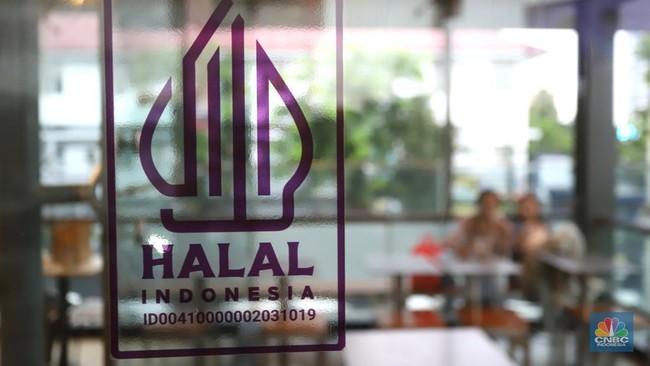
For Indonesia, the D-8 chairmanship is an opportunity to demonstrate that the halal economy is not limited to certificates, labels, or domestic consumption. The halal economy is a pathway to strengthen production, open export markets, attract investment, expand employment, and elevate the class of Indonesian businesses.
President Prabowo Subianto’s directive at the D-8 Summit in Cairo on 19 December 2024 provided a clear direction for the organisation. The D-8 needs to deepen economic integration, implement preferential trade agreements effectively, simplify customs procedures, and build a halal value chain through a D-8 halal economic network. In other words, D-8 cooperation must transform from ceremony to transaction, from forum to marketplace, from diplomacy to trade orders.
Trade figures reveal significant untapped opportunities. Intra-D-8 trade indeed rose from USD135.15 billion in 2023 to USD157 billion in 2024. However, compared to the D-8’s economic size of roughly USD5 trillion, this value still does not reflect the bloc’s strength. It also remains far from the D-8’s 2030 target of USD500 billion. Indonesia must take a larger role, not merely as a meeting chair but as a market driver.
The halal economy can serve as the most tangible entry point. D-8 countries possess a large Muslim consumer base, strong food demand, growing fashion and cosmetics markets, increasing needs for halal medicines and raw materials, and extensive opportunities for Muslim-friendly tourism.
Indonesia has substantial assets: the world’s largest Muslim population, a vast number of MSME entrepreneurs, a robust food and beverage industry, a sharia financial ecosystem, and continuously developing halal certification experience.
However, large assets alone are insufficient. Indonesia must present itself with ready products, competitive prices, consistent quality, export-worthy packaging, and the courage to open cross-border trade networks. The D-8 chairmanship must become a momentum to change the mindset of entrepreneurs. The halal market is not just Jakarta, Surabaya, Bandung, Medan, or Makassar. The halal market also exists in Dhaka, Lahore, Karachi, Istanbul, Cairo, Lagos, Kuala Lumpur, Tehran, and Baku.
One of the key activities of Indonesia’s chairmanship, the D-8 Halal Expo Indonesia 2026, is therefore critically important. The event, scheduled for 8-12 July 2026 at the Senayan Indoor Tennis Complex in Jakarta, must become a meeting space between producers and buyers, between MSMEs and investors, between regulators and industry players, and between culture and commerce. The exhibition programme, business matching, investment forums, halal industry discussions, and cultural festivals can represent a new face of Indonesia’s economic diplomacy.
The Indonesian public needs to view the D-8 HEI agenda as a shared undertaking. The government opens the door. The business world brings the products. Regions prepare their leading commodities. MSMEs improve quality and packaging. Universities prepare research and innovation. Islamic boarding schools can participate through food products, fashion, education, and entrepreneurship. The media helps spread the spirit. The Indonesian diaspora in D-8 countries can serve as market bridges. Ultimately, the success of the D-8 will be felt when our entrepreneurs gain new buyers, new markets, and new trust.
The D-8 chairmanship is not solely the affair of the Ministry of Foreign Affairs or the summit committee. The D-8 chairmanship is a national stage. If utilised correctly, Indonesia can advance halal certification cooperation, expand mutual recognition of standards, strengthen the halal value chain, open access to financing, and connect entrepreneurs with cross-border buyers.
The world is changing. Global value chains are not solely determined by major powers. Developing nations are beginning to seek new, fairer cooperation opportunities. The D-8 can be one of the answers. Indonesia, with its democratic experience, domestic market strength, and vision to become a global sharia economic hub, is well-positioned to lead.
The 2026-2027 D-8 chairmanship must leave a concrete legacy. This legacy should be visible in trade contracts, new investments, and market access genuinely felt by Indonesian entrepreneurs.
Indonesia must not only speak about potential. Indonesia must bring products, open networks, and move markets. From Jakarta, Indonesia can send a strong message to the world: the halal economy is not a fringe market. The halal economy is the future of cleaner, fairer, and mutually reinforcing trade.
The D-8 is the gateway. Indonesia is now holding the key.
Source: jawawa.id (https://jawawa.id/newsitem/indonesias-d-8-chairmanship-a-gateway-to-the-global-halal-market-1782197552)
Originally published by CNBC Indonesia (https://www.cnbcindonesia.com/opini/20260623131059-14-745021/keketuaan-d-8-indonesia-gerbang-pasar-halal-dunia), translated from Indonesian