
Indonesia's Crypto Industry Continues to Grow, Blockchain Begins to Enter the Real Sector
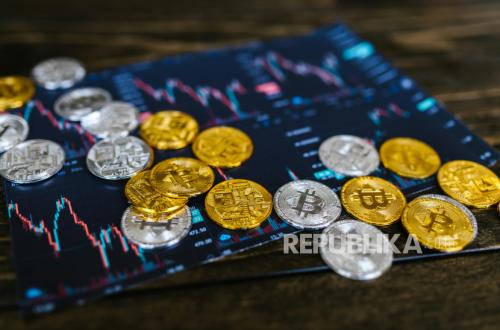
The Indonesian blockchain and crypto asset industry is beginning to enter a new phase, driven by stronger regulation and the expanding use of blockchain technology in the real sector. The development is no longer solely related to crypto asset trading, but is starting to encompass asset tokenisation, intellectual property, and the development of digital infrastructure.
Indodax CEO William Sutanto said that regulatory strengthening is one of the important factors in the development of the crypto asset industry. According to him, regulatory certainty can serve as a foundation for industry players to expand innovation while connecting with a larger financial ecosystem.
“We do not see the transition to the OJK as something to be feared. The soft landing approach has made the change process go quite well. The most important thing is how stronger regulatory certainty can become a foundation for the industry to become a space for innovation and broader integration with the financial ecosystem while maintaining consumer protection,” William said during a panel discussion at Indonesia Blockchain Week 2026, according to a press release on Monday (17/8/2026).
William assessed that regulators need to maintain a balance between space for innovation, market access, and consumer protection. This is considered important because the development of crypto technology and business models is relatively fast.
“The crypto industry is developing very quickly. Therefore, what needs to be continuously sought is a balance so that innovation still has room to develop, while consumer protection remains a priority,” he explained.
From an industry competition perspective, the increasing number of licensed exchanges is considered to provide more choices for consumers. However, William reminded that the growth in the number of players needs to be accompanied by market volume development to avoid increasing the risk of consolidation.
“More players certainly provide more choices for consumers. However, we also need to see how the market continues to develop. Because if the number of players increases while market volume does not grow in line, consolidation could become one of the dynamics that occurs going forward,” he added.
Beyond trading activities, blockchain technology is beginning to be developed to expand access to assets in the real sector. One of its uses is through the tokenisation of real world assets (RWA), which allows certain assets to be represented digitally and divided into smaller ownership units.
Minister of National Development Planning/Head of Bappenas Rachmat Pambudy said that blockchain technology can be used to represent various assets, ranging from securities, commodities, gold, property, to infrastructure.
“Small investors, medium investors, large investors can become part of the investment ecosystem because of blockchain and also the ability to digitalise assets and divide them into smaller and more affordable parts for investors,” he said.
The use of blockchain is also beginning to enter the creative economy sector, especially in the management and commercialisation of intellectual property. Minister of Creative Economy/Head of the Creative Economy Agency Teuku Riefky Harsya said the technology can open new models in the management of intellectual property rights and financing.
“Blockchain opens space to strengthen policy, licensing, royalties, and even present new IP-based financing models. But one principle must be maintained: innovation must go hand in hand with legal certainty and consumer protection,” he said.
These developments show that the use of blockchain is beginning to shift from merely digital asset trading infrastructure towards broader use in economic activity. Asset tokenisation and intellectual property have the potential to open new models in ownership, investment, and financing.
For the crypto asset industry, these developments simultaneously increase the need for adaptive regulation and strong governance. Legal certainty is important so that innovation can develop without neglecting consumer protection and compliance.
As a licensed crypto exchange in Indonesia, William said, Indodax views these developments as an opportunity for the digital asset industry to expand its benefits to the economy. The industry’s future development will not only be measured by the growth of trading activity, but also by the ability of blockchain technology to create new uses in the economic sector.
Source: jawawa.id (https://jawawa.id/newsitem/indonesias-crypto-industry-continues-to-grow-blockchain-begins-to-enter-the-real-sector-1786985465)
Originally published by Republika (https://ekonomi.republika.co.id/berita/tjx30e416/industri-kripto-ri-terus-berkembang-blockchain-mulai-masuk-sektor-riil), translated from Indonesian