
Indonesia's Credibility Tested by Global Volatility
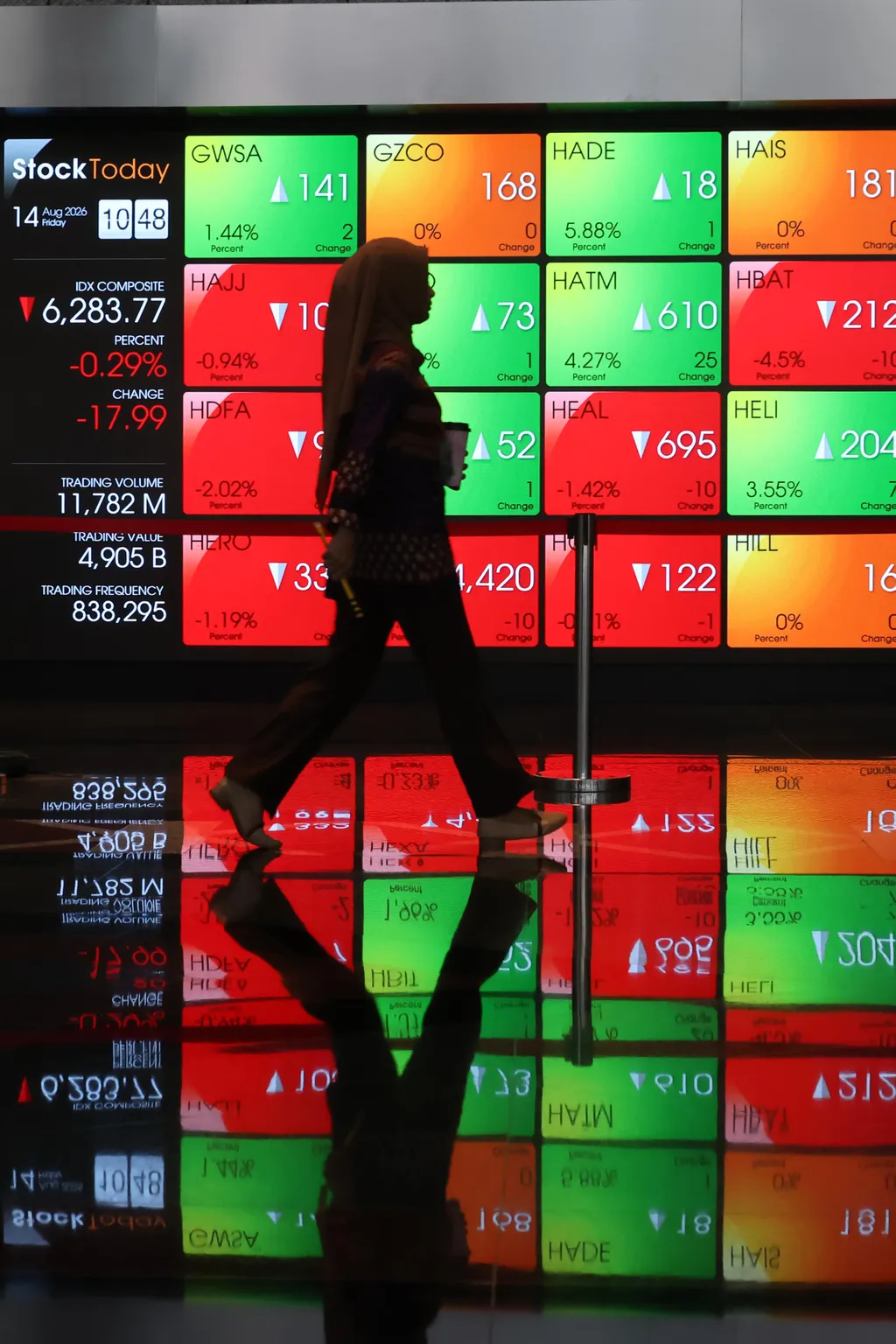
Indonesia’s vision for high growth is once again being obstructed by global uncertainty. Simultaneously, legal certainty and the business climate remain unfinished tasks, despite these aspects being decisive factors for the influx of investment as a primary engine of growth.
This was a central theme in a discussion forum titled ‘Reclaiming Global Trust: Indonesia’s Investment Agenda for a Volatile World’, organised by Bank UOB Indonesia in Jakarta on Tuesday (15/09/2026).
UOB ASEAN Economist, Enrico Tanuwijaya, stated that current global uncertainty remains high. In addition to surging oil prices and inflation risks, the direction of monetary policy is also influencing global economic growth, which is expected to enter a slow trajectory.
The US Federal Reserve is set to make a decision regarding its policy interest rate direction on Thursday (17/09/2026) local time. Markets anticipate that the Fed will likely raise its benchmark interest rate by 25 basis points (bps) to a level of 3.5-3.75 per cent.
On the other hand, Bank Indonesia (BI) had already preceded the Fed by raising its interest rate by 100 bps in May-June 2026 to a level of 5.75 per cent. This means that even if the Fed tightens its policy, the interest rate differential between the US and Indonesia remains at 200-225 bps.
“If the Fed rate rises, it is almost certain. However, the concern is how much more will follow in the future. Because uncertainty is increasing, investor trust is declining,” said Enrico.
Therefore, he suggested that such trust should be built by providing legal and business certainty. In this regard, the government could begin building confidence through fiscal measures, specifically regarding the sustainability of regional development through the allocation of regional transfer funds (TKD).
This comes as the government has continued to cut TKD budgets since 2025. Initially, TKD funds were reduced from an initial allocation of Rp 919 trillion to Rp 869 trillion. Furthermore, in 2026, the TKD allocation was cut again, leaving only Rp 693 trillion.
Every quarter, approximately US$9 billion is returned to the home countries in the form of dividend payments. If we are successful, they will stay here, and automatically, they will reinvest.
From such certainty, investor confidence is expected to strengthen, ensuring investment continues to flow into Indonesia. Unfortunately, current practices show that investment growth tends not to be accompanied by reinvestment.
This is reflected in Indonesia’s primary income account deficit. Citing data from the Indonesian Balance of Payments (BOP) for the second quarter of 2026, the primary income account recorded a deficit of US$9.7 billion, an increase from the previous quarter’s deficit of US$9.1 billion.
He warned that the primary income account deficit is one of the contributors to Indonesia’s current account deficit. Therefore, with legal and business climate certainty, the Indonesian economy will not only grow, but domestic resilience will also become more robust.
Meanwhile, the Director of Regional Promotion for Southeast Asia, Australia, New Zealand, and the Pacific at the Ministry of Investment and Downstreaming/Investment Coordinating Board (BKPM), Saribua Siahaan, stated that investment is the key for Indonesia to achieve 8 per cent growth.
“There are two major indicators that investors always consider before investing in Indonesia. The first is the issue of policy, and the second is the issue of land. If these two things are clear, it means investors will see that the domestic market still holds future prospects,” he said.
In this regard, investors most frequently question regulatory certainty regarding permits and land use. Additionally, another factor frequently complained about by investors is the implementation of Domestic Component Level (TKDN) policies.
Previously, most US-based businesses complained about import regulations in Indonesia, particularly regarding the import of raw material components. This was revealed by the Chief Country Representative for Indonesia at the US-ASEAN Business Council (USABC), Nugraheni Utami, in a discussion forum held by HHP Law Firm in Jakarta on Wednesday (09/09/2026) evening.
On the same occasion, UOB Strategic Communications and Brand Head, Luke Ariefiandi, stated that the business world requires legal certainty and policies that support the business climate.
Legal certainty and fiscal discipline would mitigate foreign investors’ concerns regarding domestic market volatility.
This is especially pertinent as Indonesia faces challenges both globally and domestically, ranging from exchange rate fluctuations and high global interest rates to uncertainty in import prices and inflation.
“This certainly impacts the confidence of global investors, who are becoming increasingly selective in determining investment destinations,” he said.
To strengthen market confidence, the simplification of investment permits needs to be supported by transparency in expenditure allocation and political stability. Legal certainty and fiscal discipline will dampen foreign investors’ fears regarding domestic market volatility.
Meanwhile, Bank Indonesia reported that Indonesia’s International Investment Position (IIP) for the second quarter of 2026 recorded a net liability of US$197.4 billion. This figure decreased compared to the net liability at the end of the first quarter of 2026.
This decrease occurred because the position of Foreign Financial Liabilities (KFLN) fell by 1.9 per cent, from US$783.7 billion in the first quarter of 2026 to US$769 billion in the second quarter of 2026.