
Indonesia's cosmetics industry grows 6.3% annually, BPOM issues new certification regulation
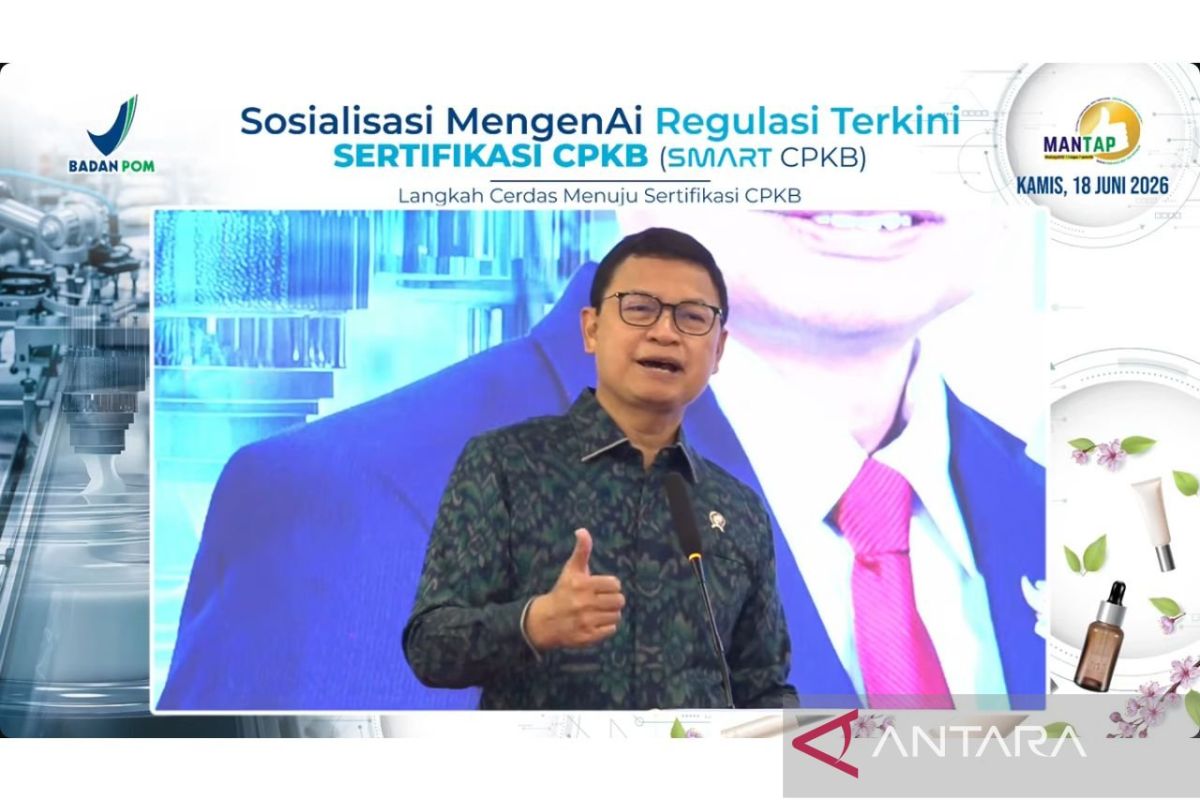
Jakarta (ANTARA) - The Head of the Food and Drug Supervisory Agency (BPOM), Taruna Ikrar, stated that the cosmetics industry in Indonesia is growing significantly, reaching 6.3% per year. “Business in the cosmetics sector is increasing by 6.3% per year,” said Taruna Ikrar during a dissemination event for BPOM Regulation No. 8 of 2026 concerning Good Manufacturing Practice Certification for Cosmetics in Jakarta on Thursday. According to him, the cosmetics market is very promising because its market spans from infants to the elderly. “Almost everyone in Indonesia, from babies to grandparents, now needs cosmetics, so our market share continues to grow. I say babies also need cosmetics because of soap and everything; the manufacturing of that soap is part of the cosmetics manufacturing certification,” Taruna Ikrar said. He noted that the market value of the Indonesian cosmetics industry has reached Rp110 trillion this year. He added that the beauty industry has the potential to book up to Rp176 trillion. “We actually have an opportunity of up to 10 billion US dollars, or around Rp176 trillion. There has been an extraordinary increase from this cosmetics-based economy. So do not underestimate it as just a powder or beauty business; its value can reach hundreds of trillions of rupiah,” Taruna Ikrar said. To boost the cosmetics industry, BPOM has issued BPOM Regulation No. 8 of 2026 on Good Manufacturing Practice Certification for Cosmetics (CPKB). The regulation provides ease of doing business for 1,630 business operators in the Indonesian cosmetics industry. Additionally, the regulation aims to ensure high-quality domestic cosmetic products. “So that our domestic products become king in their own country, quality must improve. The key is that factories, quality, and standards must be properly regulated. That is why we updated this regulation,” Taruna Ikrar said.