
Indonesia's Concrete Actions to Safeguard Energy Security
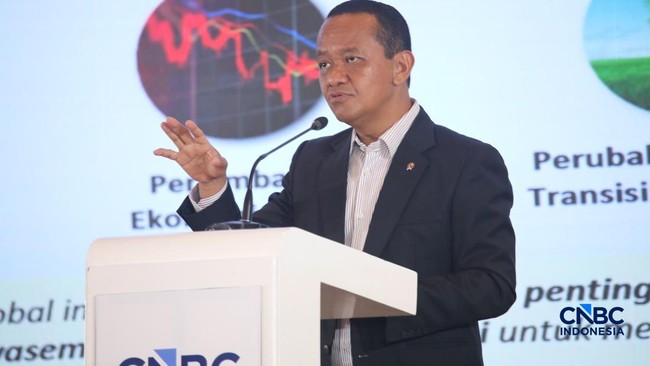
Jakarta, CNBC Indonesia - The Indonesian government is intensifying efforts to achieve energy security, particularly in light of political tensions in the Middle East. Minister of Energy and Mineral Resources Bahlil Lahadalia acknowledged the urgency, recalling Indonesia’s peak oil production of 1.6 million barrels per day in 1996-1997. “That was the golden era of the energy sector, and 43% of our state budget in 1996-1997 came from oil and gas,” Bahlil stated at the CNBC Indonesia Energy Forum in Jakarta on Thursday (25/6/2026).
Today, rising global uncertainty has disrupted energy distribution in many countries, causing significant price spikes. Indonesia currently imports around 1 million barrels per day to meet domestic demand. In response, the government is pursuing several strategies to boost domestic oil production. These include optimising existing fields with enhanced technology such as fracking, Enhanced Oil Recovery (EOR), and horizontal drilling. The government also plans to reactivate idle wells; out of 7,345 idle wells with hydrocarbon potential, 792 were reactivated in 2025, and a further 5,771 are being considered for cooperation agreements to increase output. “We have no choice but to accelerate construction to enable production. This approach is being implemented partly in Java and partly in Papua,” Bahlil explained. Additionally, the government will push for exploration of oil and gas potential in Eastern Indonesia through more attractive cooperation mechanisms and incentives, including the offering of 118 potential oil and gas blocks.
Alongside fossil fuel development, the government is advancing new and renewable energy (EBT) programmes. National Energy Council member Mohamad Fadhil revealed that President Prabowo Subianto is pursuing an ambitious project to build a 100 GW solar power plant (PLTS) at an estimated cost of Rp1,800 trillion. The project aims for energy self-sufficiency, reducing reliance on diesel power plants in Eastern Indonesia, and driving the energy transition. Other programmes include converting 120 million motorcycles to electric power and implementing the B50 biodiesel mandate starting 1 July 2026. Fadhil stressed the importance of maintaining consistency in the energy transition even if geopolitical conditions ease. “We must not be complacent. The challenge is to remain consistent when the situation calms down. We encourage all parties to consistently implement this energy transition programme despite future uncertainties,” he said.
Chairman of the House of Representatives Commission XII, Bambang Patijaya, affirmed that Indonesia’s energy resilience and supply remain secure despite global challenges. He noted that JPMorgan recently ranked Indonesia second out of 52 countries for energy resilience. “From March until now, Indonesia’s energy resilience has been fine. Despite challenges, all problems can be overcome because we are under pressure,” Bambang said. To ensure secure supply, regulations now allow Lemigas to act as an extension of the state, facilitating direct procurement agreements with partner countries. “The advantage is that Lemigas is mandated to conduct direct procurement with various criteria, and all government aggregation guarantees supply availability,” he added.
From a corporate perspective, Pertamina Vice President Director Oki Muraza outlined mitigation measures to secure energy supply and maintain domestic resilience. Pertamina is building defensive layers, pursuing availability, and increasing upstream production to reduce crude oil imports. “Downstream, we are diversifying by reducing diesel with B40-B50, cutting petrol imports and replacing them with ethanol. Geothermal also contributes as a primary source,” Oki stated. He also confirmed that Pertamina continuously consults with the DPR and the government regarding affordability to ensure measures benefit the public and keep activities running. Meanwhile, Pertamina Hulu Rokan Vice President Exploration Suprayitno Adhi Nugroho highlighted efforts to capture opportunities from wells in the Rokan Block, citing successful exploration at Astrea and Pinang East. The Pinang East area alone now contributes 2,500 barrels of oil per day. “It truly is a game changer; it turns out that in a mature block, we still have hidden potential,” he explained. The company is pursuing a firm work commitment (KKP) involving massive exploration, seismic surveys, and Enhanced Oil Recovery (EOR) programmes to increase national oil and gas reserves and production.