
Indonesia's Complex Relationship with AI
Staring at a smartphone screen today feels vastly different from just a few years ago. Unbeknownst to us, we have stepped into an era where artificial intelligence (AI) is no longer just a sci-fi film trope.
From social media algorithms that anticipate our thoughts, virtual assistants handling daily routines, to automatic text and image generators, AI has quietly infiltrated nearly every aspect of modern life.
High digital optimism
How does Indonesian society view this phenomenon?
Rather than fearing replacement by robots, the majority of Indonesians have shown a remarkably open and adaptive acceptance of AI. This optimism is supported by Indonesia’s increasingly robust digital infrastructure.
According to the latest report by the Indonesian Internet Service Providers Association (APJII), internet penetration has reached 81.72%, meaning approximately 235 million Indonesians are actively online.
This ease of internet access correlates with the public’s affinity for digital socialisation. Annual We Are Social data reveals 180 million active social media users in Indonesia, equivalent to 62.9% of the total population.
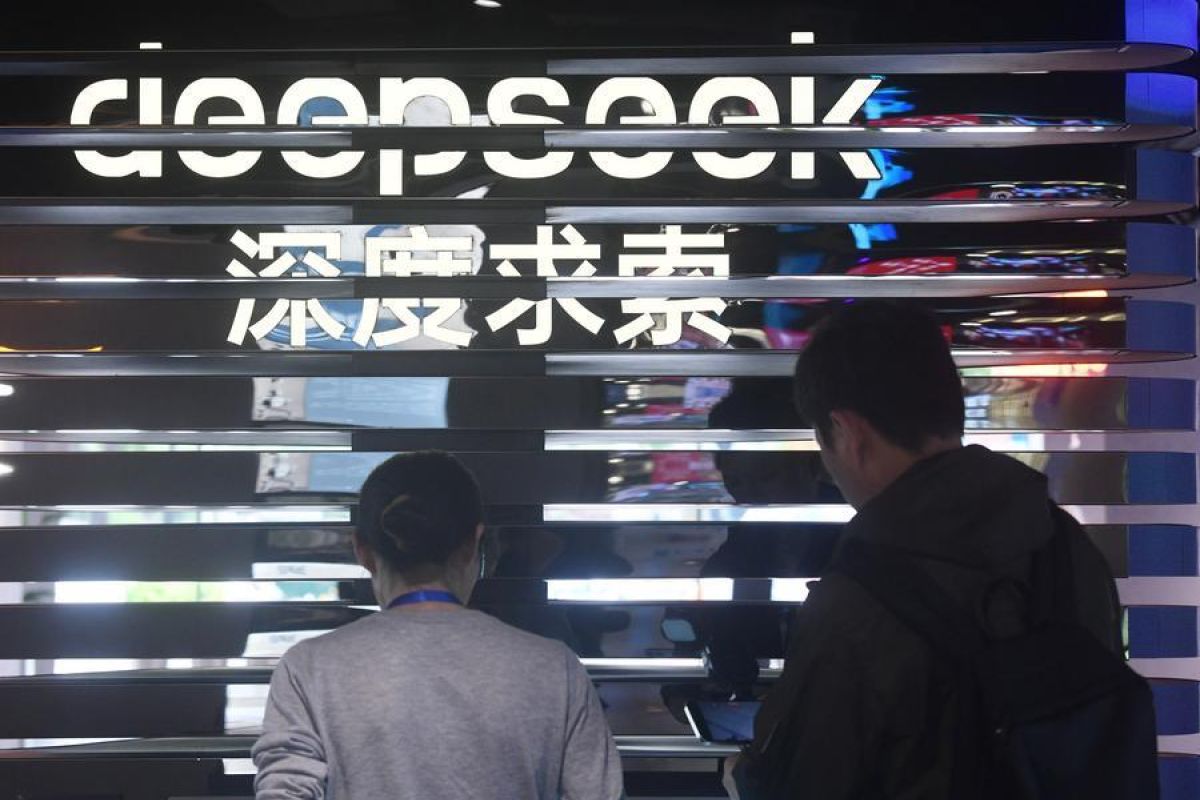
With such a massive digital ecosystem, it is unsurprising that adoption of new technologies like AI has surged without hindrance. The same report states that over a third of Indonesian netizens regularly use AI platforms like DeepSeek, Google Gemini, and ChatGPT monthly for various needs.
AI usage is no longer confined to corporate computer labs; it has become commonplace among the general public across all ages and professions.
The stories of those ‘befriending’ AI
To see how this technology operates in real life, let’s hear directly from three individuals from different generations who have successfully ‘tamed’ AI to simplify their lives.
Approaching fifty, Arief (47) proves age is no barrier to tech literacy. As a private sector employee active on social media, he once struggled to craft words or find engaging content ideas.
‘Initially, I felt inferior seeing young people’s creative posts. But once I discovered AI writing apps, I just type my key points, and boom! A neat draft caption with tags appears,’ Arief said during an interview at a Bogor, West Java, coffee shop on Sunday (17 May).
For Arief, AI has slashed his thinking time and enabled him to create compelling content. The benefits are tangible; he can maintain social media interactions confidently without stressing over rigid grammar.
In South Jakarta, Laela (45), an administrative staff member at a prestigious private university, finds her workload significantly lighter thanks to AI. Every day, her desk is inundated with hundreds of emails and documents requiring prompt responses.
‘In the past, replying to official emails from superiors, lecturers, or external parties could take a whole day due to crafting precise formal sentences. Now, I use AI to draft replies or compile monthly reports. Administrative tasks that once took hours are now completed in minutes,’ Laela said at her office on Monday (18 May).
For Laela, AI is a free personal assistant allowing her to focus on strategic tasks requiring human judgment.
Meanwhile, for Gen Z like Alka (21), AI is part of daily life. A geology student, she frequently uses AI to help with piled-up academic tasks, but insists she does not use it for cheating.
‘I don’t ask AI to complete assignments outright – that’s cheating. I use it as a discussion partner or for brainstorming. When stuck for ideas or struggling to summarise complex foreign-language material, I ask AI to break down the key points,’ Alka explained at her Bogor, West Java, home.
She says AI greatly accelerates her learning process, especially when campus libraries are closed and lecturers are hard to reach.
Negative impacts and future challenges
Like any new technology, AI in Indonesia is a double-edged sword. On one hand, its benefits are clear: boosting productivity, saving operational time, overcoming language barriers, and opening limitless creative avenues for all.
On the other hand, AI poses several negative impacts that must be monitored.
In some cases, AI is misused to spread visual deepfake hoaxes or machine-generated manipulative articles. The Indonesian government has classified AI-driven disinformation as a serious risk to national stability and resilience.
Furthermore, excessive reliance on AI can dull human analytical and critical thinking skills. According to Buldan Thontowi S.Psi., M.A., Ph.D, a social psychology researcher from Gadjah Mada University’s Psychology Faculty, frequent AI use for cognitive tasks has negative effects.
‘In experiments, groups using AI to write essays were weakest when explaining their work compared to those writing independently,’ he said. This creates ‘cognitive debt’ – when we use AI too often without exercising thinking skills, we become humans…