
Indonesia’s Cocoa Industry Finds New Opportunities as Processed Products Target Global Markets
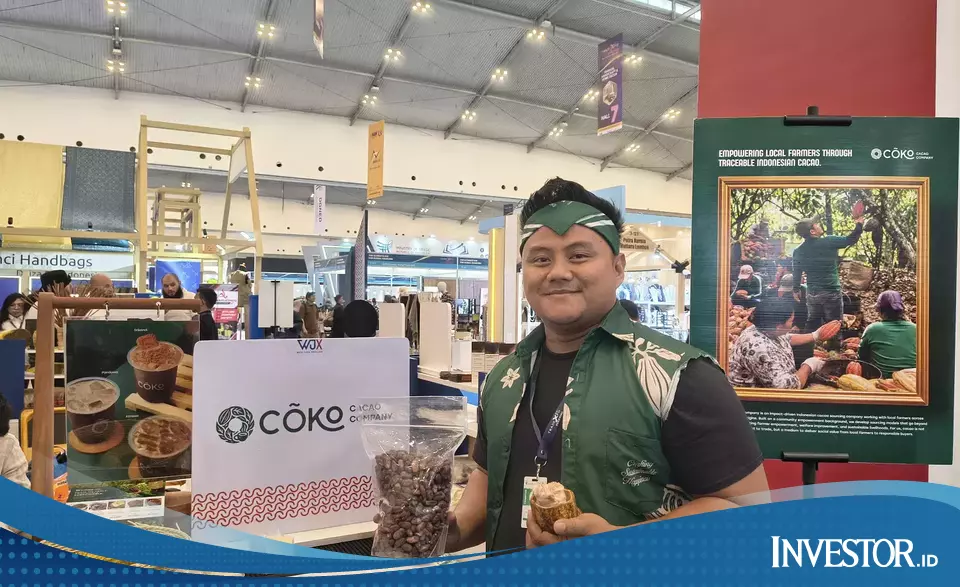
TANGERANG — Indonesia’s cocoa industry is offering broader business opportunities than the trade in raw beans alone. Developing derivative products such as cocoa powder, butter and paste is opening up opportunities for businesses to enter the processing industry’s value chain and expand export markets.
The shift has also drawn investors’ attention, as downstream processing could increase the economic value of plantation commodities.
One company pursuing this opportunity is Coko Cacao Company. It is expanding from ready-to-drink chocolate beverages into supplying cocoa ingredients to industrial customers. The move began in early 2026, in partnership with farmers in several cocoa-producing regions of Indonesia.
Coko Cacao Company Purchasing Manager Andri Epriasman said the business expansion stemmed from the company’s desire to help farmers secure higher prices for their harvests.
“Until now, farmers have received very low prices after harvesting,” Andri said at Trade Expo Indonesia (TEI) 2026 at ICE BSD, Tangerang, according to a statement from the Ministry of Trade on 2 November 2026.
Coko Cacao Company works with farmers in Pangandaran, Jember, Tabanan, Berau, Polewali Mandar and Merauke. It markets not only cocoa beans but also processed products, including cocoa powder, cocoa mass, cocoa butter, cocoa husk and cocoa nibs.
The products target the business-to-business (B2B) market, in which one company supplies raw materials to another for further processing. This creates opportunities across a broader range of markets, as cocoa products can be used by the food, beverage and cosmetics industries.
Economically, processing cocoa into derivative products can create added value compared with selling raw materials alone. Cocoa butter, for example, is used in food and cosmetics, while cocoa powder is widely used in chocolate-based drinks and foods.
However, the industry’s challenges are not limited to production volumes. Around 99% of Indonesia’s cocoa plantations are managed by smallholders, making harvest quality, crop productivity and supply continuity important factors for processors.
The Ministry of Agriculture also recorded Indonesian cocoa exports of US$2.65 billion in 2024, with a volume of about 348,000 tonnes. The figures highlight the scale of Indonesia’s cocoa trade in international markets. The Government is also encouraging the development of processed products so that more of the commodity’s added value can be retained domestically.
Despite the market opportunities, cocoa processing businesses still face operational risks. Andri said Coko Cacao Company needed to expand its marketing channels and increase production capacity. Meeting orders of more than 10–20 tonnes can take the company around two to three months to produce.
This shows that business growth depends on more than strong demand. The ability to fulfil order volumes, maintain production quality and control costs also determines whether a business can remain sustainable.
For investors, developments in the cocoa industry may make it a sector worth monitoring, particularly businesses involved in plantation processing and the food industry. However, the commodity’s growth potential does not automatically guarantee company profits or rising share prices. Investors should also consider financial performance, profit margins, cash flow and companies’ ability to manage raw-material supplies.
Ultimately, the development of Indonesia’s cocoa industry depends on stronger links between farmers, processors and export markets. If that chain grows stronger, cocoa could deliver greater economic value not only for companies but also for farmers, who are key suppliers to the industry.
Source: jawawa.id (https://jawawa.id/newsitem/indonesias-cocoa-industry-finds-new-opportunities-as-processed-products-target-global-markets-1793658017)
Originally published by investor.id (https://investor.id/money-lab/460411/industri-kakao-indonesia-punya-peluang-baru-bisnis-produk-olahan-mulai-bidik-pasar-global), translated from Indonesian