
Indonesia’s Civil Service Recruitment System Dates Back to the Dutch Era: The Story Behind It
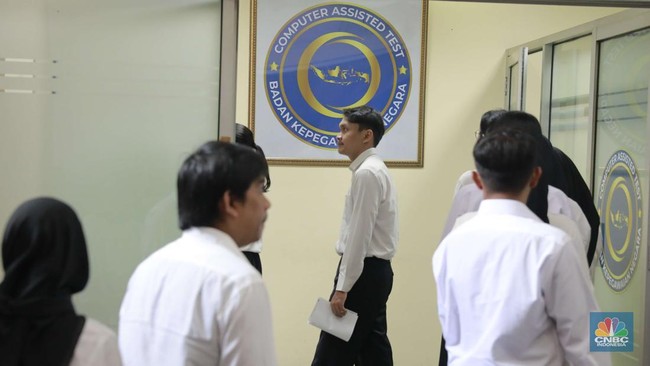
Jakarta, CNBC Indonesia – Behind the fierce competition in Indonesia’s civil servant recruitment examinations each year lies a long history dating back to the Dutch colonial era. The foundations of the government’s civil service system can be traced to reforms under Herman Willem Daendels, Governor-General of the Dutch East Indies from 1808 to 1811.
At the time, the Dutch colonial government was undertaking a major overhaul of its administrative system. Daendels believed that the government established after the collapse of the Dutch East India Company (VOC) needed a more orderly bureaucracy. During the VOC era, he argued, no such system existed, leaving administration vulnerable to abuse and corruption.
In Sentralisme Kekuasaan Pemerintahan Herman Willem Daendels di Jawa 1808–1811 (2005), historian Djoko Marihandono says Daendels sought to put the bureaucratic disorder in order. He brought a reformist spirit influenced by the French Revolution and the governing model of Napoleon Bonaparte.
Daendels then carried out a sweeping reorganisation of Java’s bureaucracy. He sought to replace an administration still shaped by older practices with a more centralised system and a clearly defined hierarchy.
Under the new system, officials were appointed according to their positions and rank, with clearer authority and responsibilities. The government also paid employees in return for their work.
Historian Ong Hok Ham, in Terbentuknya Sebuah Elite Birokrasi (1983), says Daendels changed the position of the bureaucracy in the Dutch East Indies, particularly in Java. Officials were assigned according to hierarchy and rank.
They were also given uniforms and insignia to signify their roles and status. With this hierarchy in place, orders from the central government could be passed down through successive levels.
The Governor-General no longer needed to issue instructions directly to the lowest-level employees. Directives could be given to senior officials, who would then pass them on to their subordinates according to the established structure.
The system made government more centralised. Each official had a clearer position, function and responsibility in administering the government.
Salaries were also an important part of the reforms. Daendels sought to ensure that officials earned their income from the state, so they would not need to seek additional gains through their positions.
In addition to their salaries, employees had the opportunity to receive higher pay in recognition of contributions made in line with their duties. On taking office, they were also required to swear an oath of office to their superior.
Daendels’ system therefore did more than determine who would serve as an official: it also regulated relationships between superiors and subordinates, how duties were carried out, and how the state compensated its employees.
These principles were inherited when Indonesia became independent, although they have been adapted over time, including in the civil servant recruitment examinations held by the government.
Source: jawawa.id (https://jawawa.id/newsitem/indonesias-civil-service-recruitment-system-dates-back-to-the-dutch-era-the-story-behind-it-1793533826)
Originally published by CNBC Indonesia (https://www.cnbcindonesia.com/lifestyle/20261101165625-33-781275/sistem-cpns-ri-ternyata-dari-zaman-belanda-ini-ceritanya), translated from Indonesian