
Indonesia's Carbon Industry Seeks to Expand Access to International Markets
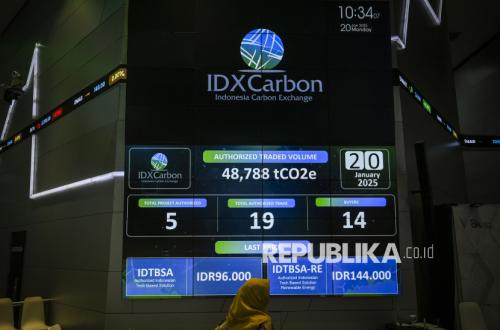
The Indonesian carbon industry is seeking to expand its market access, not only through the voluntary carbon market but also via compliance markets. This opportunity is increasingly open following Indonesia’s cooperation with several countries through the framework of Article 6 of the Paris Agreement, including with South Korea.
Strengthening market access is a crucial challenge for the national carbon industry amidst Indonesia’s vast nature-based carbon asset potential. Beyond generating high-quality, high-integrity carbon credits, domestic projects need access to international markets so that the economic value of these assets can develop more broadly.
Founder of VCarboN, Heppy Trenggono, stated that Indonesia possesses enormous nature-based carbon asset potential, but market access must be continuously strengthened. “Indonesia has a very large potential for nature-based carbon assets. The challenge is not only producing high-quality and high-integrity carbon credits but also ensuring these assets have access to various international markets, both voluntary and compliance markets,” Heppy said during a meeting with Minister of Environment Moh Jumhur Hidayat in Jakarta on Monday (10/8/2026).
During the meeting, Heppy and Jumhur discussed the development of Indonesia’s carbon industry and opportunities to expand the access of domestic carbon projects to international markets. The government and industry players also discussed strengthening the carbon ecosystem so that market development can provide economic benefits to the community.
Minister of Environment Moh Jumhur Hidayat said the government will continue to refine the necessary regulations to support the development of Indonesia’s carbon industry. “We continue to tidy up all the necessary regulations so that the carbon industry in Indonesia can develop well,” Jumhur explained.
Jumhur also stressed the importance of ensuring that the economic benefits of the carbon industry are felt by the public. According to him, every carbon project needs to have a clear benefit-sharing mechanism. “It is important that every project has a clear benefit-sharing mechanism. In addition, we are also formulating ways for the wider community to access the carbon industry,” Jumhur clarified.
The voluntary carbon market is a market where companies buy carbon credits on their own initiative to reduce their emission footprint. Meanwhile, the compliance carbon market is a carbon market established and regulated through government provisions, including obligations for certain business actors to meet emission targets or limits.
One market of particular interest is South Korea. Indonesia and South Korea have pioneered cooperation on the implementation of Article 6 through bilateral cooperation between the two countries. Heppy stated that this intergovernmental cooperation needs to be translated into concrete transactions and market access for Indonesian carbon projects.
“The Indonesia-South Korea cooperation framework has been pioneered by both governments. For us as industry players, the next important step is how these opportunities can be translated into real transactions and market access for Indonesian carbon projects,” Heppy said.
According to him, the voluntary carbon market remains an important market for developing nature-based carbon projects. However, Indonesian industry players also need to build readiness to enter the compliance market, including through Article 6 mechanisms and Internationally Transferred Mitigation Outcomes (ITMO).
VCarboN is developing a portfolio of nature-based projects, particularly in peatland and mangrove ecosystems. The company is also building relationships with various industry players and international markets. “We see the voluntary and compliance markets as two complementary pathways. The more open Indonesia’s access to both, the stronger the position of Indonesian carbon assets in the global carbon economy,” Heppy said.
The dialogue with the government is part of efforts to push Indonesia’s carbon industry ecosystem beyond just project development. Expanding international market access is considered crucial so that the potential of Indonesian carbon assets can develop into a source of economic value while providing broader benefits to the community.
Source: jawawa.id (https://jawawa.id/newsitem/indonesias-carbon-industry-seeks-to-expand-access-to-international-markets-1786442043)
Originally published by Republika (https://esgnow.republika.co.id/berita/tjlm6l416/menteri-lh-dan-vcarbon-dorong-industri-karbon-ri-masuk-pasar-global), translated from Indonesian