
Indonesia's Capital Market Shows Resilience Amid Global Pressures, Investor Base Surges
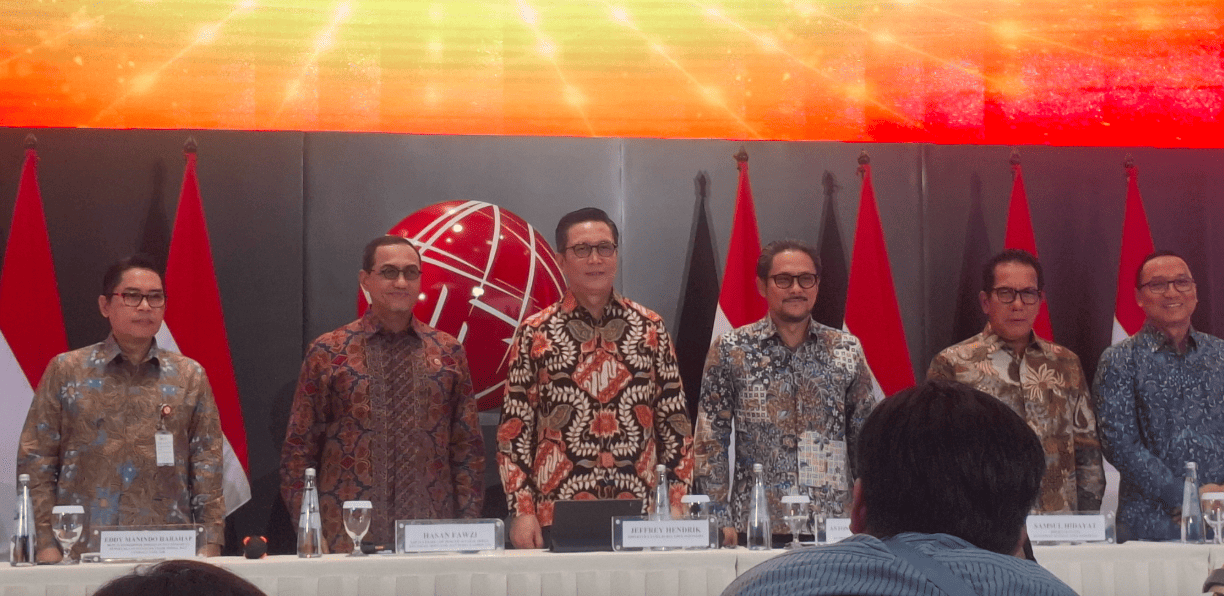
Indonesia’s capital market is continuing to strengthen its resilience amidst various global and domestic dynamics that have exerted pressure throughout 2026. The 49th anniversary of the reactivation of the Indonesian capital market serves as an opportunity to reinforce the foundations of a trustworthy and robust market, while ensuring its ability to grow sustainably amid change and uncertainty.
Chief Executive of Capital Market, Derivative Finance, and Carbon Exchange Supervision at the Financial Services Authority (OJK), Hasan Fawzi, stated that the capital market faced considerable pressure throughout 2026. This was reflected in the performance of the Jakarta Composite Index (IHSG), which, year-to-date as of 7 August 2026, had corrected by 25.87% to a level of 6,409.65. Stock market capitalisation also declined by 29.37%.
This pressure was driven by a succession of external and domestic dynamics, including uncertainty over tariff policies and trade tensions between nations, escalating geopolitical risks particularly in the Middle East, rising global oil prices, and increasing threats of global inflation. These conditions put pressure on the rupiah exchange rate and interest rates, triggering portfolio rebalancing by investors and causing the market to enter a consolidation phase after reaching record highs earlier in the year.
“Despite these pressures, our capital market has factually demonstrated a strong level of resilience,” Hasan said during a press conference marking the 49th anniversary of the Indonesian Capital Market at the Indonesia Stock Exchange (IDX) in Jakarta on Monday (10/9).
This resilience is supported by the country’s relatively strong macroeconomic conditions. Economic growth in the first and second quarters of 2026 remained above 5%, with first-half growth recorded at around 5.4%. From a market perspective, the number of investors has grown significantly. As of 7 August 2026, the number of investors reached 30.27 million Single Investor Identifications (SID), an annual increase of 48.67%. This achievement has already reached 151% of the roadmap target, which was originally set for 2027.
Corporate fundraising activities have also continued. There are currently 962 listed companies, and throughout 2026, 135 public offerings have been conducted with a total fundraising value of Rp123.21 trillion. The average daily transaction value grew by more than 23% to Rp22.26 trillion. Assets under management in the industry reached Rp1,026.05 trillion and continued to record a positive net subscription. Meanwhile, fundraising through securities crowdfunding to support MSMEs has surpassed Rp2 trillion.
Hasan noted that these achievements indicate the capital market still has significant room for growth. Current market capitalisation is approximately 70% of the indicative target, while the number of listed companies has reached 87% of the target and the average daily transaction value is around 89% of the target. “This 49th anniversary momentum must be an opportunity to continue strengthening the integrity of the capital market,” he said.
On the same occasion, IDX President Director Jeffrey Hendrik stated that market resilience is also evident from the market capitalisation value, which still stands at around Rp11,200 trillion, placing Indonesia 20th globally. The average daily transaction value remains around Rp22.3 trillion, or approximately US$1.2–1.3 billion, positioning Indonesia 18th in the world for daily transaction value.
Hendrik added that the launch of a gold-based Exchange Traded Fund (ETF) instrument during the anniversary further strengthens the IDX’s position as a multi-asset class exchange. Beyond equities, the IDX already trades bonds and sukuk, non-equity products, structured warrants, single stock futures, mutual funds, derivatives, and carbon units.
On the supply side, the IDX has recorded seven new initial public offerings (IPOs) this year, including one categorised as a lighthouse IPO, bringing the total number of listed companies to 962. This number of IPOs still places the IDX second in the ASEAN region. Hendrik acknowledged that the number of IPOs is relatively lower than the average of previous years, a trend also seen on global exchanges due to market uncertainty. The IDX expects the number and quality of new issuers to improve as macroeconomic conditions recover.
From the investor side, the total number of capital market investors has reached approximately 30.2 million, an increase of 9.9 million investors in just seven and a half months. This represents the highest investor growth in the history of the Indonesian capital market. Samsul Hidayat, President Director of PT Kustodian Sentral Efek Indonesia (KSEI), noted that the total number of capital market SIDs increased by nearly 49% compared to the end of 2025, from around 20.35 million to over 30.3 million SIDs. Including non-capital market activities, the total number of S-Invest SIDs reached approximately 29 million, an increase of 51%. Despite this growth, the distribution of securities ownership remains concentrated on the island of Java, which accounts for around 65% of SIDs.