
Indonesia’s Capital Market Risks Downgrade to Standalone Market Status; OJK Vows All-Out Reform
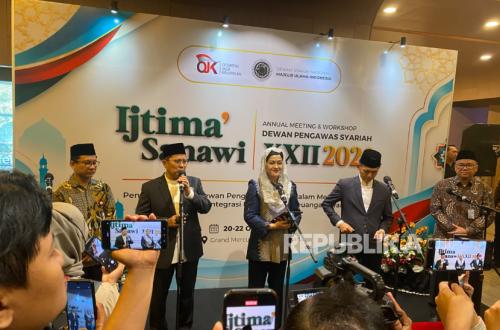
JAKARTA – Financial Services Authority (OJK) Chair Friderica Widyasari Dewi stressed that the OJK had been making the utmost efforts to reform Indonesia’s capital market since early 2026, when turmoil hit the market. These efforts included taking firm action against violations in the Indonesian capital market.
She said the all-out effort was not being made solely because of the threat of Indonesia’s status being downgraded from emerging market to standalone market, following an announcement by Morgan Stanley Capital International (MSCI) on 16 October 2026.
“Since January 2026, after the turmoil in the capital market began, we have already been carrying out major reforms. You could say we’ve gone all out,” Friderica told reporters after attending the annual Ijtima’ Sanawi event organised by the National Sharia Council of the Indonesian Ulema Council (DSN-MUI) in Central Jakarta on Tuesday (20 October 2026).
Among the OJK’s reforms is a disclosure policy requiring the publication of the names of shareholders holding more than 1 per cent of a listed company. “Here, in Indonesia’s capital market, the threshold is 1 per cent. In other markets it’s 5 per cent,” she said.
Another reform is the High Shareholding Concentration (HSC) policy, which addresses situations in which share ownership is concentrated among a small number of shareholders. It is intended to increase market transparency, strengthen investor protection and ensure benchmark indices move in a fairer and more credible manner.
“HSC is an addition; it wasn’t requested. It is something we have added, with provisions on HSC. As far as I know, which markets have it? Only us [Indonesia] and Hong Kong,” said Friderica, who is also known as Kiki.
The OJK has also introduced a 15 per cent free-float requirement, referring to shares available for public trading. The policy is intended to improve trading liquidity, strengthen good corporate governance (GCG), and support fairer and more transparent share-price formation.
“Then there’s free float. A 15 per cent requirement is not bad, although we are implementing it in stages; we can’t do it all at once,” she said.
Another measure is a classification system that expands the categories used to profile investors in Indonesia’s capital market. It increases the number of investor groupings from nine to 39 sub-categories, with the aim of improving data transparency and meeting global standards, including requirements from index providers such as MSCI.
Source: jawawa.id (https://jawawa.id/newsitem/indonesias-capital-market-risks-downgrade-to-standalone-market-status-ojk-vows-all-out-reform-1792500695)
Originally published by Republika (https://ekonomi.republika.co.id/berita/tn7gfm370/pasar-modal-indonesia-terancam-turun-kasta-jadi-standalone-market-ojk-tegaskan-all-out), translated from Indonesian