
Indonesia's Biodiversity Status: Javan Rhino Population Dwindles to 79
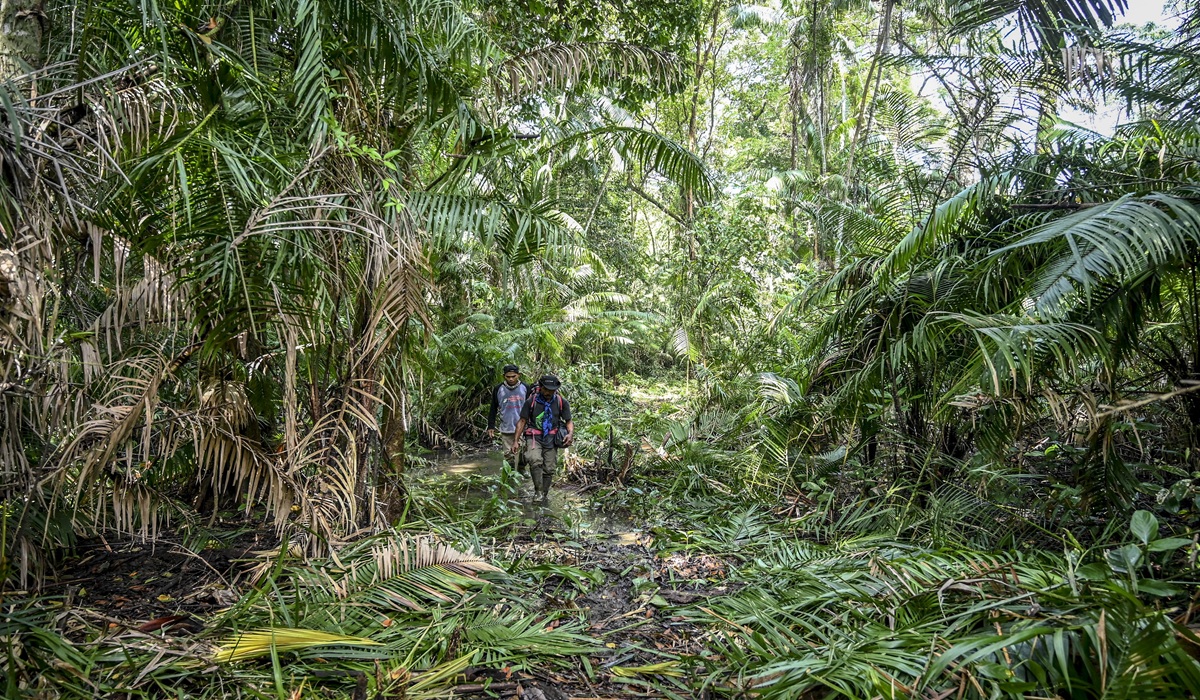
The government has released a status report on biodiversity in the Bali-Nusa Tenggara, Java, Maluku, and Papua regions. The latest research findings serve as a prerequisite for formulating adaptive, measurable, and effective policies. The biodiversity status document provides a scientific basis to support development planning, natural resource management, and evidence-based decision-making, while strengthening the implementation of the IBSAP 2025–2045 as a roadmap for biodiversity management towards a Golden Indonesia 2045.
Director of Environment at the Ministry of National Development Planning/Bappenas, Nizhar Marizi, stated that biodiversity data can strengthen spatial planning in the National Medium-Term Development Plan (RPJMN), ensuring regional development is based on local biodiversity potential. This data can also be utilised in drafting spatial plans (RTRW) and provide comprehensive guidelines for determining spatial functions. “Biodiversity data can be integrated into the preparation of strategic environmental assessments, environmental management and protection plans, and regional biodiversity profiles, which will become modalities in the regional biodiversity management master plan,” Nizhar said during a media gathering in Jakarta on Friday.
Beyond its high richness, the research also found that biodiversity in the Bali–Nusa Tenggara, Java, Maluku, and Papua regions is overshadowed by significant environmental threats. Andes Hamuraby Rozak, Head of the Research Organisation for Life Sciences and Environment at the National Research and Innovation Agency (BRIN), detailed various challenges in each region. In Java, these include land subsidence, particularly in Jakarta, tidal flooding on the north coast, rapid land conversion, the Trans-Java toll road, urban sprawl, and sand mining on Mount Merapi. “Wildlife trade, overtourism, and zoonotic diseases are also serious challenges,” he added.
In Bali–Nusa Tenggara, the threat of primary forest deforestation in Bali and West Nusa Tenggara, and secondary forest loss in East Nusa Tenggara, continues to loom. Other issues include mass tourism, marine plastic pollution, illegal gold mining, and turtle trade. Invasive savanna species, rabies, and anthrax are also still found in the region. In Maluku, nickel mining expansion, deforestation of mountainous areas, trade in parrots, climate change, overfishing, invasive flora, pollution, and land conversion are prevalent. In Papua, deforestation and land conversion for industrial timber plantations, oil palm, roads, and mining are ongoing. The report notes 64 flora species and 23 vertebrate species are critically endangered, alongside coral bleaching in Waigeo, coastal pollution, and roads opening access for wildlife poaching.
Based on the biodiversity status, Java is one of Indonesia’s important biodiversity centres, with at least 12,819 terrestrial flora species, comprising 9,493 seed plants, 3,266 spore-bearing plants, and 601 endemic seed plant species. Its location on the Sunda Shelf, influenced by the Ring of Fire’s geological dynamics, makes Java a centre of endemism and evolution. The region also possesses rich coastal and marine ecosystems, including 11 seagrass species, 493 coral species in the Java Sea, and 400 coral species in the Indian Ocean. Java is a habitat for iconic species such as the Javan rhino, with only about 79 individuals remaining in Ujung Kulon National Park, and the Javan hawk-eagle, with an estimated population of around 511 pairs, reflecting the island’s high ecological value and the critical importance of conservation and research.
The Bali-Nusa Tenggara region, part of the Wallacea area, hosts at least 3,459 flora species, 560 bird species, 137 mammal species, 76 reptile species, 868 marine fish species, and various other biota, including 1,202 mollusc species, 328 crustaceans, and 323 cnidarians. This region has a spermatophyte endemism rate reaching 55%, the highest compared to other regions like Java and Papua, and is home to iconic species such as the Komodo dragon, Bali starling, and Timor deer. As a biogeographical transition zone between Asia and Australasia, Bali–Nusa Tenggara is one of Indonesia’s most important centres for evolution, speciation, and endemism, holding strategic value for conservation and sustainable development.
Maluku, consisting of approximately 2,397 islands, is one of Indonesia’s most important biodiversity centres. Situated between the Wallace and Weber Lines, this region is a unique biogeographical transition zone blending Asian and Australasian flora and fauna, and is part of the Coral Triangle, the world’s centre of marine biodiversity. Maluku is recorded as having 4,383 plant species, including 17 new seed plant species discovered in the last decade, 437 bird species with 126 endemics, and 564 reef-building coral species, representing about 67.9% of the world’s total coral species. This wealth makes Maluku a habitat for various endemic and iconic species, including the Moluccan cockatoo, and a strategic area for conservation, scientific development, and sustainable archipelagic biodiversity management.
Papua is one of the world’s most important biodiversity centres with a very high level of endemism. The region has been identified as having at least 7,994 species of flora and macrofungi, and 7,179 species of fauna, including 703 bird species, 250 mammal species, and 413 reptile species.