
Indonesia's Biochar Industry Urged to Strengthen Quality Standards and Certification
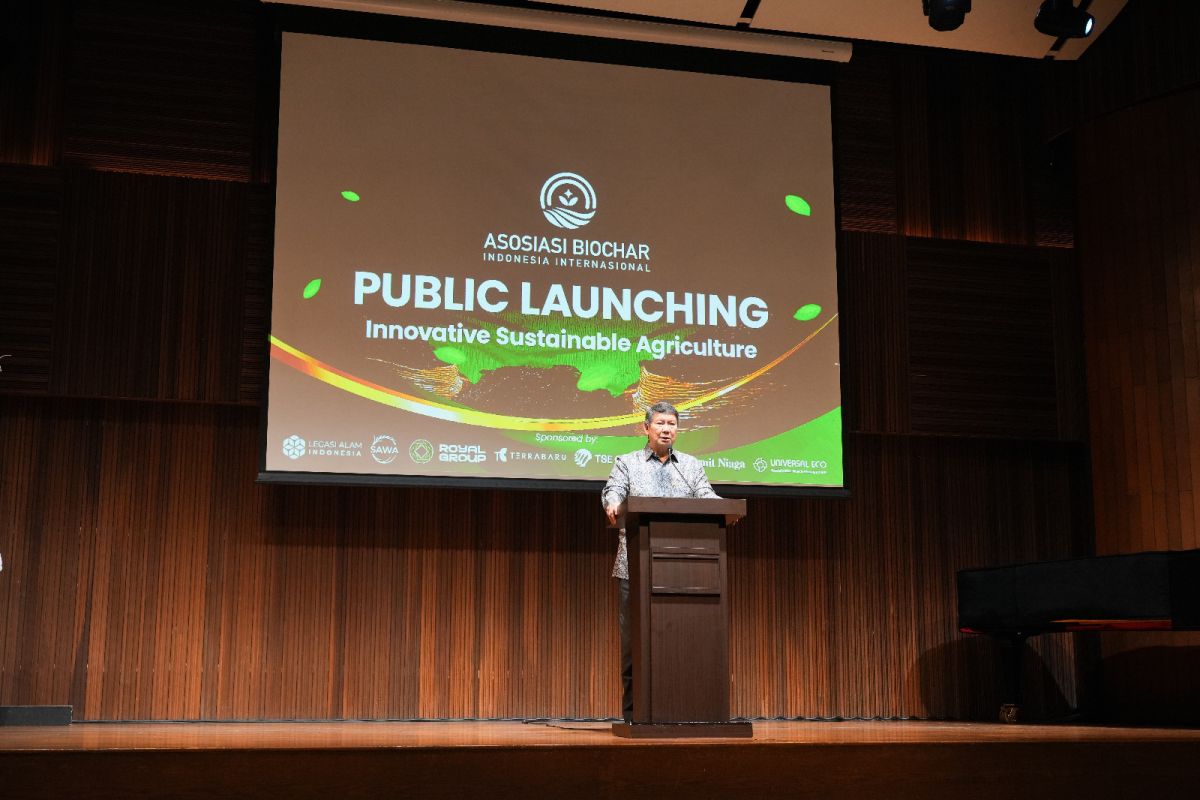
The Indonesian Biochar International Association (ABII) and IDSurvey are strengthening the development of national biochar standards and quality infrastructure as part of efforts to drive the growth of the biochar industry, carbon removal, and climate-smart agriculture in Indonesia. The collaboration was marked by the signing of a Memorandum of Understanding (MoU) between ABII and IDSurvey at the ABII Annual Member Gathering 2026 in Jakarta on Thursday evening (20/8). The cooperation is directed towards developing national biochar standards, building an international-standard biochar laboratory, strengthening testing and quality monitoring systems, and developing certification schemes.
ABII Chairman Hashim Djojohadikusumo said strengthening standards and quality is becoming increasingly important as demand for Indonesian biochar rises, both from domestic and international markets. According to him, biochar has the opportunity to be developed not only as an environmental solution but also as part of strengthening Indonesia’s agricultural sector and carbon economy.
“Biochar is not only an environmental solution, but also a strategic opportunity for Indonesia to strengthen food security, improve farmer welfare, and build a globally competitive carbon economy. Collaboration is the key to realising this potential concretely,” said Hashim.
He noted that demand for Indonesian biochar is currently quite high. A number of prospective users from Japan and Saudi Arabia are said to be interested in utilising biochar, among other things to improve soil moisture retention in regions with dry climate conditions. Hashim assessed that the increase in demand needs to be accompanied by the ability to maintain product quality. According to him, the existence of credible standards and testing systems will help ensure that biochar produced in Indonesia meets market requirements.
“We must produce, and we must produce with the right quality. Let us maintain its quality,” he said.
ABII Executive Director Phil Rickard said the Indonesian biochar industry has in recent years developed from the research and pilot project stage towards an ecosystem involving government, industry, academia, users, and the carbon market. This development is also marked by the increase in biochar production facilities now spread across at least six new provinces.
“In recent years, we have witnessed biochar develop from a technology into an industry, and now towards an ecosystem,” said Phil.
In addition to industry development, ABII is promoting the use of biochar in the agricultural sector through cooperation with the Indonesian Farmers’ Harmony Association (HKTI). One focus is the development of Climate-Smart Agriculture by integrating the use of biochar and the Alternate Wetting and Drying (AWD) method. The implementation is directed at increasing agricultural productivity while reducing methane emissions from the agricultural sector.
ABII is also involved in the preparation of a national biochar roadmap, industry mapping, project methodology development, and the implementation of the Carbon Unit Registry System (SRUK) as part of strengthening carbon governance in Indonesia.
Meanwhile, IDSurvey President Director Arisudono Soerono said the development of the biochar industry requires quality infrastructure support capable of guaranteeing product quality consistency. According to him, increased production capacity needs to be accompanied by measurable testing methods, comparable standards, and certification systems that gain international market trust.
“IDSurvey welcomes this collaboration as an important step to strengthen Indonesia’s biochar quality infrastructure. The development of credible national laboratories and standards will increase market confidence and support the competitiveness of Indonesian biochar at the international level,” said Arisudono.
He said strengthening the biochar industry is also related to the development of the Carbon Economic Value (NEK) policy and the carbon market. Therefore, the involvement of various parties, from government, industry players, investors, academics, associations, to quality assurance institutions is needed to build a sustainable ecosystem.
As a state-owned holding company in the field of Testing, Inspection, and Certification (TIC) as well as Classification & Statutory, the IDSurvey Group, which consists of Biro Klasifikasi Indonesia, SUCOFINDO, and Surveyor Indonesia, will support the development of biochar quality capacity. This support includes the development of laboratory facilities and capabilities, strengthening testing methods and standardisation, consultancy as well as validation and verification of carbon projects, and the development of certification schemes and technical competence.
“Together with ABII, IDSurvey is committed to preparing laboratory capabilities and certification schemes to obtain endorsement from the World Biochar Certification (WBC),” said Arisudono.
Through this cooperation, biochar development is expected not only to rely on increasing production but also to have quality standards capable of supporting the acceptance of Indonesian products in domestic and global markets.