
Indonesia's Average ICP Reaches US$ 91.8 per Barrel from January to May 2026
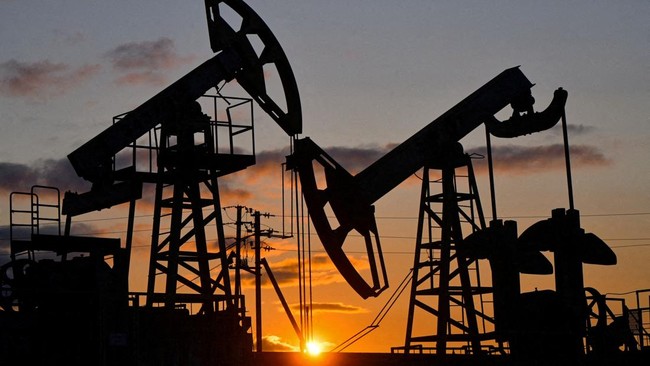
The Indonesian Crude Price (ICP) has recorded an upward trend since the beginning of 2026. As of May 2026, the ICP reached US$ 106.56 per barrel, a 65% increase compared to the January 2026 level of US$ 64.41 per barrel.
According to data from the Ministry of Energy and Mineral Resources (ESDM), the ICP stood at US$ 64.41 per barrel in January 2026, rising to US$ 68.79 in February, and then sharply increasing to US$ 102.26 in March. The peak occurred in April 2026 at US$ 117.31 per barrel, before retreating to US$ 106.56 in May. Averaged over the first five months of 2026, the ICP reached US$ 91.86 per barrel.
This figure significantly exceeds the assumption set in the 2026 State Budget (APBN) of US$ 70 per barrel, representing a 31.2% deviation above the budget assumption. The rise in Indonesian crude prices is largely attributed to the ongoing conflict in the Middle East.
Alongside the rising ICP, Indonesia is also facing pressure from a strengthening US Dollar. According to Refinitiv data, the Rupiah weakened against the US Dollar in trading on Tuesday (9/6/2026), reaching a level of Rp 18,160/US.TheRupiahevenhitarecordlowofRp18, 208perUS on Monday (8/6/2026).
The trend of rising ICP and the continuous depreciation of the Rupiah impacts various economic aspects, including the increase in subsidies and compensation required by the 2026 State Budget. Finance Minister Purbaya Yudhi Sadewa revealed that subsidy and compensation expenditures reached Rp 153.1 trillion as of 30 April 2026, equivalent to 34.4% of the State Budget. This realisation consists of Rp 74.9 trillion in subsidies and Rp 78.2 trillion in compensation.
These figures are influenced by ICP fluctuations, Rupiah depreciation, fertiliser subsidy advances, and increased volumes of fuel (BBM), LPG, and electricity usage. Specifically, fuel subsidy realisation reached 4,704 kilolitres (up 8.2%), and 3kg LPG reached 2,152 million kg (up 3.7%). Electricity subsidies covered 42.9 million customers (up 2.2%), while fertiliser subsidies reached 2.9 million tonnes (up 25.2%).
Minister Purbaya noted that the monthly payment scheme for subsidies and compensation to Pertamina and PLN is benefiting both companies’ finances. He stated that subsidies are paid in full as requested, and compensation is paid at a 70%-70% rate, which has improved Pertamina’s financial position compared to previous years. This improved financial standing allows Pertamina to more easily secure additional oil purchases, even at high prices.
Regarding future targets, President Prabowo Subianto outlined macro-economic assumptions in the 2027 Fiscal Policy Framework (KEM-PPKF) during a Plenary Session on Wednesday (20/5/2026). Prabowo set a target for the Rupiah exchange rate at Rp 16,800 - Rp 17,500 per US dollar for 2027. Other macro assumptions in the 2027 draft budget include inflation of 1.5%-3.5%, economic growth (GDP) of 5.8%-6.5%, 10-year SBN interest rates of 6.5%-7.3%, oil lifting of 602,000-615,000 barrels per day, and an ICP assumption of US$ 70-95 per barrel.