
Indonesia's Attorney General Arrests Former Minister, Uncovers Safe Containing Billions of Rupiah
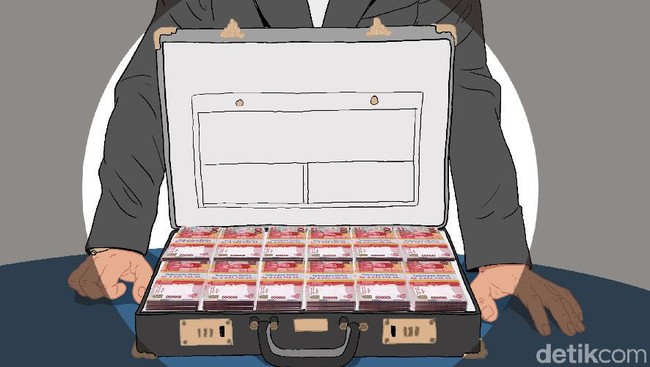
The Indonesian Attorney General’s Office once arrested a former minister with the initials DG in a bribery case that shocked the public during the Old Order era. DG served as Minister of Justice in the first Ali Sastroamidjojo Cabinet (1953-1955) and was the general chairman of a political party. During the investigation, officers discovered a safe containing money that, when converted to current values, is equivalent to approximately Rp4 billion.
The case began on 12 August 1955. On the orders of the Attorney General’s Office, Military Police arrested DG after investigators gathered what was deemed sufficient evidence. Prior to the arrest, officers searched the suspect’s house on Jalan Cut Mutia, Central Jakarta, as well as a house on Jalan Kenari No. 22 believed to be connected to him.
At the house on Jalan Kenari, investigators found a safe containing Rp135,000. The value of the money was extraordinarily large at the time. With the price of gold around Rp86 per gram in 1955, the cash was equivalent to purchasing approximately 1.57 kilograms of gold, or about Rp4.14 billion when calculated using today’s gold prices.
The arrest of a former minister prompted accusations of political motivation. Attorney General Soeprapto denied these claims, stating that the investigation had been conducted over a long period based on sufficient evidence and was known to Prime Minister Burhanuddin Harahap.
The case against DG stemmed from allegations of accepting a bribe of Rp40,000 for issuing a visa to a Chinese-Indonesian citizen from Hong Kong named Bong Kim Thjong. The allegations surfaced after Tan Po Goan submitted documents showing irregularities in the visa issuance process.
During the trial, Tan appeared as a key witness. He testified that he began to suspect DG after the minister ordered the deportation of a Chinese-Indonesian citizen named Tjhon Hoen Nji without clear legal grounds. This suspicion led him to investigate further until he discovered the alleged irregularities in Bong Kim Thjong’s visa issuance.
In court, prosecutors charged DG with accepting a gift of Rp40,000 as compensation for issuing a permanent visa for Bong Kim Thjong. The money was allegedly delivered through intermediaries.
DG denied all charges during the trial. Regarding the deportation of Tjhon Hoen Nji, he claimed he ordered the expulsion to safeguard national security because the individual was considered to be siding with the Kuomintang or the Chinese Nationalist Party. DG also denied accepting bribes, arguing that the visa issuance for Bong Kim Thjong was a policy known to parliament, while the money received by intermediaries was their personal affair for misusing the minister’s name.
Despite the defence, the panel of judges found DG guilty of accepting a bribe of Rp40,000 and sentenced him to one year in prison. DG subsequently applied for clemency from President Soekarno. On 19 July 1956, Soekarno granted the request, reducing the sentence to six months in prison.
Because the time spent in detention during the trial was taken into account, DG only served a remaining sentence of about one month. The clemency decision sparked controversy as it was seen as reflecting a lack of government commitment to eradicating corruption. The controversy reached the palace, with Vice President Mohammad Hatta expressing disappointment that the clemency was granted without consulting him first. This disappointment later became one of the factors that prompted Hatta to resign from the vice presidency.