
Indonesia's AI Technology to Monitor Solar 'Deliveries' Before They Reach Earth
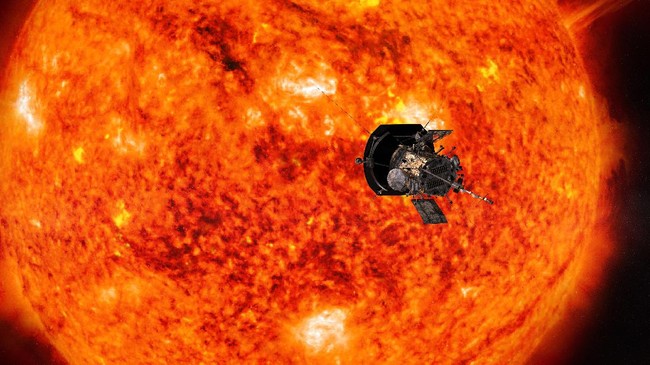
Jakarta, CNBC Indonesia - The National Research and Innovation Agency (BRIN) is using artificial intelligence (AI) to predict solar storm phenomena. The technology is expected to serve as an early warning system and allow for preparations before a storm hits Earth.
Predicting Coronal Mass Ejections (CME), the primary trigger of solar storms, is a major challenge for researchers. The condition of the solar wind is considered highly dynamic and changeable, making it difficult to create an accurate model using only conventional physics approaches.
Researcher Tiar Dani from BRIN’s Space Research Centre, Aeronautics and Space Research Organisation, and his team are attempting to overcome this problem by combining the laws of physics with artificial intelligence. The physics model used, the Drag-Based Model (DBM), describes the influence of solar wind drag on the movement of high-energy particles from a CME event.
This model is integrated with a Random Forest-based AI. The AI uses historical data and a number of CME events observed over two solar cycles.
“Through a learning process from this data, the AI is able to estimate the magnitude of the drag that each CME will experience during its journey towards Earth. In other words, this system not only understands the underlying physics of CME movement but also learns from past experience to produce more accurate arrival time predictions,” Tiar said in an official statement quoted from the BRIN website on Tuesday (30/6/2026).
The developed physics-AI Hybrid DBM model is capable of predicting CME travel time with a claimed error rate of approximately 8.7 hours. This achievement is considered competitive in the field of space weather and demonstrates a significant improvement in predictive capability.
The model can also provide more accurate results compared to the standard DBM. This is because the standard model assumes the solar wind drag on the movement of high-energy particles from a CME is constant.
With this achievement, it is hoped that an early warning system for space weather can be established well before a solar storm hits Earth. Satellite operators, communication service providers, and critical infrastructure managers can take anticipatory measures and minimise impacts with faster and more accurate information.
“Through this research, the foundation for the utilisation of artificial intelligence in the space domain in Indonesia will become stronger. Going forward, this innovation will be an important part of the ‘Research in AI for Space’ initiative we are currently building. The goal is to create a fully independent, robust, and automatically updatable space weather early warning framework to protect future technological infrastructure,” he stated.
Source: jawawa.id (https://jawawa.id/newsitem/indonesias-ai-technology-to-monitor-solar-deliveries-before-they-reach-earth-1782784297)
Originally published by CNBC Indonesia (https://www.cnbcindonesia.com/tech/20260630081015-37-746709/teknologi-ai-milik-ri-pantau-kiriman-matahari-sebelum-sampai-ke-bumi), translated from Indonesian