
Indonesia's Agriculture Minister Partners with UGM to Develop Local Soybean, Aims to Cut Imports
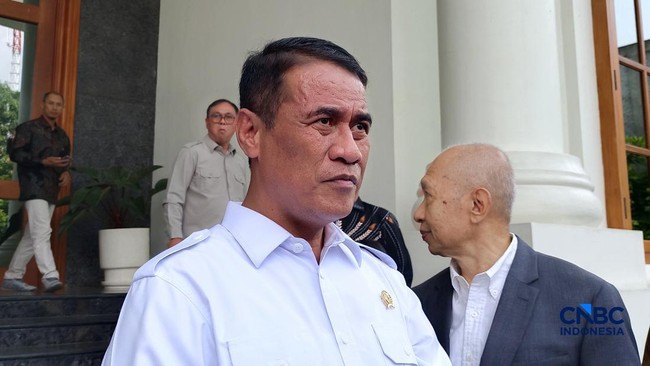
The Minister of Agriculture, Amran Sulaiman, is preparing the development of 2,000 hectares of local soybean production in collaboration with Gadjah Mada University (UGM). This move is part of the government’s efforts to reduce dependence on soybean imports, while simultaneously testing local seeds that are claimed to possess superior quality compared to imported varieties.
The programme is part of a collaboration valued at approximately Rp40 billion between the Ministry of Agriculture and UGM, covering five to six strategic commodities, including soybeans, garlic, cocoa, fertiliser, and livestock.
Amran stated that Indonesia still has significant room to reduce agricultural commodity imports. He noted that while agricultural imports have decreased significantly, the total value remains above Rp300 trillion.
“What is interesting is that our imports have already dropped by Rp41 trillion, yet there is still more than Rp300 trillion worth of imported commodities,” Amran said in Jakarta on Monday.
He explained that the results of UGM’s research will move directly from the signing of the memorandum of understanding into the field implementation stage.
“The total cooperation today involves approximately six commodities, with a total budget of Rp40 billion. We hope to see dairy cattle, specifically the ‘Sapi GAMA’ (Gagah and Macho). We are following this up immediately; it is not just an MoU, but we are directly purchasing the works of the nation’s best talents at UGM. We will jointly oversee the testing up to 2,000 hectares for soybeans, and we will also oversee garlic production. This collaboration is very positive,” he said.
According to Amran, the soybean seeds developed by UGM offer advantages because they are non-GMO, with larger grain sizes compared to imported soybeans.
“The quality is better because it is non-GMO. Furthermore, the local soybeans have larger grains than the imports. This is excellent. Therefore, I have requested that UGM increase their initial plan from 1,000 hectares to 2,000 hectares, with the costs covered by the Ministry of Agriculture,” he explained.
The initial development phase will take place in Central Java, alongside garlic and cocoa projects.
“We will begin in Central Java, as garlic, soybeans, and cocoa are all produced there,” said Amran.
While UGM initially proposed a development area of 1,000 hectares, Amran requested an increase to 2,000 hectares, requiring an estimated budget of around Rp20 billion.
When asked about the potential for reducing soybean imports, Amran emphasised that the government will first evaluate the results of the trials on the 2,000-hectare plot. If successful, the planting area will be expanded further.
“We will see the results of the 2,000 hectares first. If this succeeds, we will increase it, potentially up to 100,000 hectares,” he added.
He estimates that the first harvest of soybeans from this programme could take place by the end of this year.
Furthermore, Amran mentioned that the government is pursuing self-sufficiency for three strategic food commodities that still rely on imports: soybeans, garlic, and one other commodity. He noted that Indonesia has already achieved self-sufficiency in eight out of eleven strategic food commodities.
“Out of 11 strategic food commodities, we have achieved self-sufficiency in eight, leaving only three. Let us pray that we can sustain rice and maize, and that we can pioneer the path for soybeans and garlic starting now,” he concluded.
Source: jawawa.id (https://jawawa.id/newsitem/indonesias-agriculture-minister-partners-with-ugm-to-develop-local-soybean-aims-to-cut-imports-1782715868)
Originally published by CNBC Indonesia (https://www.cnbcindonesia.com/news/20260629121205-4-746476/impor-pertanian-ri-sampai-rp300-t-amran-gandeng-ugm-garap-proyek-ini), translated from Indonesian