
Indonesia's 3,600-Tonne Gold Reserves Underutilised, INDEF Sees Major Opportunity for Sharia Bullion Banks
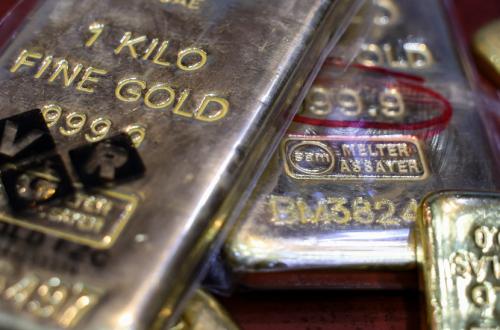
Indonesia’s large gold reserves have not been matched by the optimisation of gold as an investment and financial intermediation instrument. Head of the Center for Sharia Economic Development (CSED) at the Institute for Development of Economics and Finance (INDEF), Prof Nur Hidayah, assessed that this paradox presents a major opportunity for the development of bullion banks to strengthen the Sharia financial ecosystem while encouraging the monetisation of public assets. She explained that there is a transformation in Sharia banking through value-based product innovation. The bullion business of Bank Syariah Indonesia (BSI) reached Rp 22.9 trillion in 2025, growing by 78.6 per cent and strengthening fee-based income. “However, the irony is that Indonesia is a major gold producer, but public utilisation of gold remains low, so the room for monetisation is very large,” said Prof Nur at the Indonesian Sharia Economy Mid-Year Review 2026 forum on Tuesday. Nur explained that bullion services can increase real asset-based intermediation while expanding the Sharia financial ecosystem, growing by approximately 78.6 per cent. Specifically for bullion, she revealed a paradox in Indonesia because the huge potential remains untapped. “Indonesia ranks 4th in the world for gold reserves (3,600 tonnes) and 10th for the largest gold production (100 tonnes per year), yet our per capita gold consumption is only 0.18 grams, losing to Vietnam at 0.59 grams and Thailand at 0.54 grams, which are not gold producers,” said Prof Nur. Furthermore, Nur noted the irony that Indonesia, as a gold producer, is an importer of gold bars. Indonesia’s largest gold bar imports actually come from Hong Kong (30.0 per cent) and Singapore (13.1 per cent), two countries that have no gold mines at all.