
Indonesians Urged to Be Patient as Further Lubricant Price Hikes Loom
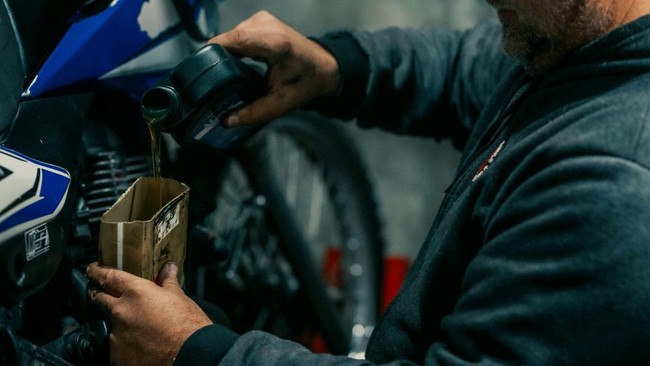
Indonesian consumers are being asked to brace for further increases in lubricant prices, a trend already reflected in national inflation data. Statistics Indonesia (BPS) recorded that lubricants or engine oil experienced inflation of 3.85 per cent in May 2026, contributing to rising costs in the transportation group. Amid rising fuel prices, the hike in oil prices is adding to the expenditure burden of vehicle owners, particularly motorcycle users.
Yusuf Rendy Manilet, an economist at the Center of Reform on Economics (CORE) Indonesia, explained that the price increase is inseparable from the surge in production costs experienced by the lubricant industry. ‘Oil is a derivative product of petroleum, so the increase in crude oil prices directly raises production costs. At the same time, the supply of base oil, the main raw material for lubricants, is also currently limited, causing its price to rise significantly,’ he said on Friday (5/6/2026).
The pressure facing producers does not only stem from the increase in main raw material prices. The industry’s dependence on imported components also makes production costs more vulnerable to exchange rate movements. Global and domestic factors are creating cost pressures for the lubricant industry, which are ultimately passed on to consumer selling prices. However, Yusuf assessed that price increases in the market are not entirely uniform as they depend on the type of product and raw materials used.
‘It should be noted that the increase in oil prices on the market is generally in the range of Rp10,000 to Rp20,000 per bottle, or around 15 to 20 per cent. If the price you encounter rises from Rp70,000 to Rp120,000, the increase is far above the market average. Most likely, this occurs for premium synthetic oil or products with a greater dependence on imported raw materials,’ Yusuf stated.
Differences in product characteristics mean the magnitude of price adjustments varies by brand and market segment. Premium products that rely on imported raw materials tend to be more sensitive to global price fluctuations and the rupiah exchange rate. Going forward, the public still appears to need to prepare for potential further price hikes, as pressure from the global energy market has not fully subsided.
‘In the short term, oil prices still have the potential to rise. Industry players even estimate there will be a further increase of around 15 to 20 per cent in the next one to two months. The direction of movement depends heavily on two main factors: the development of the conflict in the Middle East, which affects world oil prices, and Bank Indonesia’s ability to maintain rupiah stability,’ said Yusuf. The direction of oil prices in the near future will be largely determined by external dynamics and domestic economic stability. As long as these two factors have not shown significant improvement, room for price increases remains open.
‘If tensions ease and oil prices fall, pressure on oil prices will decrease. Conversely, if the conflict continues and energy prices remain high, oil prices are likely to continue adjusting before eventually stabilising,’ Yusuf said. Previously, Pertamina Lubricants Corporate Secretary Rika Gresik Wahyudi explained that lubricant price dynamics cannot be separated from global market conditions, especially regarding the supply and price of the main raw material, base oil. ‘Base oil is the primary raw material in lubricant production and as a derivative of petroleum products, its price and supply conditions are affected by the current global geopolitical dynamics. These constraints are certainly one of the factors in adjusting the selling price of lubricant products,’ said Rika.
Source: jawawa.id (https://jawawa.id/newsitem/indonesians-urged-to-be-patient-as-further-lubricant-price-hikes-loom-1780653092)
Originally published by CNBC Indonesia (https://www.cnbcindonesia.com/news/20260605143355-4-740444/warga-ri-mohon-sabar-masih-ada-gelombang-harga-pelumas-mau-naik-lagi), translated from Indonesian