
Indonesian’s Side Door to the World Stage
Speed and sports accounts are opening another door — a side entrance that requires no budget.
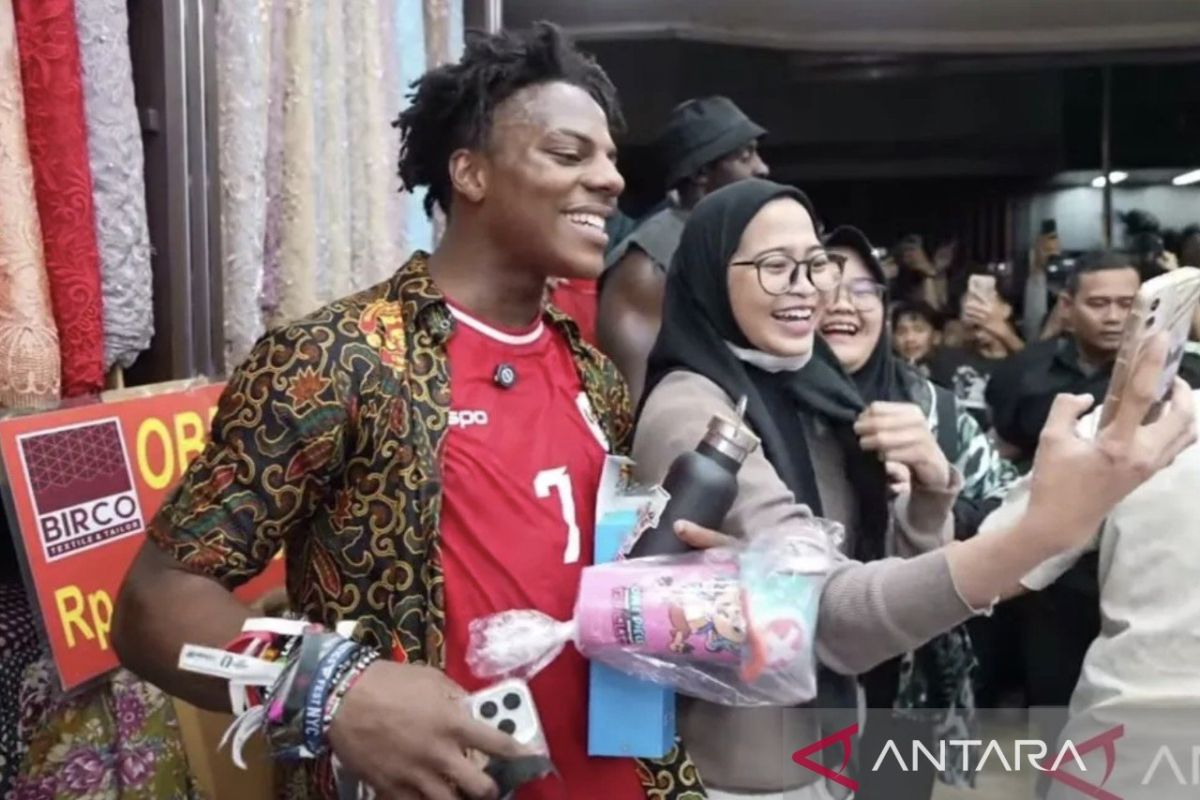
Jakarta (ANTARA) — The crowd at Alun-Alun Kidul in Yogyakarta in September 2024 left barely any room to move. People pressed in from every direction, phones held high, while an American young man in the middle tried to find a way through. He picked up three Indonesian phrases taught to him by viewers in the live-stream comments: “awas” (watch out), “santai” (relax) and “minggir lu miskin” (move aside, you poor person).
He followed the viewers’ instructions and used the words to clear a path. The crude phrase, typical of banter among friends, became the most familiar point of connection between Darren Watkins Jr., known worldwide as IShowSpeed, and millions of Indonesian internet users.
Speed may not have understood the meaning behind the words at the time, but he was surprised that what he said managed to disperse the people blocking his way.
Two years later, the language returned — this time not on the street, but on stage. On 12 November 2026, after winning Streamer of the Year at The Streamer Awards in Los Angeles for the third consecutive time, Speed gave a speech in Indonesian, wearing a red-and-white jacket. He spoke about a child who started from nothing with big dreams, and called his fans family rather than mere viewers.
Four days later, during a video call broadcast on his channel, he spoke directly with former US President Barack Obama, greeting him with “apa kabar” (how are you?).
Obama, who spent part of his childhood in Jakarta, was surprised and replied, “baik-baik” (I’m well). The former US president, who likes satay and nasi goreng, praised Speed’s Indonesian accent. Asked where he had learnt the language, Speed replied in a mixture of the two languages that he liked watching Indonesian films.
Speed had not set out to learn Indonesian. He did not begin with lists of basic vocabulary or sentence patterns. Instead, he started with expressions laden with social meaning, which are funny only when the speaker understands who can say them to whom, and in what context. He grasped what a sentence did before learning its structure, much as children absorb their mother tongue from conversations around them long before they encounter textbooks.
The Indonesian now travelling overseas has emerged from similar spaces: informal hangouts, comment sections and livestreams.
A sociolinguistic study of football-fan communities on social media by Surabaya State University and Muhammadiyah University of Makassar found that fans’ distinctive terms and expressions serve as markers of group identity. Word choice determines who is an insider and who is an outsider.
That is where Speed’s appeal lies. When a foreigner uses Indonesian appropriately, Indonesians online read it as a sign of acceptance. What is more, the connection feels equal because the language being used is not the language of formal protocol.
Source: jawawa.id (https://jawawa.id/newsitem/indonesians-side-door-to-the-world-stage-1795578813)
Originally published by Antara (Indonesian) (https://www.antaranews.com/berita/5876615/jalan-samping-bahasa-indonesia-ke-panggung-dunia), translated from Indonesian