
Indonesians Richer Than Elon Musk? Here's the Data
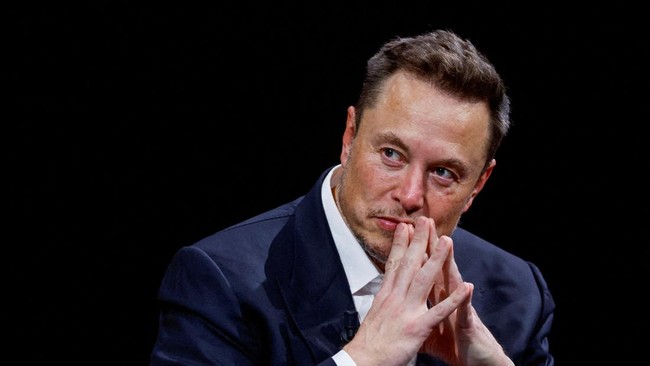
The net worth of Tesla and SpaceX CEO Elon Musk has reportedly breached US$1.1 trillion, or approximately Rp 19,459 trillion (at an exchange rate of US$1 = Rp 17,690). This significant valuation increase was driven by SpaceX’s initial public offering (IPO) last Friday (12/6/2026), which directly cemented Musk’s position as the world’s richest person at present.
The figure of US$1.1 trillion places a single individual’s asset portfolio value above the economic scale of the majority of the world’s countries. Referring to 2024 Gross Domestic Product (GDP) data published by the World Bank, there are 162 sovereign states with a GDP below Musk’s current total net worth. Meanwhile, only 19 countries have a GDP exceeding Elon Musk’s total net worth at this time. The fluctuating price of SpaceX shares will continue to alter Musk’s position on that list of countries over time.
On a global scale, several countries with established economic fundamentals recorded a GDP below the US$1.1 trillion mark. Switzerland, known as one of the world’s financial centres, had a GDP of approximately US$936.5 billion in 2024. Other major nations such as Argentina (US$638.3 billion) and the United Arab Emirates (US$552.3 billion) also registered economic sizes smaller than Musk’s wealth.
In the Southeast Asian region, this numerical disparity appears striking. The GDP values of several key ASEAN member states remain far below the US$1.1 trillion figure. Singapore recorded a GDP of US$547.3 billion, followed by Thailand with US$526.5 billion, and Malaysia at US$422.2 billion. In Southeast Asia, only Indonesia has an economy larger than Elon Musk’s, valued at US$1.39 trillion. Using data from the Central Statistics Agency (BPS) as of the end of 2025, Indonesia’s GDP had already breached US$1.4 trillion.
This phenomenon of wealth accumulation provides a structural illustration of the shift in capitalisation values in the modern era. The success of the SpaceX IPO reflects high market expectations for the commercial aerospace and satellite technology sectors, which ultimately escalated Musk’s asset value beyond the real economic productivity of hundreds of countries.